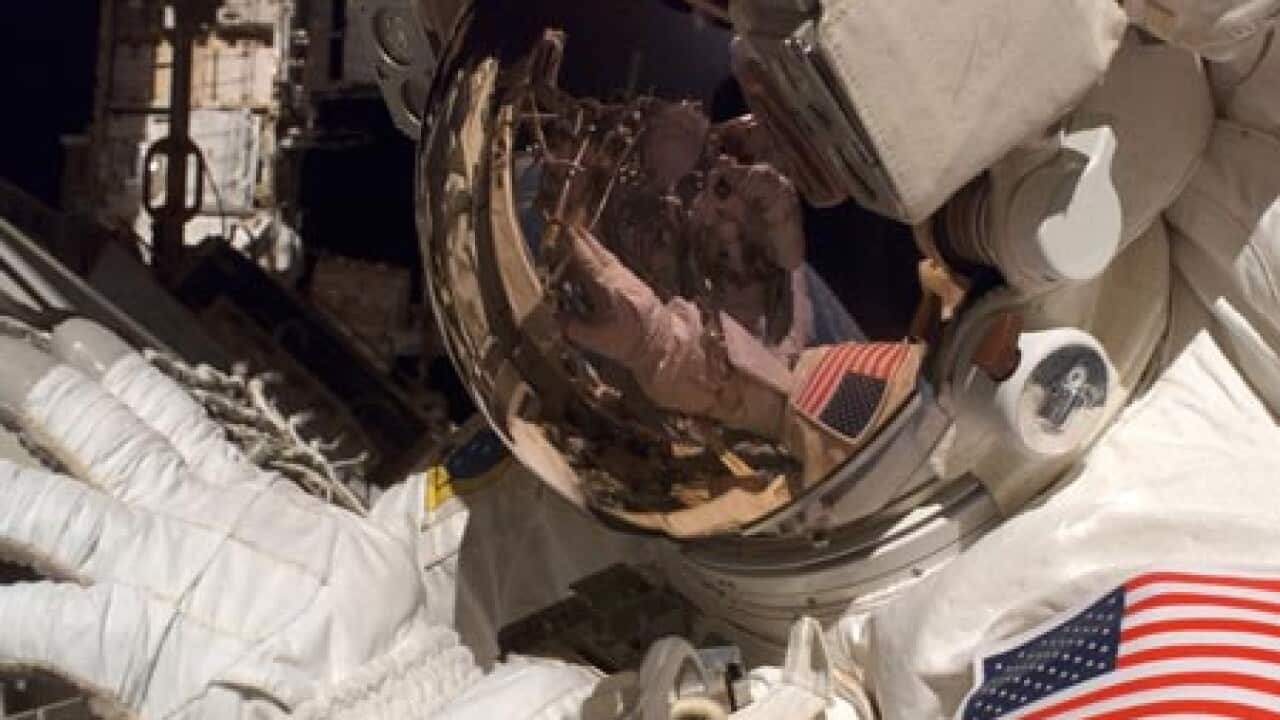
Astronauts from the space shuttle Endeavour are set to unveil a room with an out-of-this-world view, attaching a new 'dome' to the International Space Station.
US astronaut Bob Behnken and his British colleague Nicholas Patrick are on the final walk of their mission, which will see them complete installation of the Tranquility node and the seven-windowed cupola attached to it.
The walk, expected to last 6.5 hours, began with the pair hooking Tranquility up to ammonia loops that allow coolant to flow into the module and installing heater and data cables.
News that makes sense
Your trusted source for staying up-to-date with the world around you. Get free daily news updates and analysis, straight to your inbox.
The two spacewalkers will then remove insulation from the cupola's seven windows and release launch locks.
Inside, Endeavour's pilot, Terry Virts, will finally be able to open the cupola's window shutters, revealing for the first time the panoramic view.
'Breathtaking' view of space
The room's seven windows are expected to provide a breathtaking view of space, Earth and visiting spacecraft, while the 360-degree viewing spectrum provides a vital access point for monitoring spacewalks and docking operations.
While the spacewalkers work, Japanese astronaut Soichi Noguchi will move a workstation from the Destiny laboratory in the International Space Station to prepare it for installation inside the cupola.
The cupola can accommodate two people at a time and will be equipped with portable workstations that can control station and robotic activities.
The Tranquility module and its seven-pane bay window were built in Italy for NASA, and are the last major components for the station.
With the new room in place, the space station is now about 90 per cent complete. Endeavour is due to end its mission on February 21.
Return to the moon cancelled
The mission, one of just five remaining for NASA's three shuttles before the program ends later this year after a 29-year run, comes as the US space agency reevaluates its future.
US President Barack Obama effectively abandoned a US plan to send astronauts back to the moon by 2020 earlier this year.
Constrained by soaring deficits, Obama submitted a budget to Congress that encourages NASA to focus instead on developing commercial transport alternatives to ferry astronauts to the ISS after the shuttle program ends.
The ISS, a joint project involving 16 countries, has cost around 100 billion dollars, mostly funded by the United States.
Under Obama's new budget, the orbiting research station could see its life extended by five years until 2020.
NASA has set the next shuttle mission, by Discovery, for March 18.







