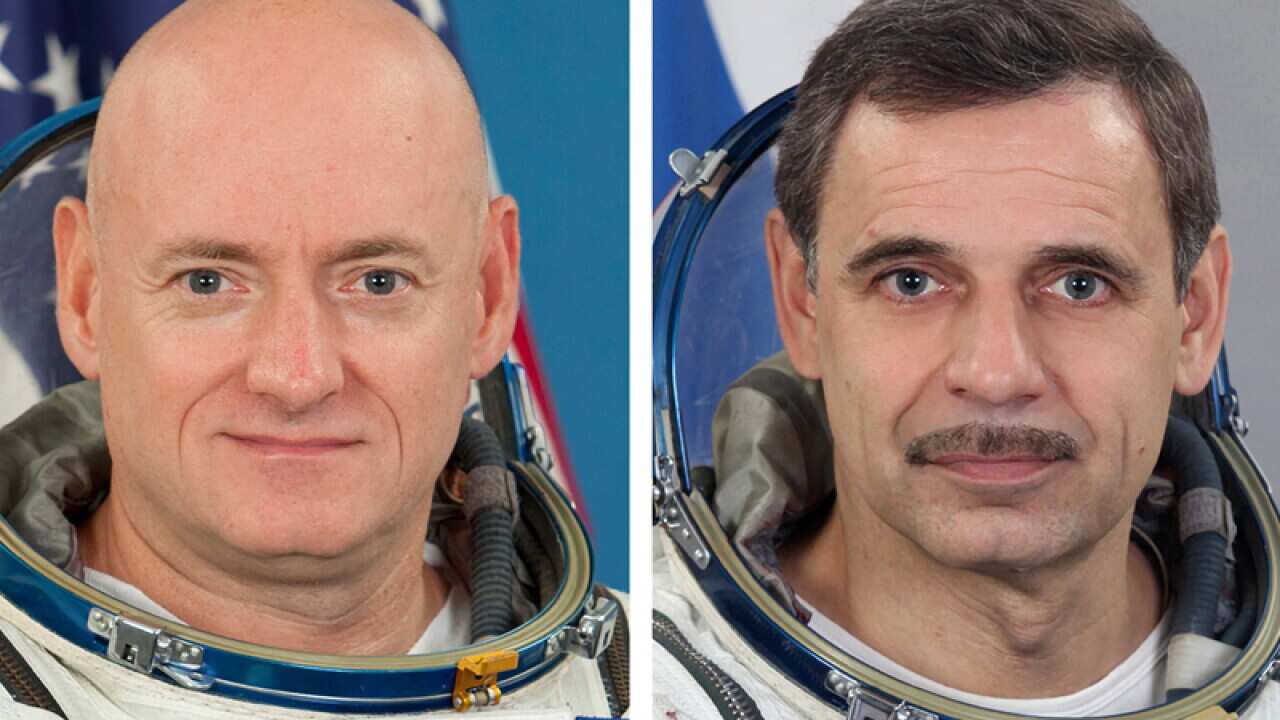
Two men are about to spend a year at the orbiting International Space Station, in an experiment that will test the limits of the human body and mind.
American astronaut Scott Kelly and Russian cosmonaut Mikhail Kornienko will launch aboard a Russian Soyuz spacecraft on March 27, and they will stay until March 2016.
The trip marks the longest time two people will live continuously at the ISS, though a handful of Russian cosmonauts spent a year to 14 months at the Russian space station Mir in the 1990s.
Kelly and Kornienko are space veterans who have flown multiple missions to orbit, and each has already spent about six months at the space station.
Kelly said some things will be different this time. He will keep a personal journal, and also plans to do his first spacewalk, as part of ongoing efforts to reconfigure and fix up the space station.
News that makes sense
Your trusted source for staying up-to-date with the world around you. Get free daily news updates and analysis, straight to your inbox.
But he said he was concerned about the effects of radiation and living in zero gravity, particularly in terms of compromised immunity, and bone and vision loss.
"I'm hopeful that there is not a big cliff out there with regards to our ability to stay and live and work in space for longer periods of time," he said.
"But we are not going to know that until we have actually done it."
The physical effects of a year in space will be closely monitored by doctors on the ground in an unprecedented study of how the human body withstands the rigours of spaceflight before humans plan to journey to Mars.
Kelly's twin brother, Mark, is part of the experiment and will undergo regular health checks on earth so doctors can compare the brothers' vital signs.
Genomic testing was being done for the first time to see if and how spaceflight changed a person's bodily make-up, ISS program scientist Julie Robinson said.
The Russian space agency has shared its data from the year-plus Mir missions in the 1990s, but science has advanced since then, she said.







