Christmas Island has a permanent population of just 2000 residents, but its mortuary has room for 50 bodies.
The stark figure reflects the recurring tragedy of asylum seeker boats capsizing or crashing in waters close to the island, often resulting in deaths.
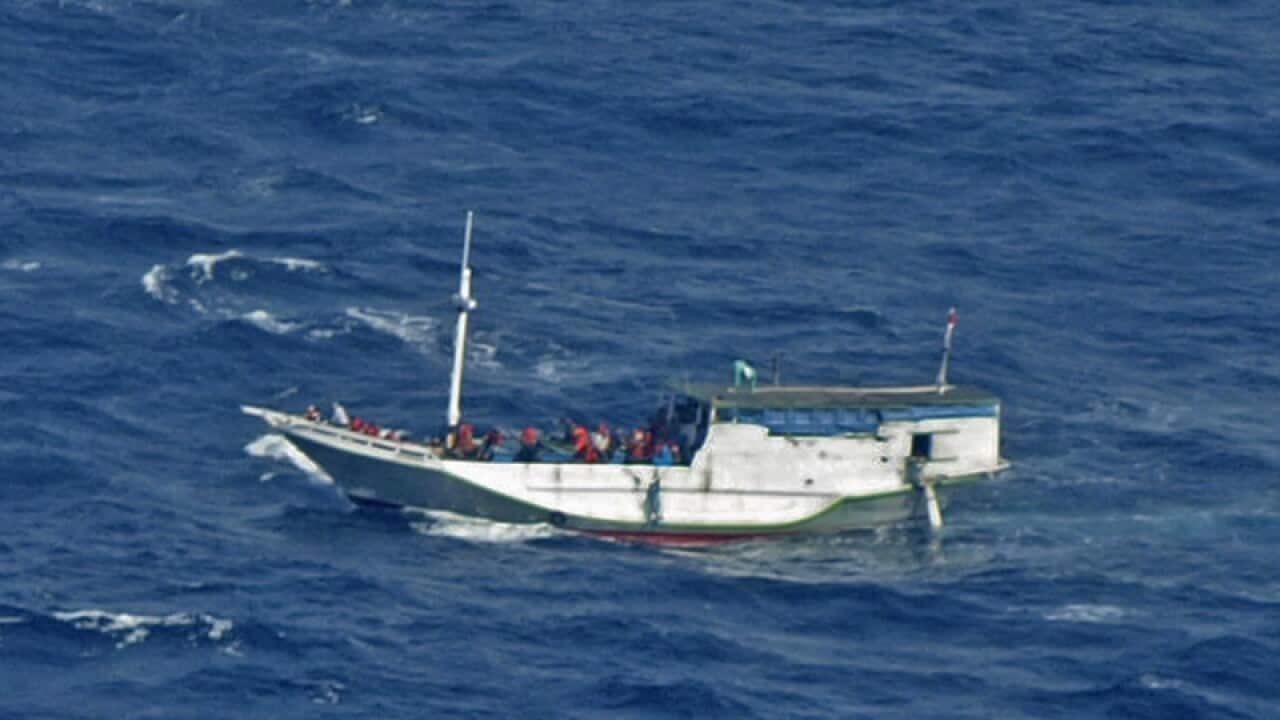
Yesterday, 144 people were rescued after a boat carrying asylum seekers capsized while being escorted by Australian navy vessels to Christmas Island.
Four bodies were also recovered.
Christmas Island administrator Jon Stanhope told ABC News up to 20 boats have arrived in the last two weeks.
News that makes sense
Your trusted source for staying up-to-date with the world around you. Get free daily news updates and analysis, straight to your inbox.
“I think we're probably averaging somewhere in the order of 100 arrivals a day. If one averages it out, 700 or 800 arrivals a week,” he said. “The arrivals are constant.”
The detention facility on Christmas Island housed 1,238 asylum seekers at the end of May 2013, according to official Department of Immigration records.
More are held in alternative detention on the island.
The latest tragedy came less than a week after a baby boy died at sea after a boat carrying around 100 passengers sank.
Mr Stanhope says the latest incidents “weren't particularly surprising” for residents of Christmas Island.
“We now have mortuary facilities that will cater for 50 bodies. And that's a statement in itself, is that within the last year we have increased our mortuary capacity from about five to about 50.”
“I think at one level, tragically, some of us weren't necessarily particularly surprised that another boat had capsized.”
Home Affairs Minister Jason Clare defended the decision not to board the asylum-seeker vessel on Tuesday, saying authorities decided it was safer to escort the ship given the rough conditions and the vessel's size.
A navy vessel which located the boat noticed that one of its engines was not working but that it was not in distress, he told reporters in Sydney on Wednesday.
Four hours after the escort began, people started to jump into the water and the ship capsized.
Australia's border protection commander Rear Admiral David Johnston said authorities do not have a lawful reason to board a boat particularly when there is no request for assistance.
"Also we know that any boarding event that you conduct particularly at night and in the weather conditions that were experienced are very dangerous," he told reporters.
Conditions during the rescue operations were "very difficult" with swells of up to four metres.
Mr Clare gave more details about the four people who died. They were two women in their late twenties or early thirties, one man in his twenties and one man in his thirties.
Rear Admiral Johnston said there may have been up to 19 children on the boat.







