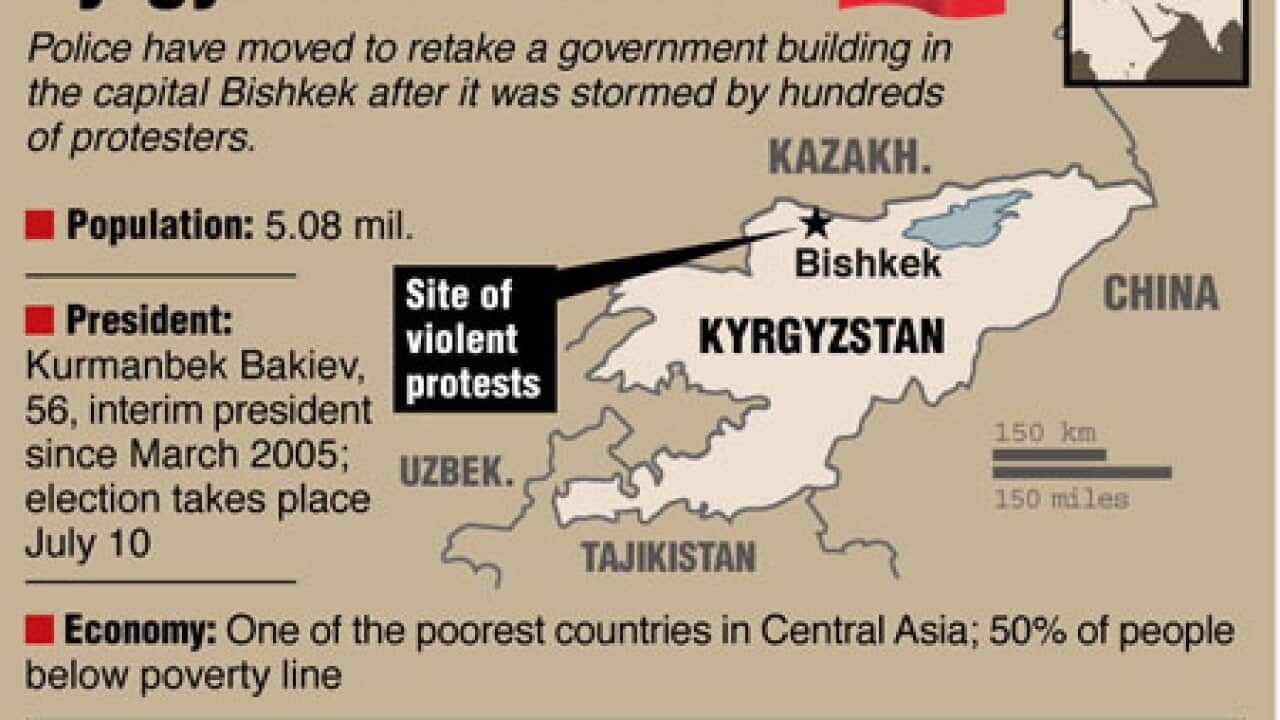
Kyrgyzstan is a mountainous country located at the strategic junction between China, Russia and southwest Asia.
With a population of more than 5 million, the country's main religions are Islam and Russian Orthodox.
Language and population
The two main languages spoken are Kyrgyz and Russian. The Kyrgyz make up nearly 70 per cent of the population, with Uzbeks accounting for about 15 per cent.
News that makes sense
Your trusted source for staying up-to-date with the world around you. Get free daily news updates and analysis, straight to your inbox.
It is among one of the poorest countries to have emerged from the 1991 break-up of the Soviet Union, with an unemployment rate of 18 per cent.
However, Kyrgyzstan's economy grew by 2.3 per cent in 2009, down from 8.4 per cent a year earlier, as the impoverished Central Asian state was hit by the global crisis. Main exports include fruits, vegetables, gold and tobacco.
Corruption and instability
The region has long been plagued by corruption and chronic instability.
In 2005, a popular revolt sparked by allegations of government interference in parliamentary elections and fuelled by poverty and corruption swept President Askar Akayev from power. He had led the country since independence.
His successor, Kurmanbek Bakiyev, also failed to restore full confidence in the state accused Bakiyev has been accused of failing to rein in corruption and shield the country's population from growing poverty.
Military bases
Kyrgyzstan's government hosts both a Russian and U.S. military airbase. U.S. forces set up their base in Kyrgyzstan when they overthrew the Taliban government in Afghanistan in 2001.
Over the past months, international rights groups have accused the authorities of cracking down on dissenting voices.
During a visit to the country, U.N. Secretary-General Ban Ki-moon called on Kyrgyzstan to do more to protect human rights.







