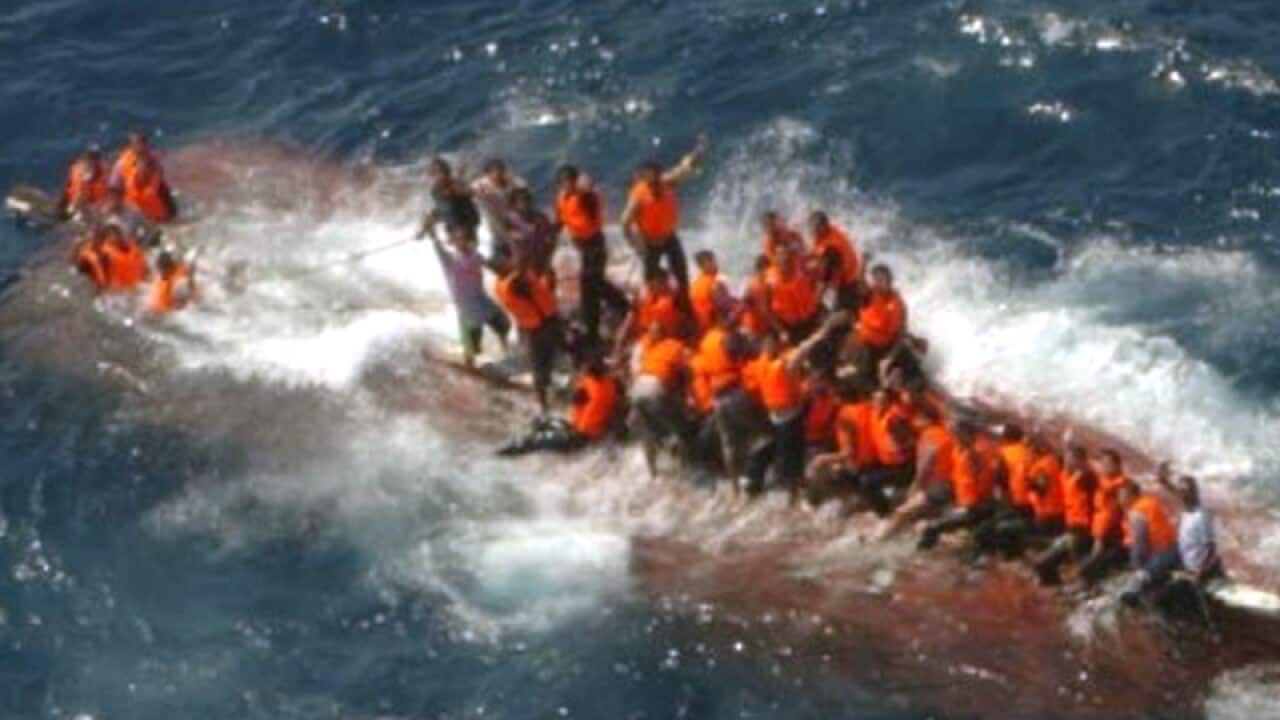
On June 21 last year, more than 100 asylum seekers are believed to have drowned trying to make their way to Christmas Island from Indonesia.
The boat, called Kaniva, was at sea for four days, between June 18 and June 21, carrying 210 men and boys from Pakistan, Afghanistan and Iran in search of asylum. (214 people were on board in total, including four Indonesian crew).
On the morning on June 21 the boat capsized, with one suvivor saying it took less then 15 seconds for the asylum seekers to be in water. (The boat was located later that day about 100 nautical miles off Christmas Island).
News that makes sense
Your trusted source for staying up-to-date with the world around you. Get free daily news updates and analysis, straight to your inbox.
Only 17 bodies were eventually recovered and taken to Christmas Island, sparking an inquiry into the cause of their deaths by the West Australian Coroner.
The inquest into the the deaths of those 17 has examined Australia's and Indonesia's actions leading up the asylum seekers' deaths, raising uncomfortable questions about the response of the two nations.
LISTEN: Questions raised over maritime responsibility
The inquest has heard repeated calls were made between June 19 and June 21 to Australia's Rescue Co-ordination Centre (RCC) and Indonesian authorities via a satellite phone onboard the boat.
A survivor said they called Indonesian police first and were told to call Australia.
Australia received the first call on June 19 at 7.52pm WA time.
On June 20, after many calls to Australia's RCC and attempts to use translators, a GPS location showed the boat was 40 nautical miles from Indonesia.
Australia tried to hand the search to Indonesia's search and rescue organisation Basarnas because the boat was in its waters.
Between June 19 and June 21, 16 calls were made to Australia outlining various concerns that the boat was damaged, overcrowded, taking on water and that the passengers were scared and had no life jackets.
LISTEN: Court played calls from doomer asylum boat
The definition of "distress" has been contested at the inquest.
The Australian Maritime Safety Authority search and rescue manager Alan Lloyd said his staff made the assessment the boat was not in "grave and imminent danger".
LISTEN: Manager defends response to asylum boat
Close to 1am on June 21, Indonesian authorities eventually took responsibility for the search, advising an Indonesian navy vessel was en route.
But at 8am the 'SIEV 358' began to capsize.
Around 3pm on June 21, an Australian routine surveillance flight located the boat roughly 110 nautical miles north of Christmas Island. The flight sighted people in the water.
The inquiry has heard the first vessels to arrive at the scene were merchant vessels responding to mayday calls, arriving at 2:28pm, 4:28pm and 5:30pm.
Two more naval vessels, the HMAS Wollongong and Larrakia also arrived around 5.30pm.
It wasn't until after 10pm on June 21 that Indonesian authorities officially asked the Australian Maritime Safety Authority to take operational command of the rescue.
This search and rescue operation continued a further two days.
All up, of a boat carrying 214 people, 110 people were rescued, the bodies of 17 recovered, while the rest were lost at sea.







