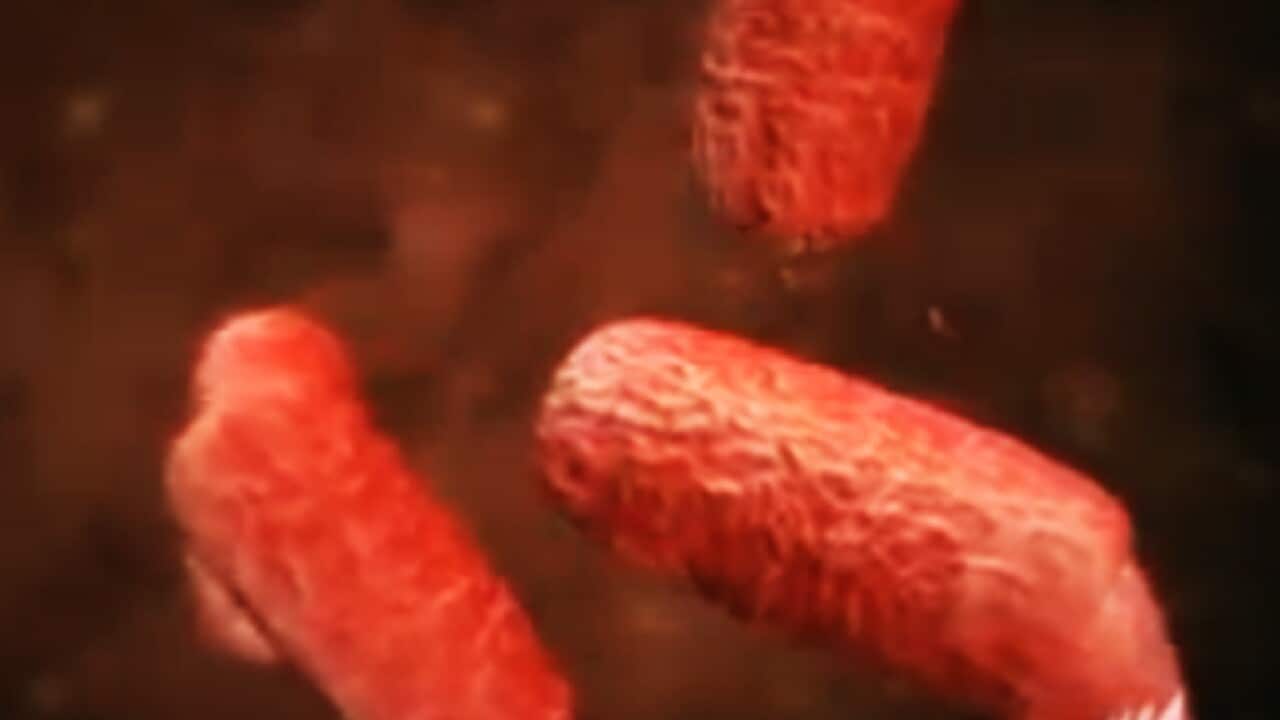
What is the E. coli bacterium, what diseases does it cause and what do we know about its origins and how to control it?
What is the E. coli bacterium?
Escherichia coli (E. coli) is a bacterium that is commonly found in the gut of humans and warm-blooded animals. Most strains of E. coli are harmless.
News that makes sense
Your trusted source for staying up-to-date with the world around you. Get free daily news updates and analysis, straight to your inbox.
Some strains however, such as enterohaemorrhagic E. coli (EHEC), can cause severe foodborne disease.
It is transmitted to humans primarily through consumption of contaminated foods, such as raw or undercooked ground meat products and raw milk.
EHEC produces toxins, known as verotoxins or Shiga-like toxins because of their similarity to the toxins produced by Shigella dysenteriae.
Why is this strain so much worse than others?
This "super-toxic" strain of the bacteria has never before seen in people. Hilde Kruse, of the World Health Organisation (WHO), said it had "various characteristics that make it more virulent and toxin-producing".
Consequently, it is affecting all ages groups, not just particular groups such as children and the elderly, which is more commonly the case with E.coli.
DNA testing of bacteria in stool samples from affected patients is being done to ascertain the exact strain and its properties.
However, despite initial suspicion around certain vegetable food products (usually sources of E. coli infection are meat products) the source of the new strain and how it has been passed to so many people is still not clear.
The diseases caused by EHEC
Symptoms of the diseases caused by EHEC include abdominal cramps and diarrhoea that may in some cases progress to bloody diarrhoea (haemorrhagic colitis). Fever and vomiting may also occur.
The incubation period can range from three to eight days, with a median of three to four days.
Most patients recover within 10 days, but in a small proportion of patients (particularly young children and the elderly), the infection may lead to a life-threatening disease, such as haemolytic uraemic syndrome (HUS).
HUS is characterized by acute renal failure, haemolytic anaemia and thrombocytopenia. It is estimated that up to 10 per cent of patients with EHEC infection may develop HUS, with a case-fatality rate ranging from 3 per cent to 5 per cent.
Where has this strain come from?
Germany, specifically the north, is the geographical source. The source appears to be contaminated salad vegetables.
Initially scientists thought cucumbers were the source of infection, however, this has not been confirmed. Other foods are now being investigated.
How could salad vegetables become infected with a gut bacteria?
Fertiliser could be the prime source of infection, while irrigation water from streams contaminated with faeces from infected animals could also be to blame.
Cattle, for instance, can carry E.coli in their guts without becoming ill.
How to prevent the risk of E. coli outbreaks
* Always keep good hygiene, particularly after using the toilet and before preparing food, to prevent the faecal-oral cycle of transmission.
* Wash fruit and vegetables to remove excess dirt and therefore reduce bacterial load, although this will probably not remove all bacteria hidden within the surface.
* Peeling and cooking fruit and vegetables is more effective at reducing bacterial load.
* Location and removal of the source of the infection during an outbreak.







