(Transcript from World News Radio)
From caring for wounded civilians in conflict zones, to stopping the spread of Ebola - the work of Red Cross nurses is rarely dull.
But this year, the Red Cross has recognised four Australians with the Florence Nightingale award for exceptional courage.
Harriet Conron has more.
(Click on the audio tab above to hear the full report)
Nola Henry, Libby Bowell, Amanda McClelland and Kerry Page have cared for the sick and the wounded in some of the world's most dangerous and remote locations.
They've battled cholera outbreaks, nursed the survivors of natural disasters, and treated the victims of civil war.
The four Australians are among 32 nurses internationally to receive the Florence Nightingale award this year.
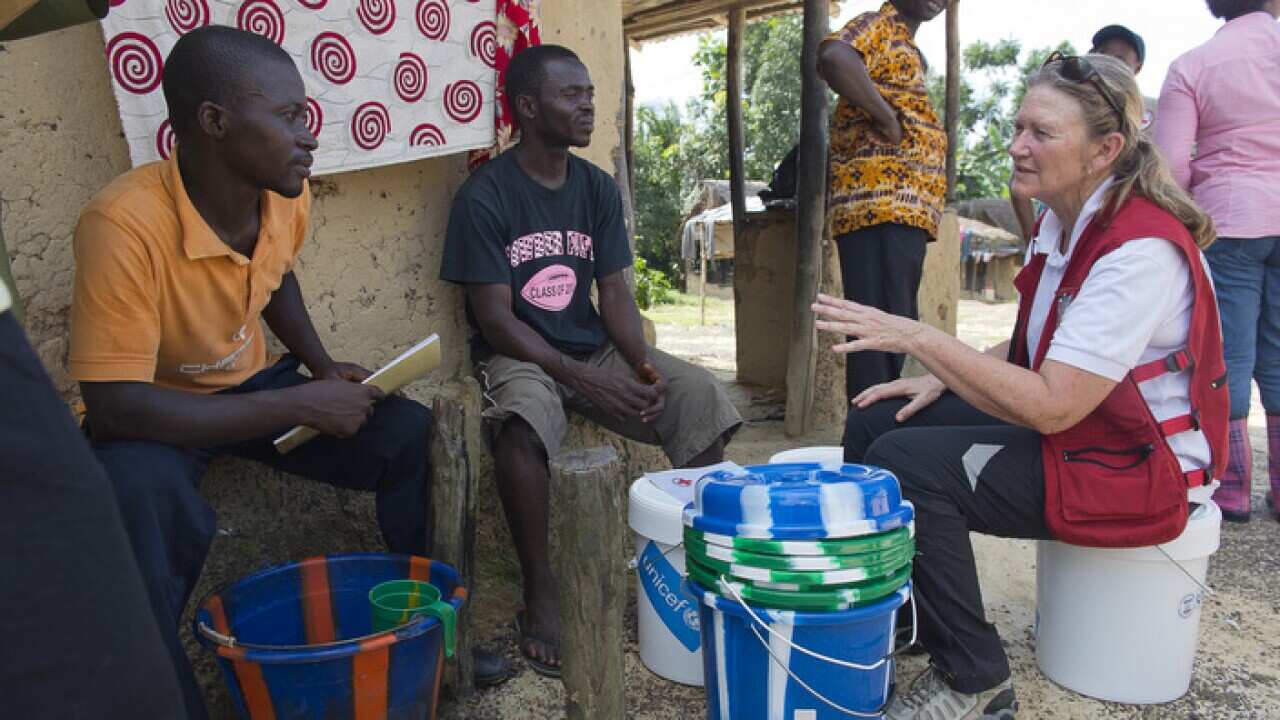
Libby Bowell, from New South Wales, is receiving the award for her work helping to co-ordinate the Red Cross Ebola response in Liberia last year.
One of her greatest challenges was being confronted with grieving families who couldn't give their dead relatives a traditional farewell.
"We were in a country that culturally beleived in funerals and burying people and that had to change because we had the monsoonal rains, and they have a very high water table in Liberia, and it wasn't possible to bury people at the safe depth of six or seven feet. So the government made a decision to start medical cremations and that was very tough for the community to accept. That was a tough thing to have to enforce."
Nola Henry from Melbourne has received the award, for her work caring for wounded civilians in war-torn South Sudan.
"I don't think there's such a thing as an average day - as an individual person just doing the job I'm asked to do. I don't really have the full picture of the entire country and what they need. But it's a very new country. It's a country in turmoil."
Nola Henry is honoured by the award, but says there's no way she could do her job in South Sudan without the support of colleagues.
"It's actually an award to receive on the behalf of the people we work with every day over there, so we couldn't do our work unless we had volunteers or nurses of health care workers working side by side with us."
When Libby Bowell arrived in Liberia, using volunteers and the wider community was also essential to providing a co-ordinated response to the Ebola epidemic.
"We were about 800 beds short at that time, for people to get to definitive treatment. So we had to really raise the awareness and raise the knowledge of people at a community level. We started to prepare them for what we called temporary home care where we provided kits to make one member of the family safe."
Amanda McClelland from is also receiving the Florence Nightingale award for her work leading the Red Cross Ebola response, in Sierra Leone.
She agrees that community measures are often the most effective way to respond to a public health crisis.
"These are areas that don't have health facitilities. They don't have doctors and nurses. They don't have garbage collection, water and santitation.These are not necessarily expensive operations to do. But they're important and they need to be at scale. And they're not always the most sexy - it's very hard to advocate that paying garbage collectors is more important than actually paying medical staff sometimes."
Amanda McClelland says the support of her colleagues in the Ebola treatment centre kept her motivated throughout her stint in Sierra Leone.
"It was a great place to work, it really was. As much as it was terrible - you know we had 60 patients with Ebola, it was a happy place to be in and people worked very hard at keeping patients' spirits up and keeping each other's spirits up. And so I think that's the motivation."
Share


