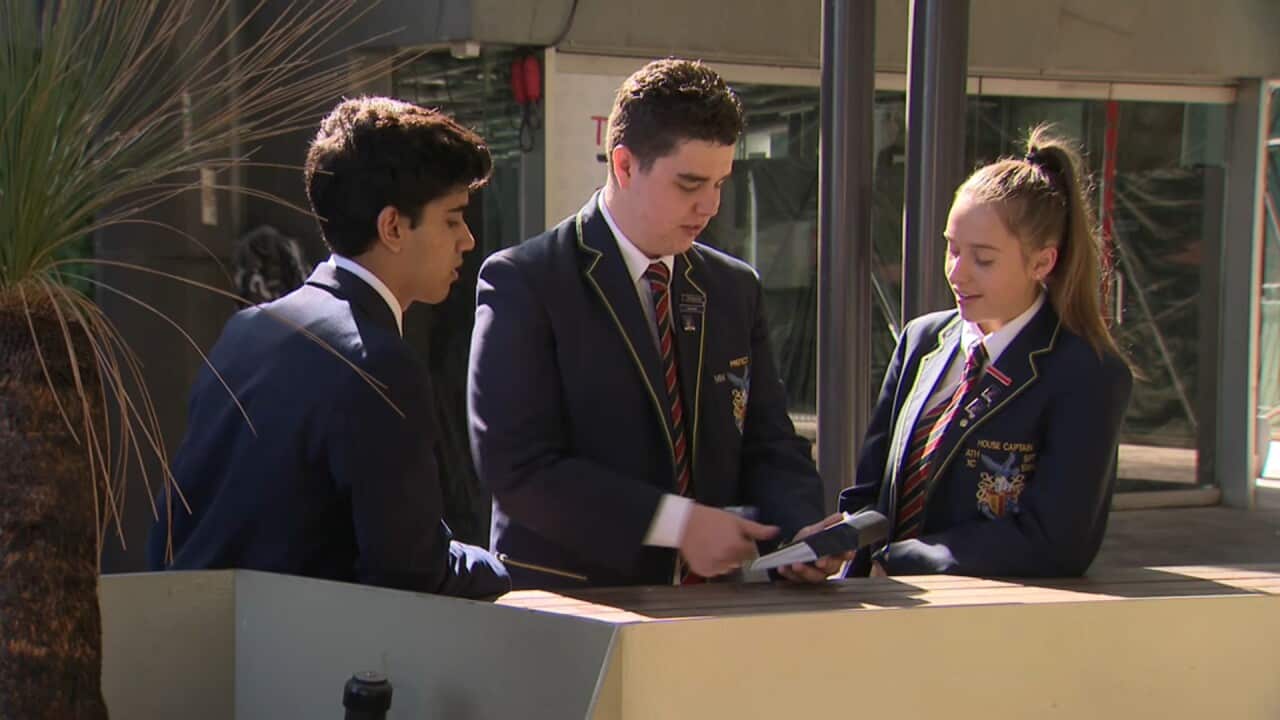
Three Australian high school students, who developed and patented an EFTPOS machine with fingerprint security, are heading to Cape Canavarel, to compete for grants and possible scholarships.
They will present their invention at the Kennedy Space Centre as they head into the finals of a prestigious global entrepreneurial competition.
The teens hope to take top honours, and secure backing for their anti-fraud technology that could one day see a world-wide roll out.
"It is really cool (to make the finals) actually. It is quite empowering," finalist Victoria Caetano told SBS News.
Aimed at making card fraud more difficult, their EFTPOS machine has secured them a spot in the final of the global Conrad Challenge.
News that makes sense
Your trusted source for staying up-to-date with the world around you. Get free daily news updates and analysis, straight to your inbox.

"So you tap your card like you normally do at the moment. And then if it is over $100, instead of using your pin number you use your fingerprint,” finalist Mitchell Phelan said.
“So that is a lot more secure than just using your pin number, and also you do not have to remember a pin number."
The fingerprint is stored on the chip inside the card, not on a central server.
"Hence the government or bank does not have access to that fingerprint,” finalist Bhavesh Kapadia said.
Card transactions on the rise
Last year, Australians spent more than $760 billion dollars using cards, while card fraud grew to $565 million dollars - 85 per cent of it carried out online or over the phone.
The roll out of chip and pin technology has seen face-to-face card fraud plummet and biometric technology is already being used to prevent further point-of-sale fraud.
People using their mobile phone instead of a card to pay are required to authenticate the payment by their device using their voice, face or fingerprint.
The payments industry self-regulatory body, the Australian Payment Network, sees benefits to applying biometrics to card transactions.
"It is particularly important for people who might not have a smart phone. And therefore might not have that biometric capability,” CEO Andy White said.
“Or they might have a smart phone that has aged and doesn't have biometric capability."
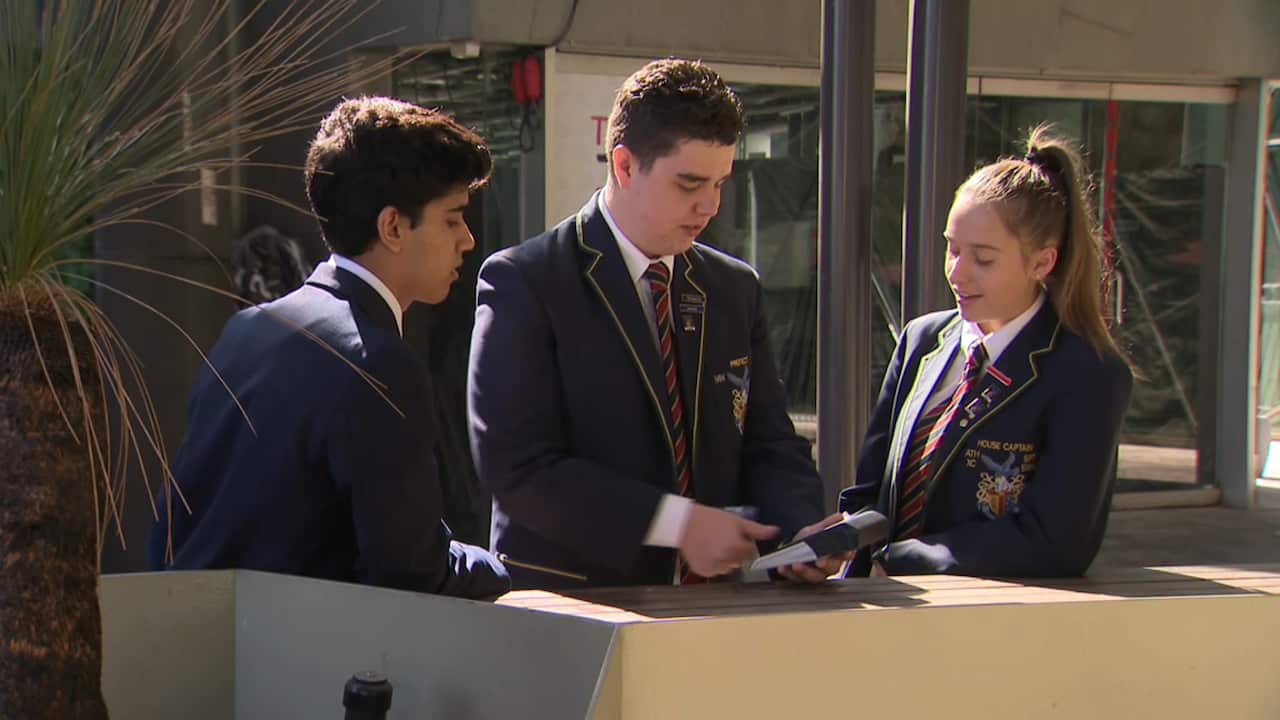
The team from Melbourne's The Knox School will pitch their patented "PadPay" invention to a panel of experts at Florida's Kennedy Space Centre from April 23-27.
"It actually has been a lot of dedication, a lot of team work,” the school’s entrepreneurship educator Michelle Mitchell saod.
“The students have worked really well as a group. And they have had to really persevere."







