
Australian scientists have helped shed light on a new species related to Homo sapiens found in the so-called "dark zone" of a South African cave system.
Deep in the caves of the Rising Star system, about 1500 bones from the extinct Homo naledi have been found by members of a scientific team.
They crawled through several hundred metres and squeezed through a 20-centimetre gap to reach a narrow passage which sunlight never illuminates.
Two scientist from Australia's James Cook University, Professor Paul Dirks and Dr Eric Roberts, were part of the group that made the discovery they say "may alter the known history of humankind."
Tests conducted at the university also helped prove the remains weren't washed in by a flood and didn't ended up there as a result of a "catastrophic event."
"Nothing is certain at this early stage, but a lot of the evidence points to the chamber being a potential deliberate body disposal site," Prof Dirks.
Homo naledi has a human-like face, feet and hands, but a short, ape-like torso and a tiny brain.
"It is a mixture of primitive features and evolved features," he said in a statement. "It shows there were different species of hominids alive at different times that combined all sorts of different features." Dr Roberts hailed the find as a "goldmine".
"It will play a key role in telling the story of human ancestry," he said.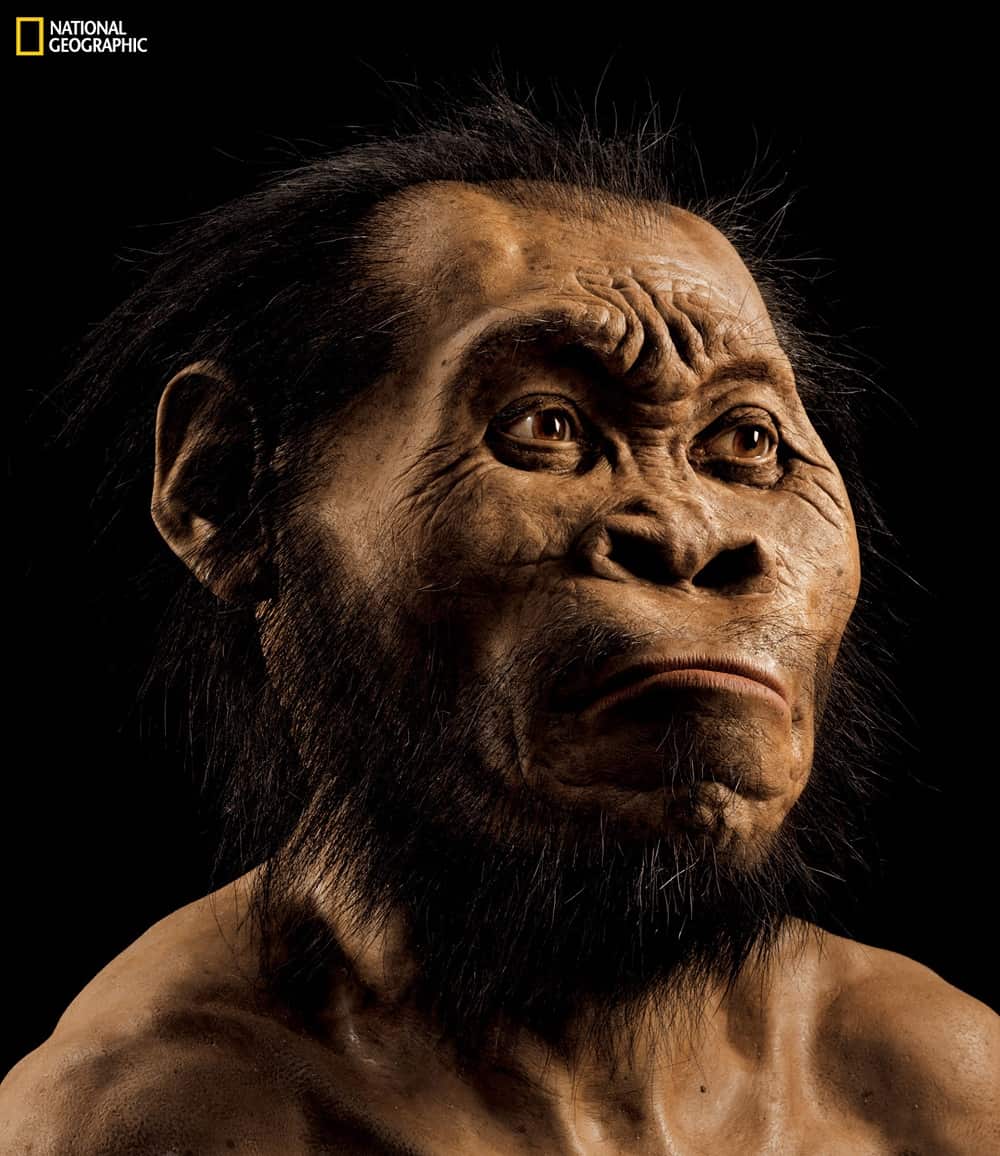
This March 2015 photo provided by National Geographic from their October 2015 issue shows a reconstruction of Homo naledi's face by paleoartist John Gurche at his studio in Trumansburg, N.Y. (Mark Thiessen/National Geographic via AP) Source: National Geographic
The University of Witwatersrand is in charge of the site, where studies are expected to continue for decades.
Share


