Australia is once again in the ninth spot, but neighbouring countries Papua New Guinea and Cambodia have ranked 157th and 132nd respectively. A total of 179 countries were surveyed as part of Save The Children's annual State of the World's Mothers report.
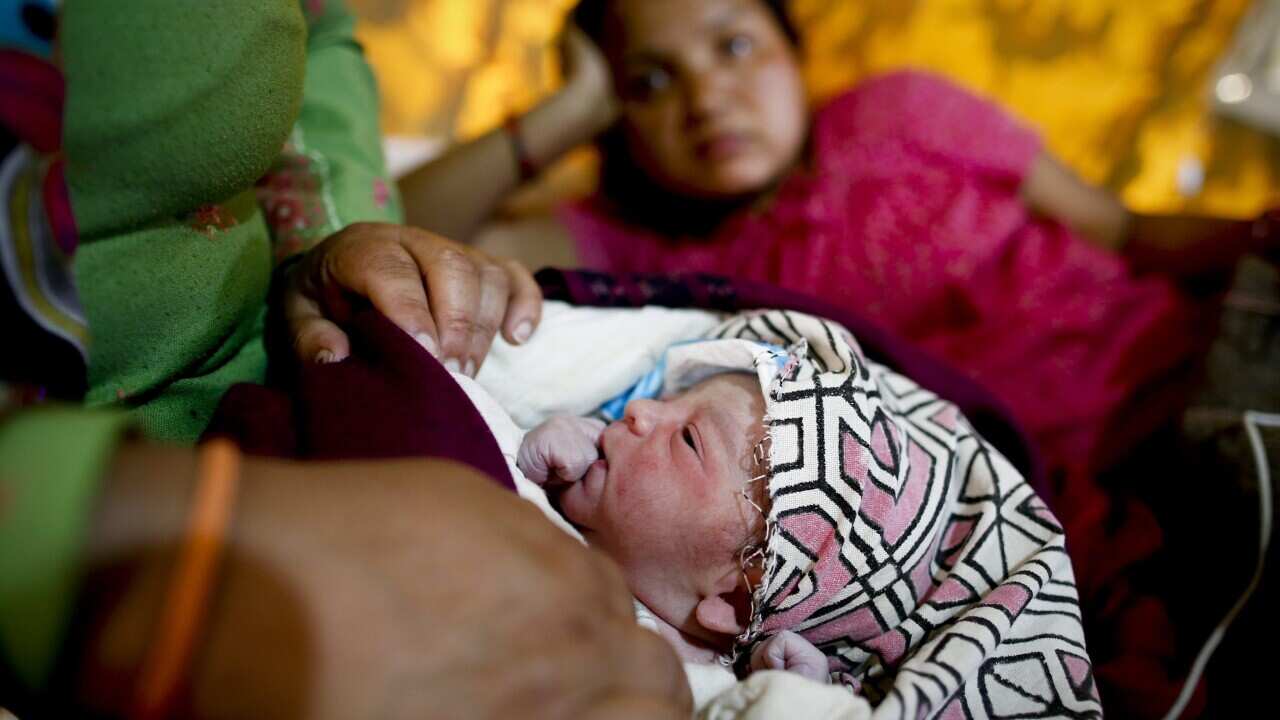
Nepal was ranked 114th, jumping seven spots in the past two years. The country has reduced the under-five mortality rate by more than 20 per cent since 2008. But since the devastating earthquake hit, some fear their significant progress could be undone.
“Australia can celebrate being an amazing place for mothers to raise their children, however there is still a lot of work to do," Nichola Krey, Save the Children’s Head of Humanitarian Affairs said.
Ms Krey said she's concerned progress in global development could be reversed ahead of next week's budget.
“As Joe Hockey prepares to cut a billion dollars from international aid next week, our report reveals it is still a life and death situation for mums and babies in countries like PNG, Cambodia and Nepal where investments in health, nutrition and education will save lives,” said Ms Krey.
“In much of the world the odds of a child surviving to celebrate their fifth birthday have improved recently, however the inequality gap between rich and poor remains too big, including in parts of Australia.”
Top 20 countries in the world to be a mother
Image
Norway came first, from second place in 2014, scoring highly on all five indicators: maternal and child health, children's access to education and women's political and economic status.
Finland came second, followed by Iceland, Denmark and Sweden. The worst country to be a mother was Somalia, for the second year running. Almost 15 per cent of Somali children do not live to see their fifth birthday, the charity said.
The United States had the highest maternal death rates in the developed world. American women face a 1 in 1,800 risk of maternal death compared to less than 1 in 19,000 in Poland. The nation slipped two places to number 33.
Uganda's capital blazes a trail in cutting child deaths
On a continent known for poor healthcare and high infant mortality rates, the Ugandan capital is an exception.
Child deaths in Kampala fell faster than in any other African city between 2006 and 2011 - despite a large influx of refugees from war-torn neighbouring states, Save the Children said in the report.
In the five years to 2011, child mortality in the East African country fell to 65 deaths per 1,000 live births from 94 deaths per 1,000 live births.
Uganda has cut child mortality by 4.3 per cent a year between 1990 and 2013, just below the 4.4 per cent annual reduction needed to achieve a Millennium Development Goal on lowering the number of deaths of under-fives.
Its neighbours Rwanda and Tanzania are among 12 African nations on track to meet the goal, according to the UN children's agency UNICEF.
"Kampala is actually a success story," said Carolyn Miles, chief executive of Save the Children USA, which focuses on urban health in its 2015 report.
Worst countries in the world to be a mother
Image
Urban poor
Save the Children said under-five mortality among Uganda's urban poor fell by 29 per cent between 1995 and 2006, compared to a two per cent drop among rich urban children.
As a result, Uganda's poorest urban children are now only twice as likely to die as the richest ones, compared to three times as likely in 1995.
But elsewhere the gap between the urban rich and poor is a cause for concern. Today, 54 per cent of the world lives in urban areas, and this is predicted to reach 66 per cent by 2050.
While statistics generally show that people living in cities are healthier than those in rural areas, the data masks huge gaps between rich and poor.
"In 60 per cent of the developing countries that we surveyed, city children living in poverty are actually more likely to die than those in rural areas," said Ms Miles. The poorest under-fives living in urban areas are twice as likely to die as the richest, Save the Children's research in 50 cities found. In Cambodia and Rwanda, this gap is almost fivefold.
1 in 3 city residents in developing countries live in slums. (Save The Children)
Malnourished young children living in dirty, overcrowded slums often fall prey to diarrhoea, pneumonia and malaria, which can be fatal without the right treatment.
While under-five mortality has almost halved globally since 1990, from 90 deaths per 1,000 live births to 46 deaths per 1,000 live births, the focus must now shift explicitly to the urban poor, Ms Miles said.
"If we are going to end child preventable deaths, we have to look for the most deprived," she said.
Share


