In brief
- Australia has embassies in Tel Aviv and Beirut, which the government said would remain open.
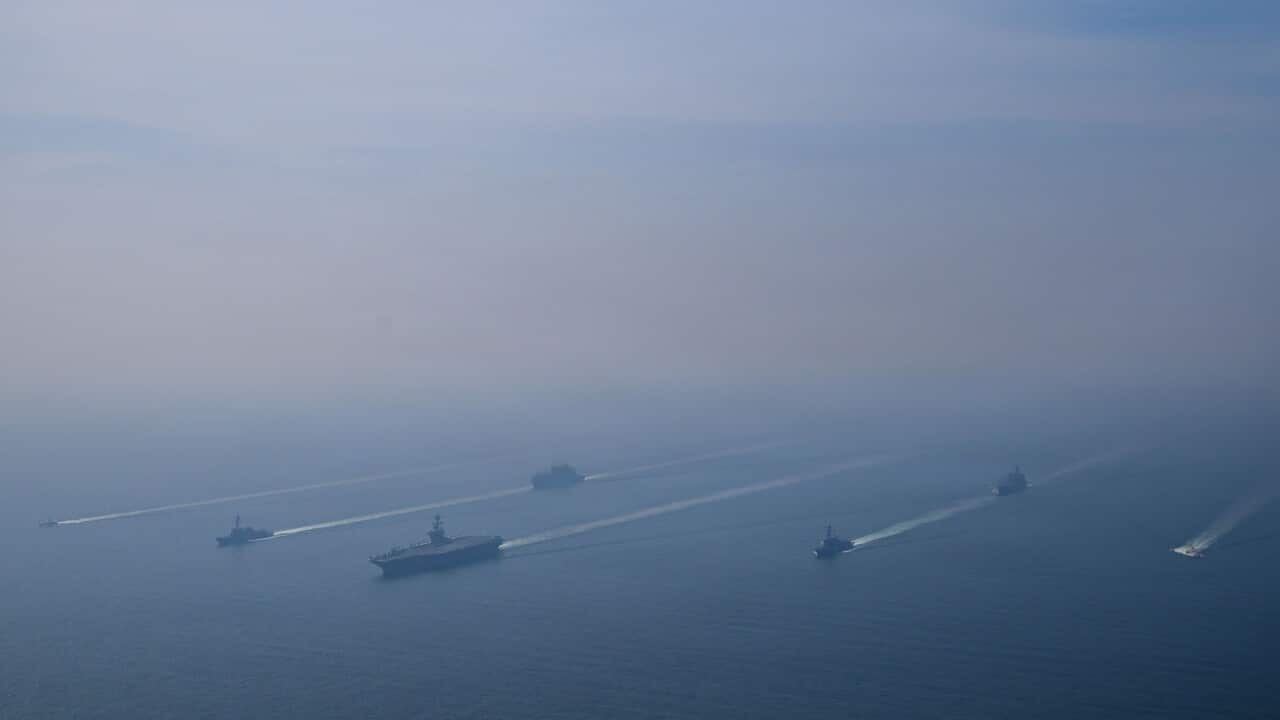
- It comes amid a massive United States military build-up in the Middle East.
The federal government has directed the families of Australian embassy staff and officials posted in Israel and Lebanon to leave as tensions in the region escalate.
On Wednesday evening, the Department of Foreign Affairs and Trade's (DFAT) Smartraveller service said it had updated its travel advice as a precautionary measure in response to the "deteriorating security situation in the Middle East".
Australia has embassies in Tel Aviv and Beirut, which the government said would remain open.
Voluntary departures have also been offered to the dependants of Australian officials in Jordan, Qatar and the United Arab Emirates. Australia's embassies in Amman, Doha and Abu Dhabi, as well as its consulate in Dubai, will remain open.
Opposition leader Angus Taylor said families "absolutely should be heeding that advice".
News that makes sense
Your trusted source for staying up-to-date with the world around you. Get free daily news updates and analysis, straight to your inbox.
"It's the best advice we have, and there's no question that the situation there appears to be hotting up," he told Sky News.
Rising tensions in the Middle East
The developments come amid a massive US military build-up in the Middle East and a third round of talks this week between the US and Iran in Geneva, Switzerland over the latter's nuclear program.
If the negotiations fail, US President Donald Trump has threatened to attack Iran, which other Middle East nations fear could spiral into more conflict in the region. Iran has vowed to retaliate "ferociously" against any attack by the US.
Trump has accused Iran, whose negotiators will meet US officials in Geneva on Thursday, of having "sinister nuclear ambitions" and working to rebuild a nuclear program that was targeted by US strikes last year.
US vice president JD Vance on Wednesday said Iran should take the US's threat of military action "seriously".
Vance told Fox News that while Trump was going to try to "accomplish it diplomatically," the US president also had the "right" to use military action.
"You can't let the craziest and worst regime in the world have nuclear weapons," Vance said.
"The president has a number of other tools at his disposal to ensure this doesn't happen. He's shown a willingness to use them and I hope the Iranians take it seriously in the negotiations tomorrow because that's certainly what the president prefers."
Iran has repeatedly denied that it is seeking to acquire nuclear weapons, and has rejected Trump's claims about its missile program as "big lies".
This week, the US ordered non-emergency personnel to leave its embassy in Beirut, as Trump threatened strikes on Iran, which has close relations with the Lebanese group Hezbollah.
On Tuesday, Lebanon's foreign minister said his country fears its infrastructure could be hit by Israeli strikes if the situation with Iran escalates.
Israel has kept up regular strikes on Lebanon despite a November 2024 ceasefire that sought to halt more than a year of hostilities with Iran-backed Hezbollah, usually saying it was targeting the group.
Last Friday, Israel carried out deadly strikes on what it called Hezbollah positions in eastern Lebanon and targets linked to the Palestinian group Hamas in the south.
Hezbollah said on Saturday that eight of its fighters had been killed, and vowed "resistance".
Its leader, Naim Qassem, said last month that any attack on Iran would also be an attack on Hezbollah.
— With additional reporting by Agence France-Presse.
For the latest from SBS News, download our app and subscribe to our newsletter.







