In brief
- The federal government has announced a suite of changes to Australia's immigration policy settings.
- Working holidaymakers, visa overstayers and students are among those most affected.
The federal government has announced a shake-up of Australia's migration system, with visa-hoppers, overstayers, students, and backpackers targeted in the crackdown.
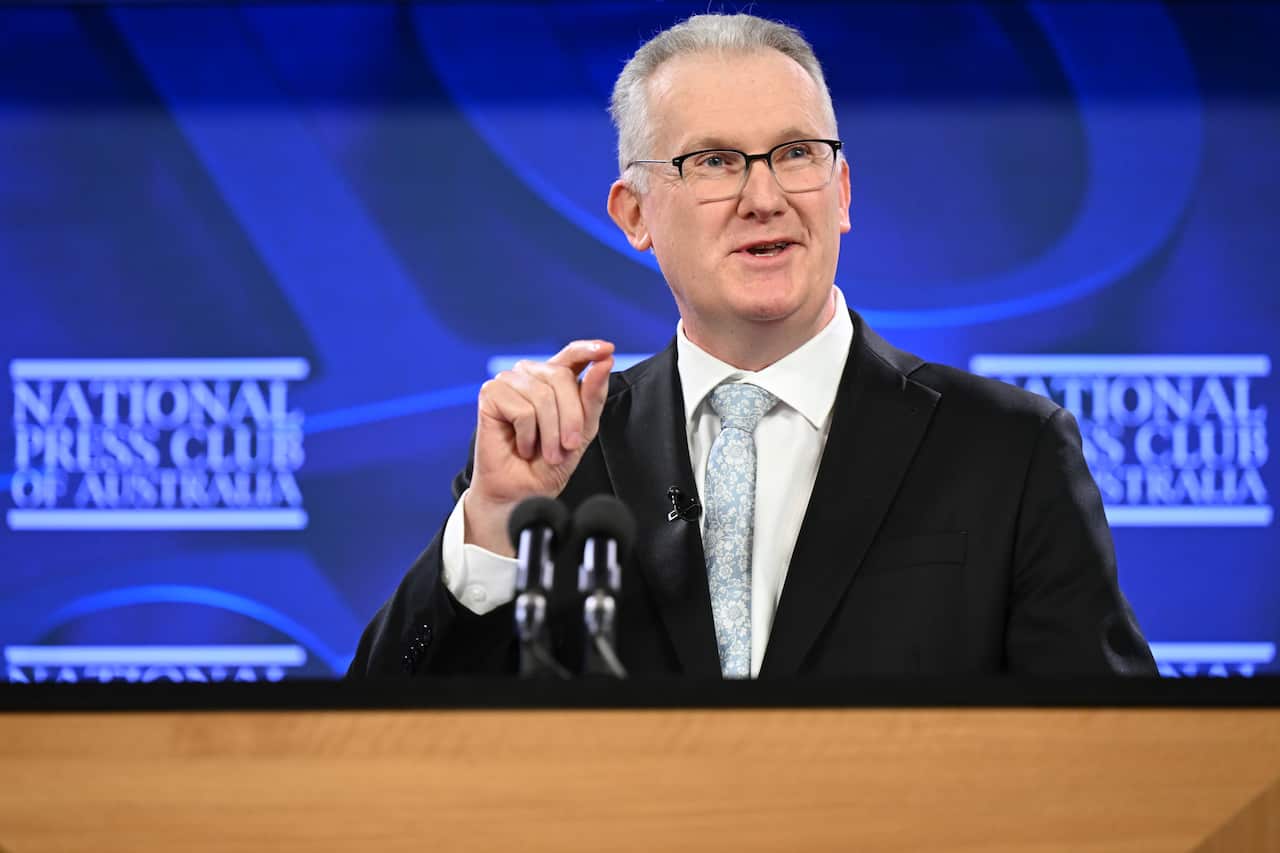
Home Affairs Minister Tony Burke unveiled the changes during a National Press Club address on Thursday, following weeks of delay, heated debate and speculation.
Burke began his speech by highlighting the contribution of migration to Australia, but acknowledging there were problems with the current policy settings.
Here's what you need to know:
What's changing?
News that makes sense
Your trusted source for staying up-to-date with the world around you. Get free daily news updates and analysis, straight to your inbox.
Burke said the reforms are split into three parts: who arrives, who stays and who leaves.
Among the most consequential changes are those affecting students, backpackers, visa overstayers and visa hoppers.
International students and those on graduate visas will no longer be able to bring family members with them to Australia, with some exceptions for PhD students and some Pacific and ASEAN students.
The changes are not retrospective and apply only to future students.
"We're not going to be breaking up families on shore," he said.
As part of a so-called "visa-hopping" crackdown, Burke said the government will introduce a qualification scale, meaning only foreign students transferring to higher-level courses (bachelor's to master's for example) will be able to extend their visas.
A ballot system and cap will be introduced for backpackers wishing to extend their visit to a second or third year.
Only 45,000 working holiday-makers will be able to stay in Australia for a second year, and only 5,000 for a third year — down from 57,000 and 31,000 respectively. This will not affect United Kingdom citizens under the rules of a free trade agreement.
The government has already slowed down the processing of working holiday visas, with applications now taking months to be approved. Burke said processing of second-and third-year visas will be restored to the previous, faster pace — with the exception of UK citizens, who are exempt from regional work requirements to secure a visa extension.
The number of UK backpackers has risen sharply since the free trade agreement came into effect in 2023, from about 17,000 in 2021 to just under 80,000 now.
People who overstay their visas, of whom there are about 77,000, will face tougher sanctions, including detention. The government is now looking for more facilities, compliance officers and beds.
Burke said this was a return to a pre-2015 model, when visa overstayers would be taken into detention, and within a few weeks, organise their own flight and leave.
"That didn't just affect them. It had a behavioural impact," he said.
However, he said it would not involve "the sort of operation that some people have seen on TV happening in other countries", an apparent reference to the US Immigration and Customs Enforcement operations, which have involved mass deportation operations, arrests, and third-country removals.
Powers to punish dodgy migration agents who help with applications they know have no merit will be expanded, including deregistration.
The points test, which determines which skilled migrants are admitted to Australia, will be revamped to treat construction-related qualifications as equivalent to university degrees.
Tweaks to ministerial directions will also prioritise visa applicants with in-demand skills, including in healthcare, construction, education and law enforcement.
Why the changes?
The government is trying to bring Australia's Net Overseas Migration, which represents population growth due to migration, down from 292,100 to 245,000 in the year to July 2027 and 225,000 each year thereafter, and to curb visa-hopping, "rorting" and "gaming" the system.
That figure has stubbornly exceeded Labor's forecasts since the party came to power in 2022, but Burke said migration was now tracking in line with its targets.
The Coalition wants the target to be about 170,000, in line with housing construction, and One Nation wants a 130,000-person-a-year cap.
Burke said immigrants were not to blame for Australia's housing crisis, but said immigration needed to slow down so that housing had a chance to catch up.
How are the changes being implemented?
Some of the changes will come under improved ministerial powers, but others may not become law because negotiations between Prime Minister Anthony Albanese and Opposition leader Angus Taylor broke down in the week before Burke's address, dooming hope of getting reforms through the Senate.
Without parliament's approval, the government cannot proceed with restrictions on phoney asylum-seekers' claims.
But Burke insisted negotiations with the Coalition were ongoing and productive, and said: "We have put nothing forward that is a wedge to them."
What has the reaction been?
Kon Karapanagiotidis, CEO and founder of the Asylum Seeker Resource Centre, said the announced changes marked "a dark day for multicultural Australia".
"Today our government chose to turn on migrants, international students and people seeking asylum who have built lives here, contributed to this country and asked for nothing more than the chance to belong," he said in a statement.
The National Farmers' Federation (NFF) said changes to backpacker visas risked Australia's food security, farm safety and regional economies which rely heavily on working holidaymakers.
"This is not how serious policy is made. You do not switch off, slow down or redesign an important workforce pathway on the eve of harvest and expect farmers, contractors, processors and regional communities to absorb the damage," NFF president Hamish McIntyre said.
His comments were echoed by the NFF Horticulture Council executive officer Richard Shannon, who warned of a spike in food prices if the agricultural sector faced a worker shortfall.
"Backpackers doing harvest work in regional Australia are not the cause of housing shortages in our capital cities. They are the reason fruit gets picked, packed and onto supermarket shelves," he said.
Earlier this week, Universities Australia chief Luke Sheehy said political parties competing to cut international student numbers needed to be honest about what Australia would lose.
"A vote for dramatically fewer international students is a vote for a poorer, less skilled Australia," he said.
"You can't take skills, jobs and billions of dollars of economic activity out of the country and pretend there will be no consequences."
— With additional reporting by the Australian Associated Press
For the latest from SBS News, download our app and subscribe to our newsletter.







