Key Points
- Net overseas migration fell to 301,000 in 2025, according to new ABS data.
- One expert says voters real problem isn't immigration and that it's being used as a "scapegoat".
Net migration has fallen to its lowest level since the post-pandemic border reopening — meanwhile the subject is one of the defining political fights of 2026.
New Australian Bureau of Statistics (ABS) data, released on Thursday, show net overseas migration fell to 301,000 in 2025, down slightly from 306,000 the year before.
Even so, the figure remains above Labor's own targets — with the Coalition and One Nation arguing current levels are still "unsustainable".
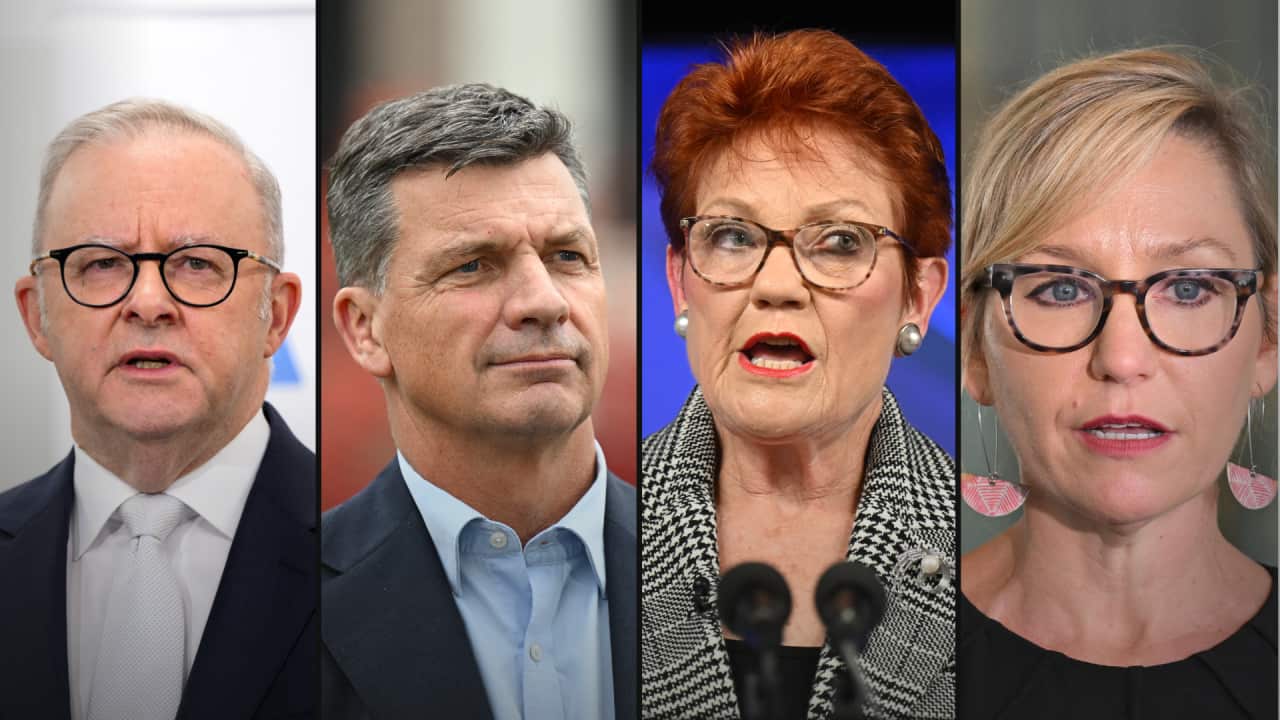
The figures were published just a day after One Nation leader Pauline Hanson used her first address to the National Press Club to blame housing pressure on immigration.
News that makes sense
Your trusted source for staying up-to-date with the world around you. Get free daily news updates and analysis, straight to your inbox.
While many experts agree that the level of migration has some effect on housing, they are divided on how significant that effect is.
Matt Grudnoff, senior economist at the progressive political think-tank the Australia Institute, recently told SBS that "data shows that migrants are not having an impact on the housing affordability issues" and in general they have "a positive impact" on the economy.
So how do the major parties actually compare on migration — and is migration really the problem voters are concerned about?
Labor
Labor wants to reduce its net overseas migration figure.
Labor's permanent migration program is capped at 185,000 places for 2026-27, with 132,240 places — 71 per cent — targeted at skills shortages.
Longer term, the government is aiming for net overseas migration of 225,000 people a year over the next three years.
Treasurer Jim Chalmers has pointed to the latest ABS figures as proof the trend is also lowering, saying migration was "already down 45 per cent since its peak."
On students, Labor's national planning level has a cap of 295,000 international student places for 2026, which it describes as "managed" and "sustainable" growth that supports the international education sector while also maintaining the "integrity of the migration system".
On housing, Immigration Minister Tony Burke has connected migration with the housing crisis, telling Sky News on Monday, "if you go at migration the wrong way, then you can actually make the housing situation worse".
He says numbers need to be "tailored" to housing supply.
But Labor's primary housing fix is still on the supply side — investing in construction workers, state incentives, and social housing investment — rather than treating migration cuts as the solution.
Coalition
The Coalition's migration policy centres on what it calls the "Australian values migration plan".
It hasn't committed to a fixed cap, but has hinted at a target "well under 200,000".
It has linked caps to housing, saying that it would cap net overseas migration each year at the number of new homes completed in the previous year.
Opposition leader Angus Taylor has said the plan is designed to curb "mass migration", though without specifying numbers.
"Australia should only bring in as many people as it can house," Taylor has said.
Taylor has said there would be a focus on an Australian values statement — covering things like freedom of religion, English as the national language, and a "fair go for all" — which the Coalition would make a legally binding visa condition.
"If a visa holder undermines our democratic values, doesn't respect the law, or demonstrates they don't respect our core values, they will be booted out of Australia," Taylor has said.
On students, Nationals leader Matt Canavan has said Australia's international student visa system is a "total scam" that needs to be "scaled back", though a concrete figure has not been confirmed.
The party has also vowed to crack down on "overstayers", "unfounded asylum claims" and greater security screenings to prevent "high-risk individuals" from entering the country.
One Nation
One Nation's policy is what it calls "Australian first".
It wants a hard cap of 130,000 visas a year to "ease pressure on housing, wages and infrastructure".
It also wants to deport 75,000 people it says are illegal migrants, and impose an eight-year wait before new arrivals can access citizenship or welfare.
On students, the party has vowed to stop what it calls a "visa loophole' that turns study into a "backdoor to permanent residency or low-wage labour".
The party wants to refuse entry to migrants from nations it says foster "extremist ideologies" incompatible with Australian values. It also wants to withdraw from the UN Refugee Convention, arguing that Australia should not be "dictated to by foreign organisations" on who it accepts on humanitarian grounds.
The party directly links migration to the housing crisis, saying it will reduce demand for housing and rentals by "substantially" lowering immigration to a sustainable level.
Greens
The Greens are the only party not proposing a cut to overall migration numbers.
Their policy instead prioritises refugees and family reunion and state Australia "benefits from immigration".
International students haven't been a major focus of their platform, though they've rejected the idea that they're driving the housing crisis, calling the framing "an attempt to scapegoat migrants and international students for a housing crisis they didn't cause".
On refugees and asylum seekers, they want to expand the humanitarian intake from its current level to 50,000 places a year, end offshore detention, and ensure no families are separated by Australian immigration assessment processes, amongst plenty of other policies.
On housing, the Greens reject the migration link altogether, pointing instead to renter protections, public and affordable housing supply, and taxing wealthy property investors.
How are voters feeling about migration — and why?
A recent poll by the Australian Bureau of Statistics (ABS) suggests that in 2025, a vast majority of Australians, 75 per cent, accepted that multiculturalism was good for society. Residents aged 15 and over, across 13,302 households, were involved in the survey.
There are signs this confidence in multiculturalism is under pressure, with support for multiculturalism dropping 10 per cent since 2020, according to the ABS.
Simultaneously, polling has shown a majority of Australians think migration has been too high for decades, regardless of who's in power, says Kos Samaras, director at consulting and polling firm RedBridge Group.
"Whenever you ask any time in this country's history if migration is too high — the answer is always yes," the pollster told SBS News.
But that sentiment doesn't translate to political salience, with only 30 per cent of One Nation voters rating immigration as a priority issue, he says.
"It does attract a lot of media attention. It is something that... a certain section of the Australian community would raise as a contributing factor to our infrastructure challenges and our housing challenges," he said.
"But it kind of sits in the background. It isn't the top issue that is animating, I would say, politics in this country right now."
Instead, he says the real issue is something else: "Cost of living — number one, number two, number three, number four and number five."
Closely tied to that, he says, is housing and health — particularly in regional Australia, where the cost of travelling for specialist medical care compounds the financial squeeze.
Samaras says the link between migration and housing doesn't stack up. Rental shortages don't line up where international students live, while refugees and asylum seekers aren't buying or renting inner-city houses.
"It's an easy scapegoat, particularly when the economy's not travelling well."
For the latest from SBS News, download our app and subscribe to our newsletter.







