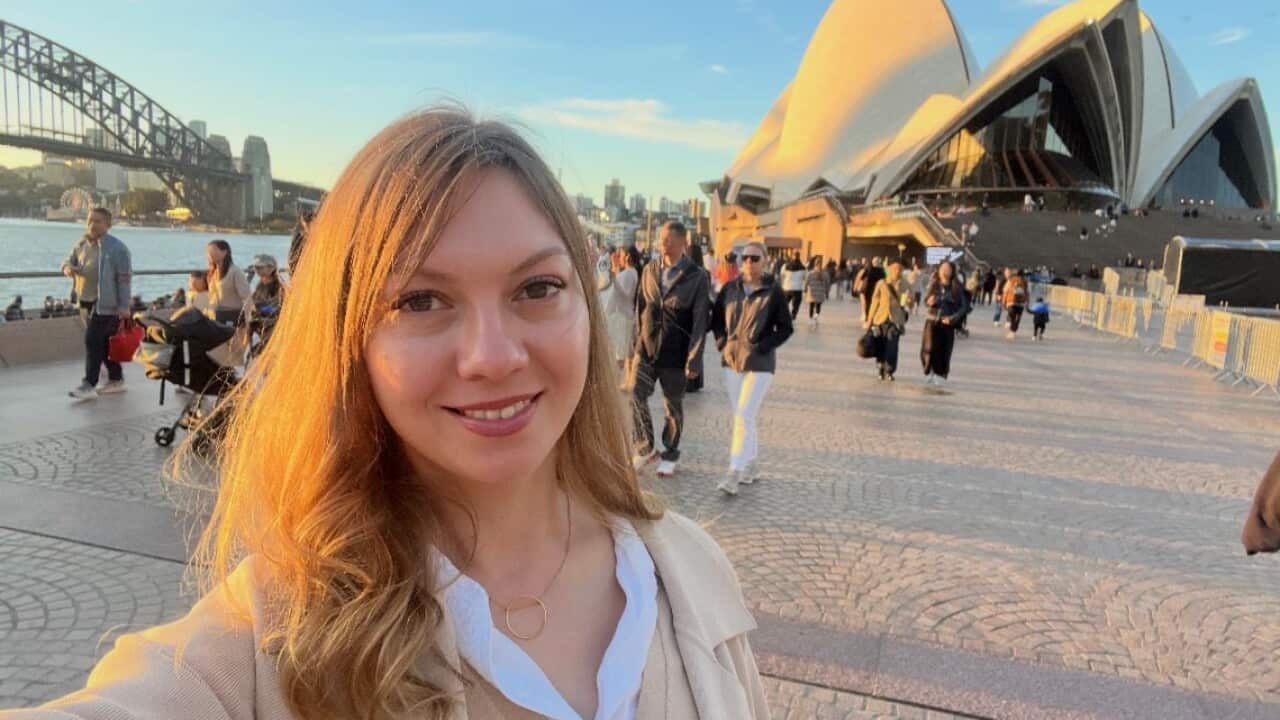
When Natalia Akulova arrived in Australia as a refugee in 2022, she brought university degrees, years of professional experience, and hopes of rebuilding her career.
What she didn't expect was how difficult it would be to re-enter the workforce.
Days after arriving, the 36-year-old mother of two visited the Sydney Opera House, fulfilling a dream she had held while living in Ukraine.
This month, Akulova graduated from a pilot employment project run by the opera house, designed to help skilled refugees enter the workforce.
"The eight-week cadetship helped me build confidence in job interview skills and communicate with people," she tells SBS News.
News that makes sense
Your trusted source for staying up-to-date with the world around you. Get free daily news updates and analysis, straight to your inbox.
This week, Australia celebrates the one million refugees who have settled here since the end of World War Two.
The federal government's Humanitarian Program is set to remain at 20,000 places in 2026-27.
However, migration has become an increasingly contested political issue, with debates over housing affordability, infrastructure and population growth dominating public discourse.
The Opposition, led by Angus Taylor, has proposed capping net overseas migration at the number of new homes completed each year, arguing migration levels should be aligned with housing supply.
The issue is also reshaping the political landscape.
A recent opinion poll showed Pauline Hanson's One Nation party drawing ahead of the ruling Labor Party for the first time, with multiple surveys placing the populist party in the lead.
Professor Betina Szkudlarek and her research team at the University of Sydney Business School investigate the systemic challenges that skilled refugees face when seeking employment.
She says the shift in political sentiment could negatively affect those on humanitarian visas.
"I am concerned that, unfortunately, the current increasing anti-migration rhetoric will have a negative impact on refugees and refugee employment more broadly," Szkudlarek tells SBS News.
Szkudlarek says the debate's impact is also being felt in the labour market, where misconceptions about refugee workers persist among some employers.
"This might be around visa status or skills and education."
She also points to growing challenges as some diversity and inclusion initiatives are being scaled back in parts of the corporate sector.
Skills, recognition and labour market barriers
For many refugees, arriving in Australia marks not only a geographical shift but also a professional one.
Despite holding degrees and years of experience, many struggle to have their qualifications recognised, and often find themselves in jobs below their skill level and out of work altogether.
Akulova says she had strong professional experience in information technology before arriving, but entering the Australian job market was far from straightforward.
"Even if you have a big CV with solid experience, it is still challenging to prove that your experience matters and get your skills recognised," she says.
She is not alone.
Research from the Australian Institute of Family Studies found that many refugees who arrive with managerial or professional backgrounds experience what researchers describe as occupational downgrading, with outcomes that can persist long after settlement.
The 2025 report shows that, before arriving in Australia, 30 per cent of employed women and 19 per cent of employed men had been working in managerial or professional roles — dropping to 17 per cent and 10 per cent, respectively, after 10 years of residency.
Lead author John van Kooy said it is important for employers to develop their capacity to support people from diverse cultural and migration backgrounds.
"Many refugees have their careers interrupted by forced migration and while waiting for their visas to be granted. Language can also be a barrier to finding suitable employment initially."
Employers testing new approaches
In response to persistent gaps in employment outcomes, some employers are experimenting with targeted recruitment and training programs to help refugees overcome employment barriers.
Prinisha Naidoo, senior manager, equity and inclusion at the Sydney Opera House, says the organisation hopes its refugee cadetship program will continue.
"We really want to provide an opportunity for refugees to engage with us, work through our recruitment process, and then hopefully have an opportunity to stay on here," Naidoo tells SBS News.
"We are assessing how we embed programs like this into our ongoing HR and employment offerings."
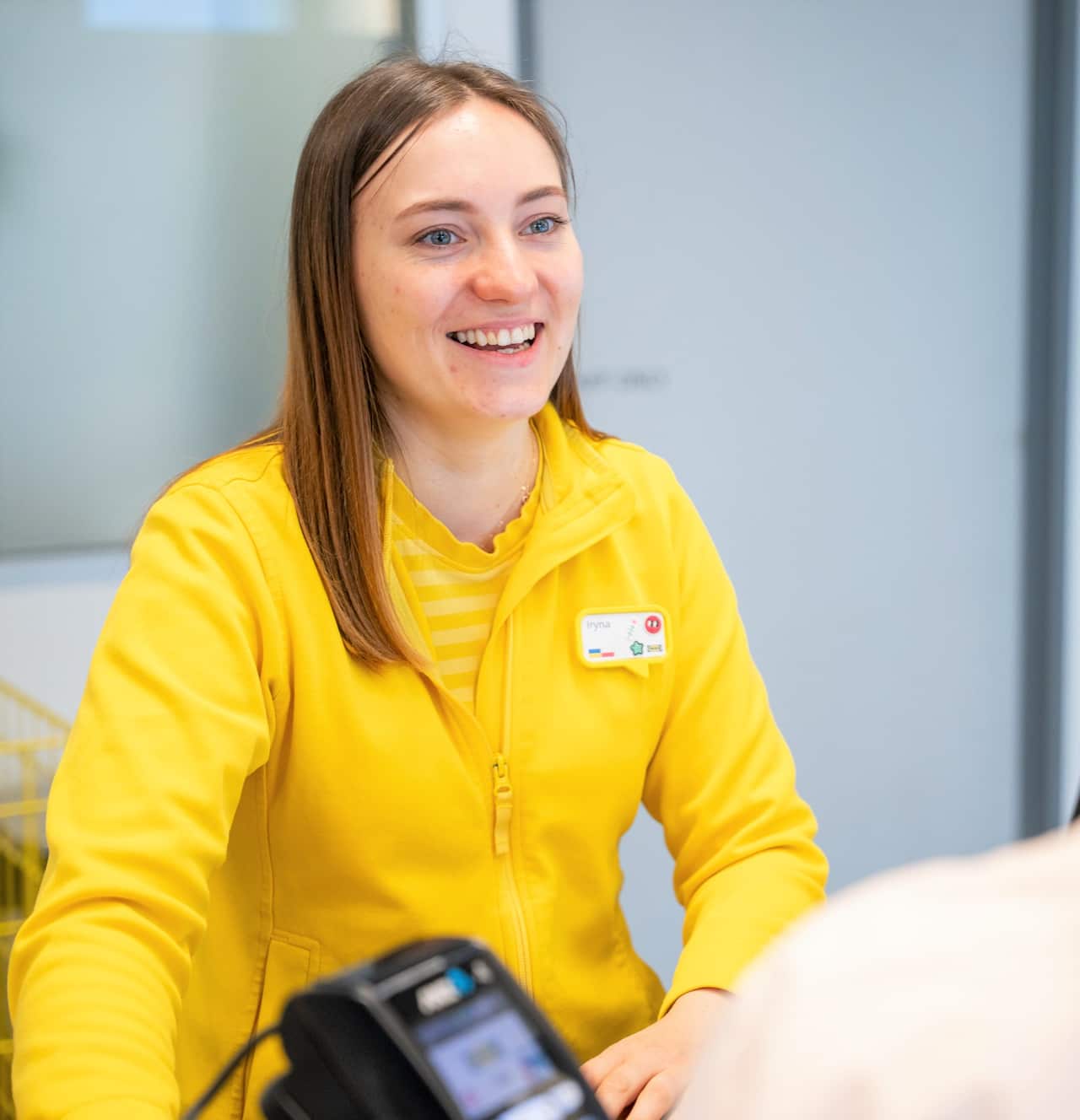
Ukrainian refugee Iryna Yarmoliuk joined IKEA Australia through the company's Refugee Workforce Inclusion program three years ago and was recently promoted to a customer experience coordinator role.
"When this opportunity came up, I was not sure initially, but I gave it a try. Calming angry customers can be quite hard," the 25-year-old tells SBS News.
"But I wanted the experience and I wanted to challenge myself."
The program began as a pilot in 2020 and has since become a permanent intake scheme.
Harriet Pope, who oversees IKEA's program, says creating opportunities for participants' progression has been central to its success.
"Over the past six years, it's led to higher retention rates and improved staff loyalty," she tells SBS News.
She says a diverse workforce speaking languages other than English has helped to improve the overall customer experience.
Uneven pathways into work
Many other organisations also run similar recruitment initiatives for refugees as part of their corporate social responsibility, often working with specialist organisations like Community Corporate that help them match candidates with roles and support both employers and job seekers through the hiring process.
Founder and CEO Carmen Garcia says some employers fear hiring refugees because they are uncertain about "navigating complex policy and visa environments, whether it's about work rights or cultural considerations".
"But hiring refugee workers is a strategic business decision that can help a business thrive," she tells SBS News.
For Akulova, who has now moved on to a full-time role as a senior project coordinator, the cadetship was a vital step.
But she says the broader challenge remains significant for many others still trying to find work.
"Unfortunately, the past four years were very unstable. It is really tough to come to a new country and start life from scratch."
I want to say to employers — Please, give us a chance.
"It is not charity because so many refugees are smart, skilled, and willing to contribute."
For the latest from SBS News, download our app and subscribe to our newsletter.







