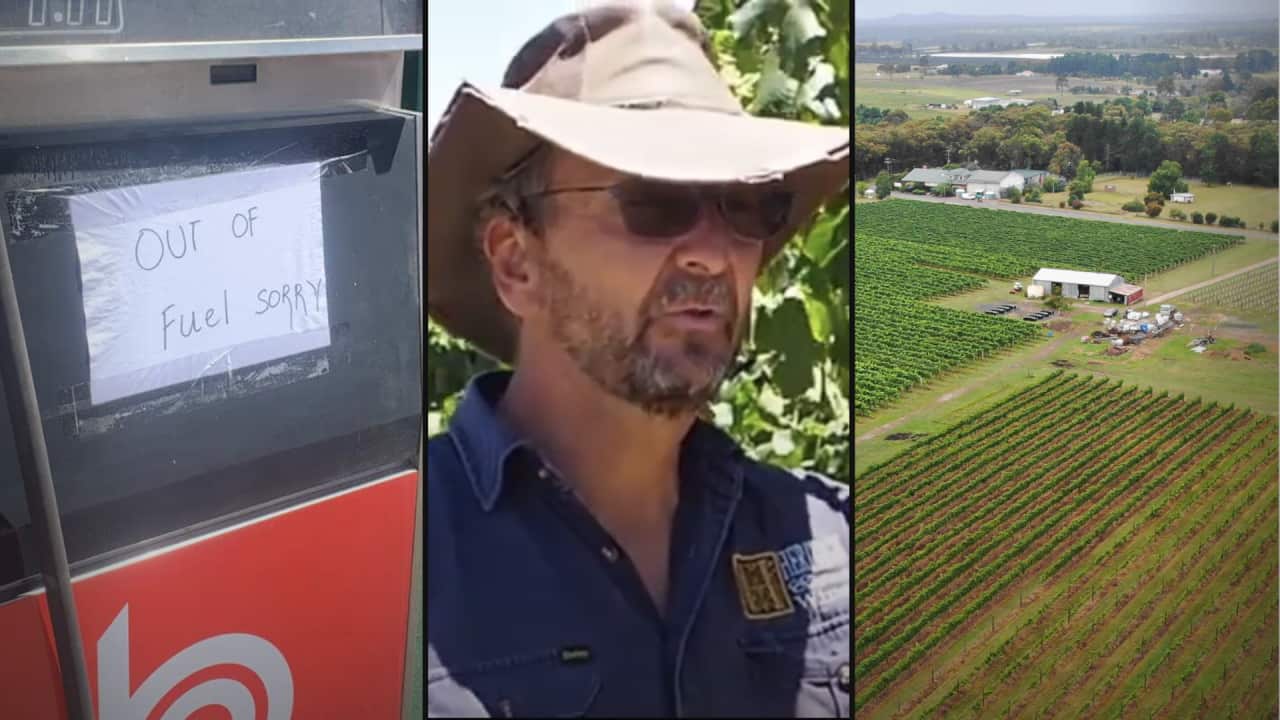
Robert Fenwick is keeping his diesel supply under lock and key.
The farmer and owner of Heritage Estate Wines in Queensland's Granite Belt has spent the last few days driving around the countryside trying to find diesel — after his regular commercial fuel supplier said they had nothing to deliver.
"I rang our fuel supplier and they're unable to deliver any. We're way down a long list of people they might potentially sell some fuel to," Fenwick told SBS News.
"Our local petrol station has run out of unleaded. I fortunately have a little pod that I could put on the ute, so I've driven around the countryside and picked up 600 litres of fuel at enormous expense — that's also gone up 30 or 50 cents in the last few days."
At his vineyard, diesel powers tractors and mowers used for disease control, planting and harvesting.
News that makes sense
Your trusted source for staying up-to-date with the world around you. Get free daily news updates and analysis, straight to your inbox.
"Some of the consumer service stations do still have fuel — at least some of them, but I know they're running out. But the people that supply our agricultural sector are unable to deliver," he said.
Government says supply remains secure
The Granite Belt isn't the only regional area experiencing fuel shortages.
Service stations in the regional Western Australian towns of Kulin and Corrigin have placed temporary restrictions on fuel due to uncertain deliveries and panic buying.
Australia had 32 days' worth of diesel as of Tuesday morning, Energy Minister Chris Bowen said.
He acknowledged there had been a "massive spike" in demand, particularly in regional areas, but insisted domestic fuel stocks were as high as when the crisis began.
"We have enough diesel in Australia for our needs for the foreseeable future, and there is absolutely no need for panic," Bowen said.
Refineries were not able to facilitate extra orders because of demand-side pressure, he said.
G7 finance ministers and the International Energy Agency left a meeting on Monday without agreeing to release strategic crude reserves.
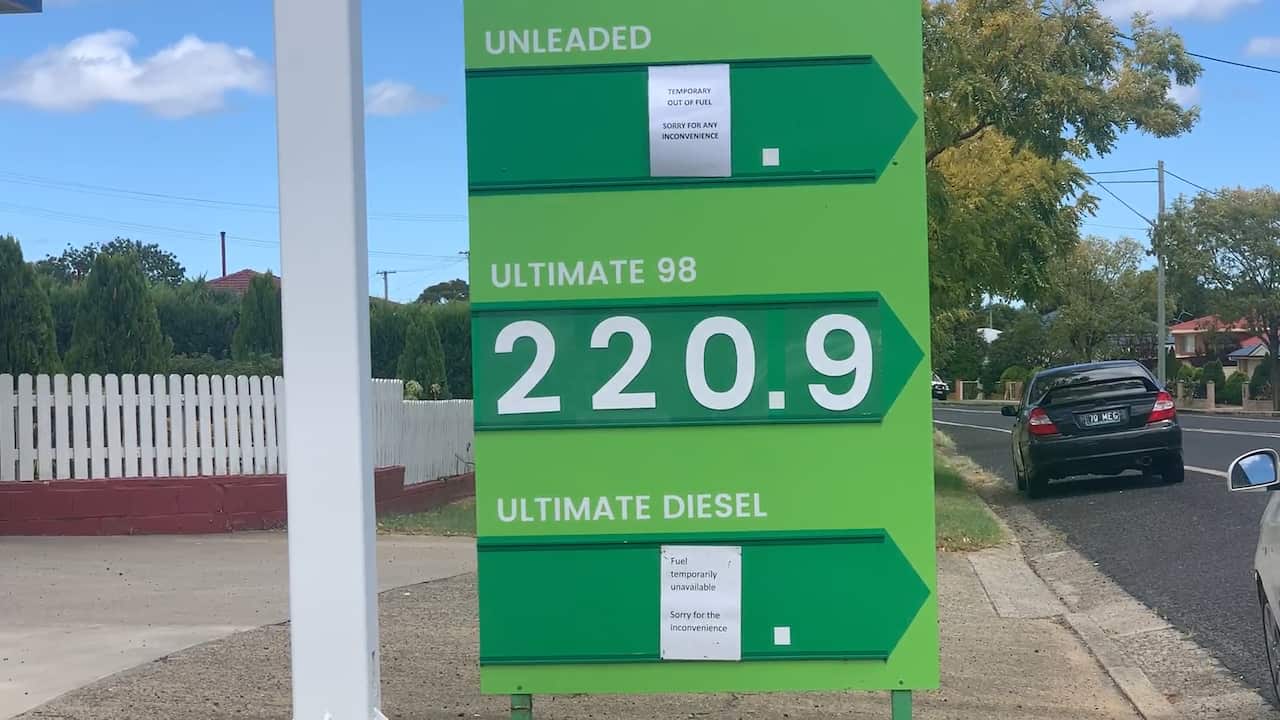
Bowen said the federal government wouldn't hesitate to use the minimum stock obligation — which requires fuel importers and refiners to maintain minimum reserves of key transport fuels — if the Middle East conflict threatened domestic fuel security.
Farmers fear losing their livelihoods
But Fenwick said those assurances are difficult to reconcile with what he's seeing on the ground.
"I've never seen this before. If we've got plenty of fuel, why is this happening? Equally, why has the price gone up crazily?" he said.
Like the federal government, the National Roads and Motorists' Association (NRMA) has said some service stations are running low on fuel because Australians are buying it at a greater rate than normal.
The group has also urged oil companies not to take advantage of the war in the Middle East as an excuse to increase prices further than what they already have. Meanwhile, Treasurer Jim Chalmers has asked Australia's consumer watchdog to monitor for price gouging.
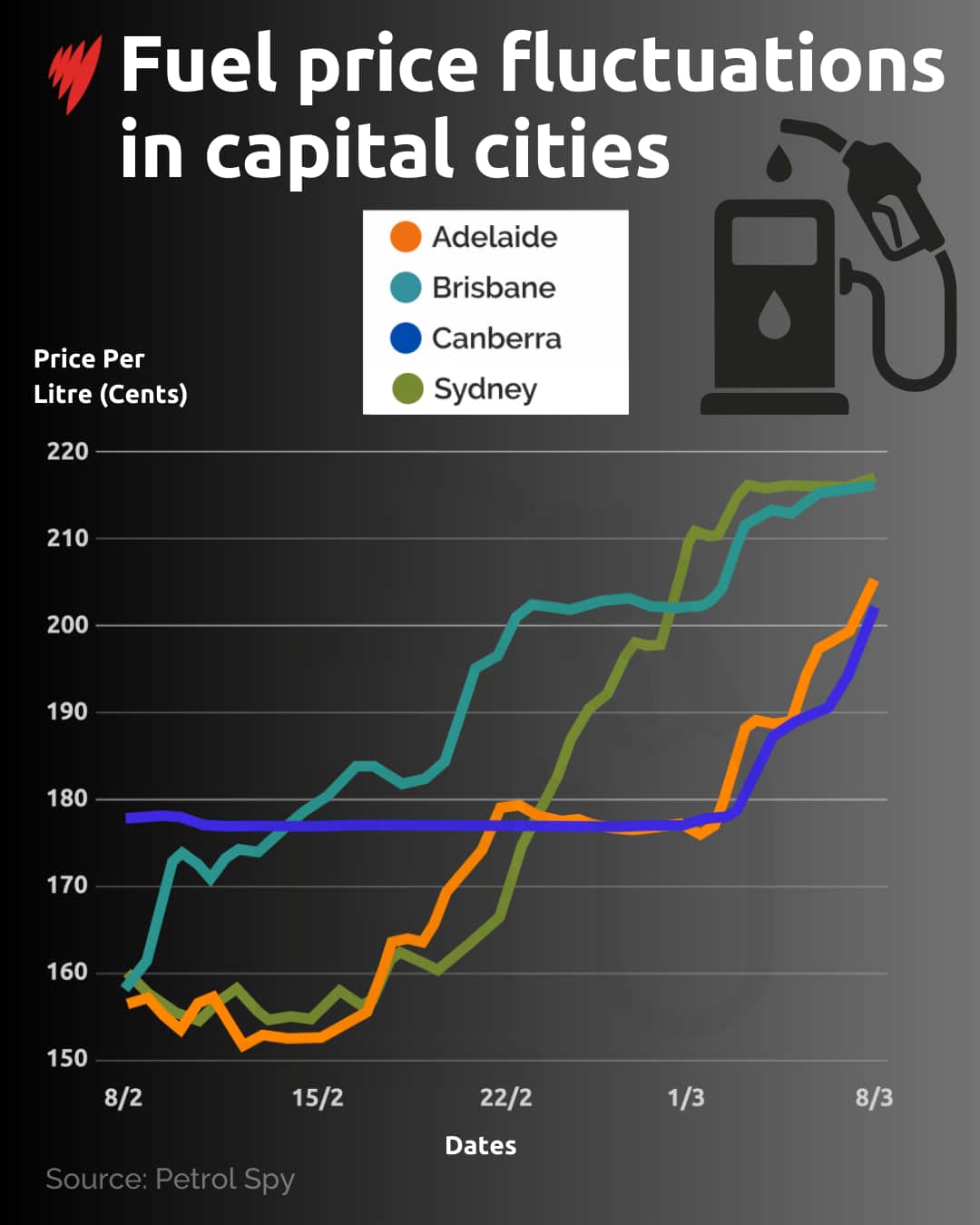
Fenwick said the rising cost of diesel could quickly wipe out any profits if prices continue climbing.
He likened the situation to the toilet paper shortages seen during the early days of the COVID-19 pandemic.
"It's more of a toilet paper crisis rather than a real fuel crisis," he said.
Still, the supply issues are already affecting farmers.
"There's a good chance that we will struggle to get what we need to run a business," he said.

While Fenwick said his vineyard uses relatively small amounts of diesel during winter, other farmers in the region are far more exposed.
"They can't get away with just a little tank of fuel like I can — they use thousands of litres," he explained. "There's a bit of hysteria because people are concerned how they will keep their business going," he said.
"The country just can't grow food without fuel … how do we expect to eat?"
'Enormous financial stress'
Rebecca Reardon, a Moree-based farmer and vice president of the NSW Farmers Association, said many producers are already under significant financial pressure.
"There's been a lot of stress for farmers at the moment. We've seen fertiliser and fuel prices shoot up. We've seen a shortage of fuel," Reardon told SBS News.
"There's a lot of uncertainty."
Reardon, who primarily plants wheat and barley, said her planting season is approaching, but farmers are struggling to secure the supplies they need.
"We don't have sufficient fertiliser and fuel to be able to plant the crop, let alone actually get to that planting season," she said. "That's a real concern."
"Because prices have increased so much, it's a situation where it's basically uneconomical to plant the crop."
She said the uncertainty is placing "enormous financial stress" on farmers.
"That's something that is going to ultimately affect food security in this country and our ability to grow food," she said.
"This is the sort of shock we haven't actually seen before."
She also expects fuel thefts to increase as supplies tighten: "We're probably going to have a lot more fuel theft, given it's such a valuable product."
Calls for stronger protections for farmers
Fuel shortages and price hikes are creating headaches for farmers on the cusp of harvesting summer crops and planting for winter, National Farmers' Federation president Hamish McIntyre said.
"Without fuel and fertiliser, farmers simply can’t get food and fibre to consumers. Historically, not enough work has been done to understand and plan for these vulnerabilities," he said.
"We believe the government must explore all options to understand and protect local food and fibre production against vulnerabilities like global conflict. We expect the national food security plan will do exactly that."
But Fenwick believes farmers should be prioritised if shortages worsen.
"It seems strange to me that the consumer service stations have fuel, and yet the delivery of industrial diesel to the farms doesn't," he said.
"I understand we might get to a situation where we do have to ration, then it has to go to the people who actually produce the food and fibre that we all rely on, and not to people driving their four-wheel drives up the beach."
"It needs to move to where it's needed."
— With additional reporting by Australian Associated Press.
For the latest from SBS News, download our app and subscribe to our newsletter.







