
In brief
- The Australian government wants social media platforms to pay for news.
- The tech giants reject it. The media have welcomed it. But what could these changes mean for you?
A new proposal to force social media platforms to pay for their use of news has been criticised by Meta, Google and ByteDance, while Australian media welcomed the changes.
Announcing the draft proposal details on Tuesday, Prime Minister Anthony Albanese said it would prevent tech platforms from avoiding their "obligations" under existing laws introduced by the Scott Morrison government in 2020, when social media platforms were forced to enter into licensing agreements with news media organisations.
In a bid to force tech juggernauts to pay for Australian news, Albanese's plan instead places a 2.25 per cent tax on revenue earned, unless platforms have struck a deal with Australian media companies.
The plan follows the near-collapse of the News Media Bargaining Code (NMBC) introduced by former prime minister Scott Morrison in 2021.
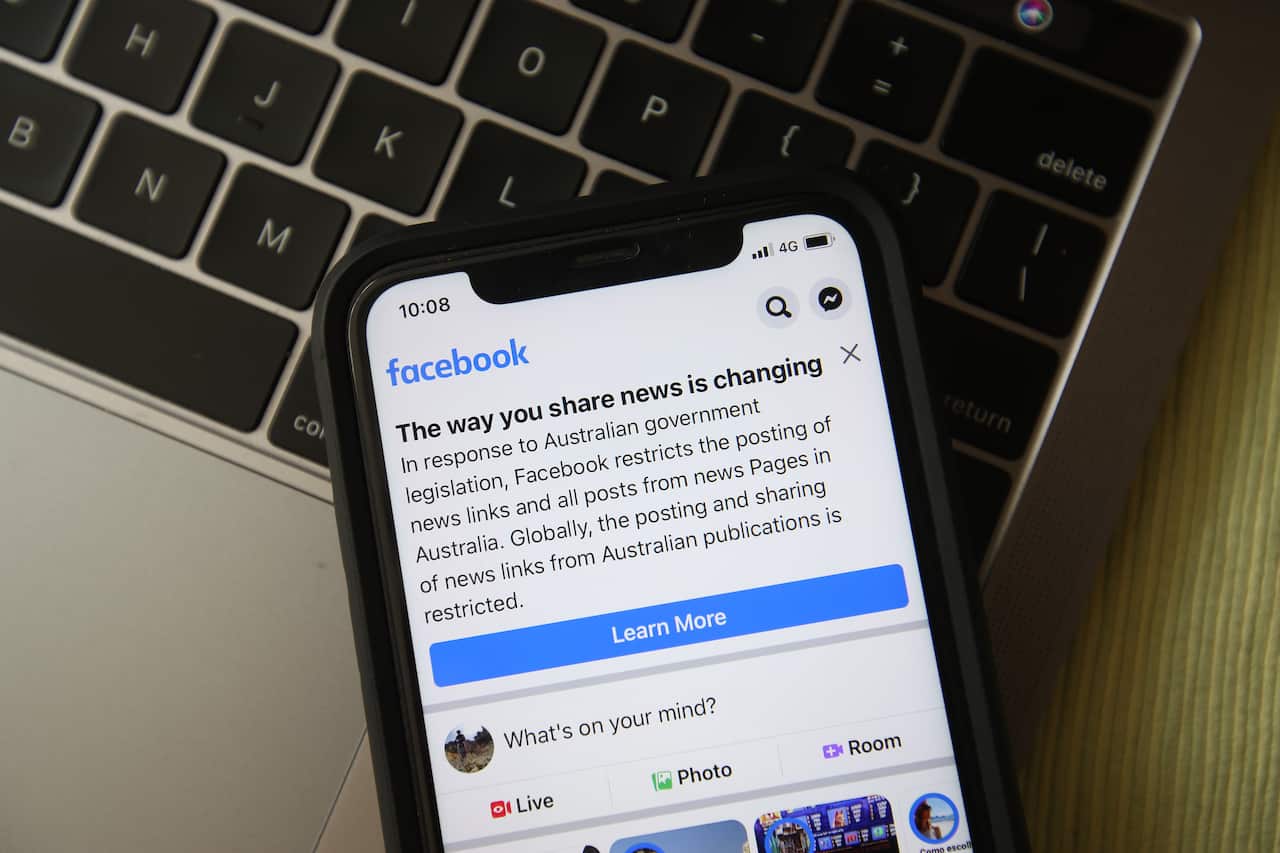
In February 2021, in response to the introduction of the NMBC, Meta banned news on social media for more than one week. Now, uncertainty remains around whether it will do so again.
News that makes sense
Your trusted source for staying up-to-date with the world around you. Get free daily news updates and analysis, straight to your inbox.
Managing directors from across Australian media, including the ABC, News Corp, SBS, Network Ten and Guardian Australia, co-signed a joint statement calling on platforms to "step up" and urging parliamentarians to safeguard Australian journalism.
"While Google has been positive about doing deals, others need to come to the table, and all platforms need to step up," the statement read.
"We urge all parliamentarians to support safeguarding Australian journalism and the vital role it plays in our democracy, for all Australians."
What are the new changes?
Under the proposal, social media companies will be required to pay 2.25 per cent of revenue to the government, which will be split across media companies, or if tech platforms strike bargains with media companies for content, they will only pay 1.5 per cent of their revenue.
The tech platforms would have to make deals with at least four different media groups and can deduct 150 per cent of the value of those agreements from their tax liability.
The plan offers up to 170 per cent offsets for deals done with smaller or non-traditional outlets.
Regulation and governance expert at the University of New South Wales, Rob Nicholls, said the proposal was barely significant.
"It's barely more than a continuation of an approach that was used before," he told SBS News.
"You could characterise it as, 'well, we started with the news media bargaining code under the lids. It worked for a while and was great. It stopped working, so here's a tweak to make something work instead.'"
Nicholls said Australia's original news bargaining agreement had unravelled when its biggest players opted out.
"Each of Google and Meta went off and did deals, but a little over two years ago, Meta announced that it wasn't going to continue because 'news isn't important to Meta'," he said.
"That's a line they have repeated often."
But Lisa Given, a distinguished professor at RMIT University, said there was a "big difference" between the initial code and the proposed revision.
"The proposal doesn't only apply to organisations that are posting news onto social media. And so what that means is it takes away one of the big levers that the tech companies had, which was to simply refuse to post news content on social media," she told SBS News.
This could make another news ban unlikely, even though tech companies would likely "squirm" to get out of paying money, she said.
The new proposal would incentivise big tech companies to make "relationships or deals" with news organisations, she added.
Other commentators have argued that Meta could react the same way it did in 2021, and ban news, given news urls only form around 1 per cent of content shared on its platforms.
Given said she thought it was an "innovative approach", which she hoped would help tech companies realise it was in the public's best interests.
"We're certainly seeing several lawsuits and issues being raised around the world about the use of news content by these companies. News organisations have been really clear: 'This is copyrighted material, and you need to pay for it.'"
What could happen if Meta pulls out of Australia?
A law similar to the NMBC was introduced in Canada in 2023, which resulted in a Meta ban on all news links and content. It remains in place.
Given, who was born in Canada and lives in Australia, said the ban had had a severe effect on her contacts back at home.
"Effectively, what it means for social media users is that news content is blocked on the platforms.
"They can't view content. They can't share news articles with people. And it's really interesting timing because, of course, many people, especially young people, social media is often the number one source of news, particularly on platforms like TikTok, for example, but also on Facebook."
Given said it made it difficult for people to provide evidence, check sources and provide references to back up claims made in social media content.
"People often want to be able to share news stories as a mechanism to prove the facts, as it were. And so what that legislation does is cut that off."
Meta has repeatedly suggested it could ban links to news on Facebook and Instagram in Australia.
"(The 2021 news ban) didn't just affect news," Nicholls said. "It included services at the time like 1800 RESPECT, it included some of the health services, during the middle of COVID, it cut off a bushfire service."
"But I think it's a bit different this time.
"This is not like Canada where you have to pay the money and the news companies have to spend it in a particular way. This is a levy. Australia has about 900 different levies across the Commonwealth and states. And so it's just a cost of doing business in Australia."
Nicholls said he thought the inclusion of ByteDance was useful because it made clear the draft legislation was clearly not only targeting US companies.
"But let's say Meta says no, well, what's their social licence for being here?
"More people use Insta, but TikTok is an option. There's a lot of advertising that flows from Australia, on which only GST is paid. If you want to give up that well, give it up."
What are the platforms saying?
Major tech players are unhappy with the proposal, with multiple releasing statements calling it a "government-mandated transfer of wealth".
Google, which had complied with the original media bargaining code to make deals with key players, including Seven West Media and Nine Entertainment, for its Google Showcase platform, said it rejected the need for the tax.
"For 20 years, Google has partnered with newsrooms through our products and programs. We remain the only technology company in Australia with commercial agreements supporting more than 90 news businesses and 226 outlets across national, regional, and independent titles," a spokesperson said in a statement to SBS News.
Google questioned the "arbitrary" exemption of Microsoft, Snapchat and OpenAI from the proposal, in spite of what it called a "major shift" in how people consume news.
Meta also condemned the tax as "nothing more than a digital services tax".
"News organisations voluntarily post content on our platforms because they receive value from doing so. The idea that we take their news content is simply wrong," a Meta spokesperson said in a statement provided to SBS News.
"This proposed legislation, which would apply to platforms regardless of whether news content even appears on our services, is nothing more than a digital services tax.
"A government-mandated transfer of wealth from one industry to another, with no connection to the value exchanged, will not deliver a sustainable or innovative news sector," they said.
ByteDance, the Chinese parent company of TikTok, declined to comment.
For the latest from SBS News, download our app and subscribe to our newsletter.







