IN BRIEF
- Experts say Australia’s modern slavery laws focus on disclosure, not forcing companies to act.
- Despite tougher trade restrictions, the US still faces modern slavery and forced labour risks.
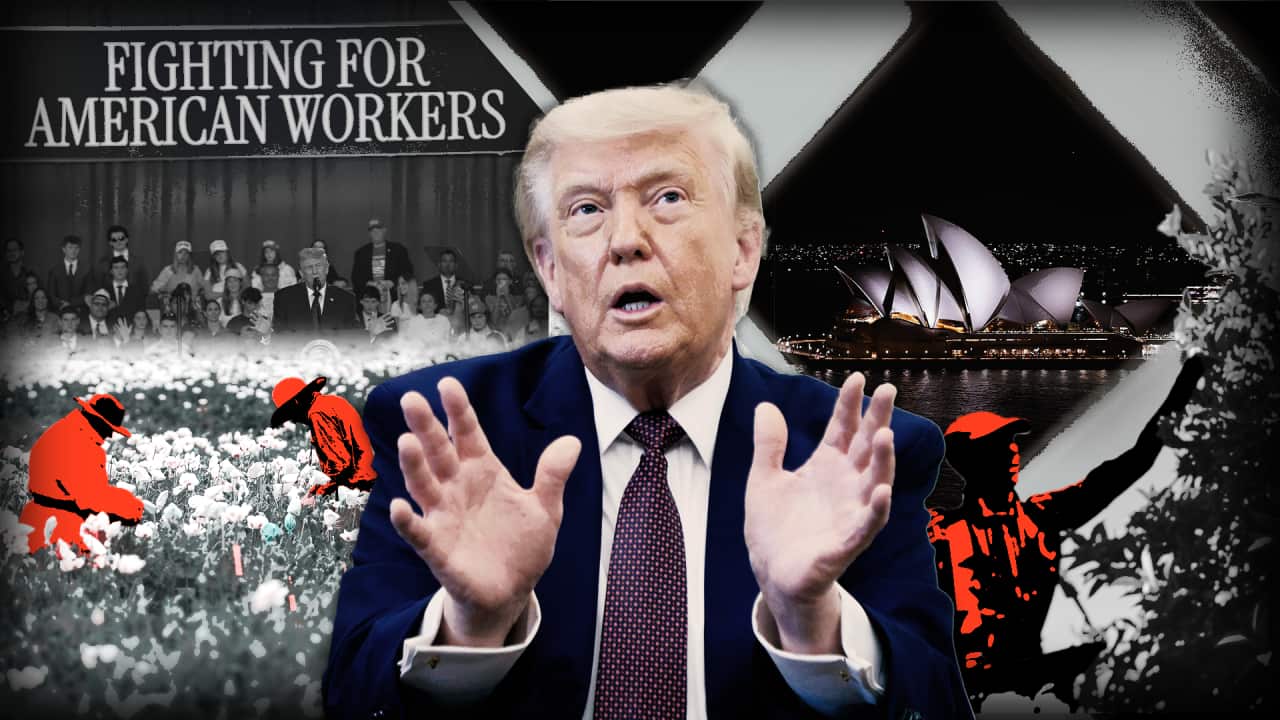
United States President Donald Trump's threat to impose tariffs on dozens of economies, including Australia, may appear politically convenient.
But experts say the forced-labour dispute also points to a broader question at home: Is Australia doing enough to keep goods linked to exploitation out of local supply chains?
Australia was among dozens of economies identified by the Trump administration following an investigation into countries' import practices, with US trade representative Jamieson Greer saying Australia had failed to "impose and effectively enforce a prohibition on the importation of goods produced with forced labour".
A report summarising the findings did not provide detailed examples specific to Australia.
The move comes as the US continues to expand trade measures tied to forced labour concerns, including enforcement of the Uyghur Forced Labour Prevention Act introduced in 2021.
News that makes sense
Your trusted source for staying up-to-date with the world around you. Get free daily news updates and analysis, straight to your inbox.
A broader challenge
Despite introducing stronger import restrictions targeting forced labour, research from the University of Oxford estimates that around 1.1 million people were living in modern slavery conditions in the US in 2021.
University of Sydney associate professor Martijn Boersma said the tariff threat was "completely opportunistic" but reflected existing policy discussions in Australia.
Australia's Modern Slavery Act requires businesses to report modern slavery risks but does not require action or impose penalties for inadequate reporting.
A government-commissioned review of the Modern Slavery Act, informed by public consultation in 2022, delivered recommendations in 2023 to strengthen Australia’s response. The federal government responded in December 2024, supporting most recommendations while continuing consultation on some reforms.
Boersma said there had been growing political debate over whether Australia should move further.
"One of the things that has been debated in Canberra for a while now is whether we need import bans, basically blocking goods suspected of having been created by means of forced labour.
"Canberra has not gone that far yet and neither have they imposed mandatory human rights due diligence," he said.
"You're compliant if you report on your risks, and that's where the whole thing stops."
Australia rejects tariff criticism
Prime Minister Anthony Albanese has defended Australia's existing approach, saying the country already had world-leading laws addressing modern slavery and forced labour that had received unanimous parliamentary support.
He also said any tariff imposed on Australian exports would be unjustified and inconsistent with the free trade agreement between Australia and the US.
"We continue to use every opportunity that we have to advocate that US tariffs imposed on Australia are unwarranted," Albanese told the ABC on Thursday.
Opposition leader Angus Taylor also criticised the proposal, saying Australia should not face tariffs from one of its closest allies and that the Coalition would continue opposing the measures.
What does 'forced labour' refer to?
Experts say forced labour does not necessarily resemble historical depictions of slavery and can involve a range of coercive labour conditions.
Boersma said it often involved workers being unable to leave harmful working environments because of threats, debt, withheld documents or other forms of pressure.
"It's not like the traditional form of slavery where people are shackled ... It's more that people have no other avenue to go down, so they simply have to accept whatever horrible working conditions they find themselves in."
Do forced labour import bans work?
Research published last year by the University of Oxford found some evidence that import bans prevented goods linked to forced labour from entering markets and influenced business behaviour. But evidence remained limited and mixed, with little indication bans alone prevent forced labour.
Human Rights Law Centre associate legal director Freya Dinshaw said concerns around forced labour in Australian supply chains pre-dated the tariff proposal.
"Buying goods should never come at the expense of someone else's freedom," she said.
"The alarm bells have been ringing for a long time in relation to the risk of goods made with forced labour flooding Australian shop shelves.
"If the US is looking to penalise countries who have not taken sufficient steps to prevent forced labour in global supply chains, then Australia is indeed vulnerable."
Could the tariff threat accelerate reform in Australia?
NSW Anti-slavery Commissioner James Cockayne said in a statement that the tariff proposal reflected growing international pressure.
"The concern raised is that producers in Australia and around 60 other countries have an unfair advantage over US competitors because they are able to rely on modern slavery to keep their costs down," he said.
Cockayne called on the federal government to strengthen Australia’s modern slavery laws, including through mandatory due diligence requirements.
For the latest from SBS News, download our app and subscribe to our newsletter.







