
In Brief
- China and the United States are in a race to start deep-sea mining critical minerals in the Pacific Ocean.
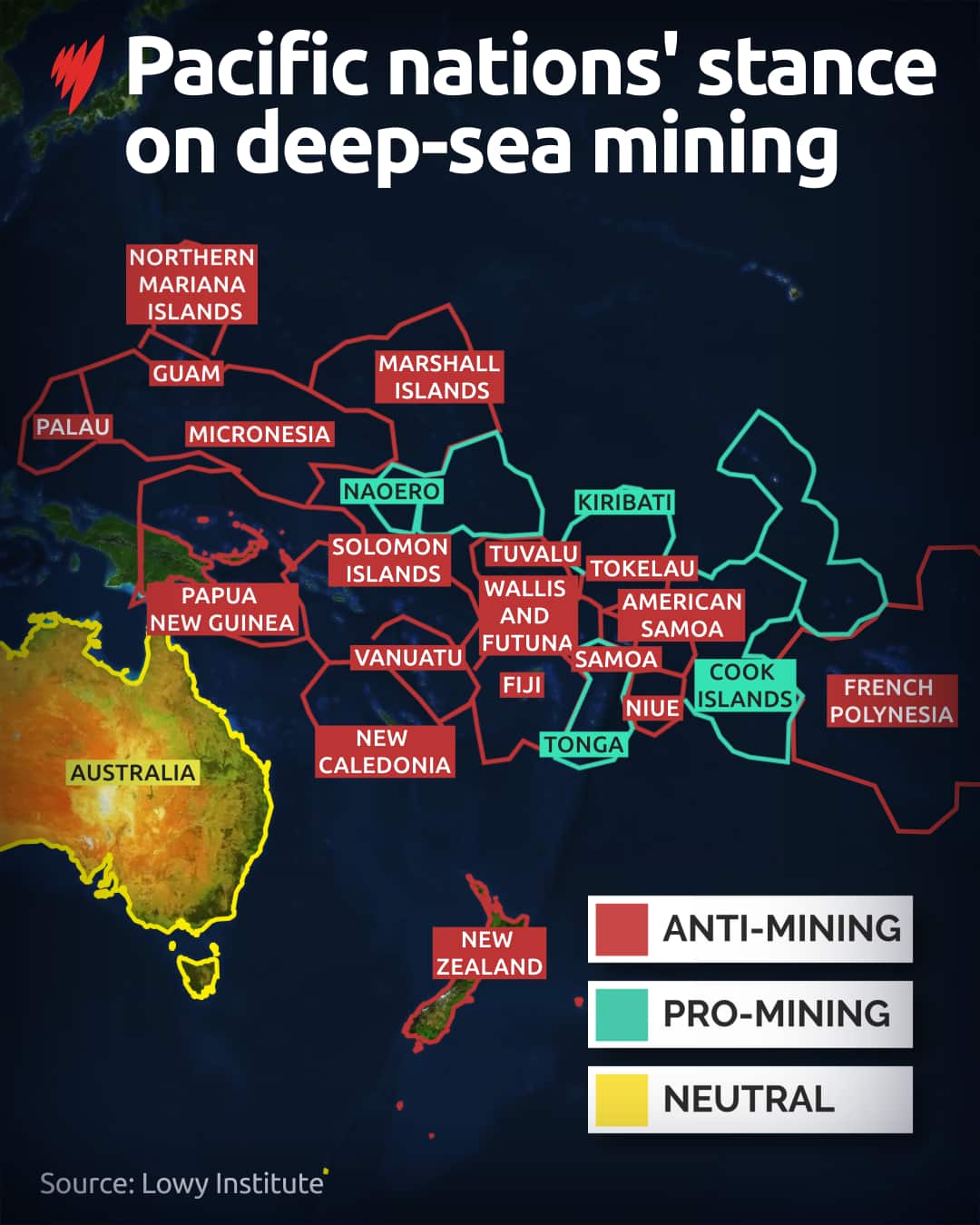
- The issue has starkly divided Pacific nations, with many opposed to deep-sea mining and some in favour.
Sitting at the bottom of the Pacific Ocean are vast deposits of the critical minerals that could drive a potential green transition.
The race to start mining these deposits has begun, and experts say what happens next could impact Australia's relationship with once-reliable Pacific allies.
Commercial deep-sea mining in the Pacific has been on the cards for many years, but the not-yet-existent industry had been on pause while a United Nations agency responsible for the ocean floor develops guidelines for extraction.
That changed last year when United States President Donald Trump's administration took the controversial step of issuing an executive order allowing US companies to apply for licences in its Pacific territories, sidestepping international law.
One US company has publicly committed to start operations as soon as 2027, and in August the US shocked Pacific island communities by announcing it planned to auction off a maritime territory near American Samoa for deep-sea mining.
News that makes sense
Your trusted source for staying up-to-date with the world around you. Get free daily news updates and analysis, straight to your inbox.
In 2025, China signed a deal with the Cook Islands to co-operate on seabed mineral development and research and is reportedly considering a similar partnership with Kiribati.
Now the US and China are locked in a geopolitical battle in the Pacific to corner the industry — valued at up to US$30 trillion ($41.88 trillion) — before it's even begun.
The subject has starkly divided Pacific nations. Some want to cash in on the new mining boom, while others worry the largely untested industry could wreak havoc on the environment.
Experts warn this division could leave the region vulnerable to exploitation and damage Australia's relations with its closest regional partners.
What is deep-sea mining?
Deep-sea mining as an industry does not yet exist, but the technology behind it does, and countries have been surveying the ocean floor for years to understand what kinds of deposits lie at the bottom of the ocean.
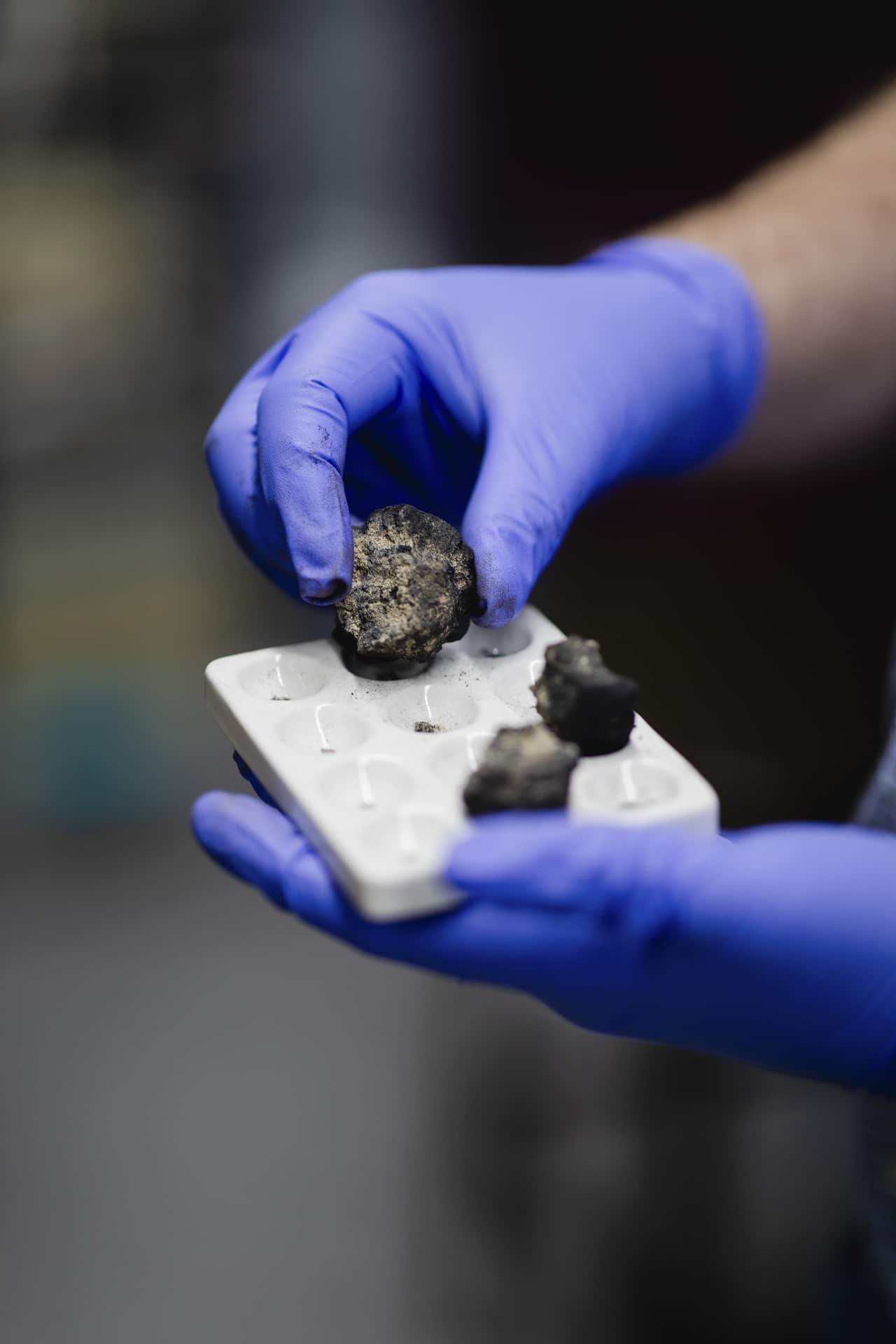
These deposits come in several forms, but extracting so-called 'polymetallic nodules' forms the backbone of existing deep-sea mining technology.
Formed layer by layer, over millions of years, these potato-sized forms are found between 3,500 and 6,500 metres beneath the surface.
To extract these deposits, a large harvesting vehicle drives across the pitch-black ocean floor, vacuuming up the deposits and the surface layer of sediment before pumping the material to the surface via a pipe for sorting.
What does this have to do with Australia?
The Lowy Institute's Connor Graham told SBS News Australia has two key reasons to be concerned about deep-sea mining in the Pacific.
The first is political.
The issue has starkly divided Pacific nations. Naoero (formally Nauru), the Cook Islands, Tonga and Kiribati support the emerging industry, while the remaining members of the Pacific Islands Forum have come out in strong opposition.
"If deep-sea mining divides the Pacific into two camps, then we will see a breakdown in that unity that has historically defined the Pacific, and that could be a destabilising force that could leave Pacific nations vulnerable to external influences," Graham said.
"Say Kiribati signs a deal with China to mine. They become aligned with Beijing. They're still a member of the Pacific Islands Forum, but now more influenced by Beijing than they currently are."
Graham said Australia should play "moderator" and advocate for a Pacific-led governance framework for deep-sea mining that would provide all Pacific nations with clear, baseline standards for any deep-sea exploration.
"It would outline minimum expectations for environmental protections, remediation and revenue sharing," he said.
"At the moment, nothing like that exists, leaving these countries vulnerable to bad deals — companies will go wherever governance is weakest. A strong framework protects all countries equally."
He said the second issue was environmental.
What are the environmental concerns?
Graham said scientists were "very concerned" that deep-sea mining could have "profound" impacts on the delicate and largely mysterious ecosystems at the bottom of the ocean. Scientists believe they have only described 5 per cent of the life at depths where this mining would take place.
The potato-shaped nodules are the only solid forms on the sea floor, and are home to sponges, corals, crustaceans and worms, which would lose their only habitats if they were removed. The consequences of this are not fully understood.
The mining process also involves pumping sediment from the sea floor to the surface and then pumping it back into water 1,000m below the surface — moving nutrients and fine particles with it.
"There are pretty big concerns about how much this will impact the fisheries in the Pacific — these plumes won't care about the borders of your exclusive economic zone. It could just sort of float around off into next door and impact fisheries in a massive area," Graham said.
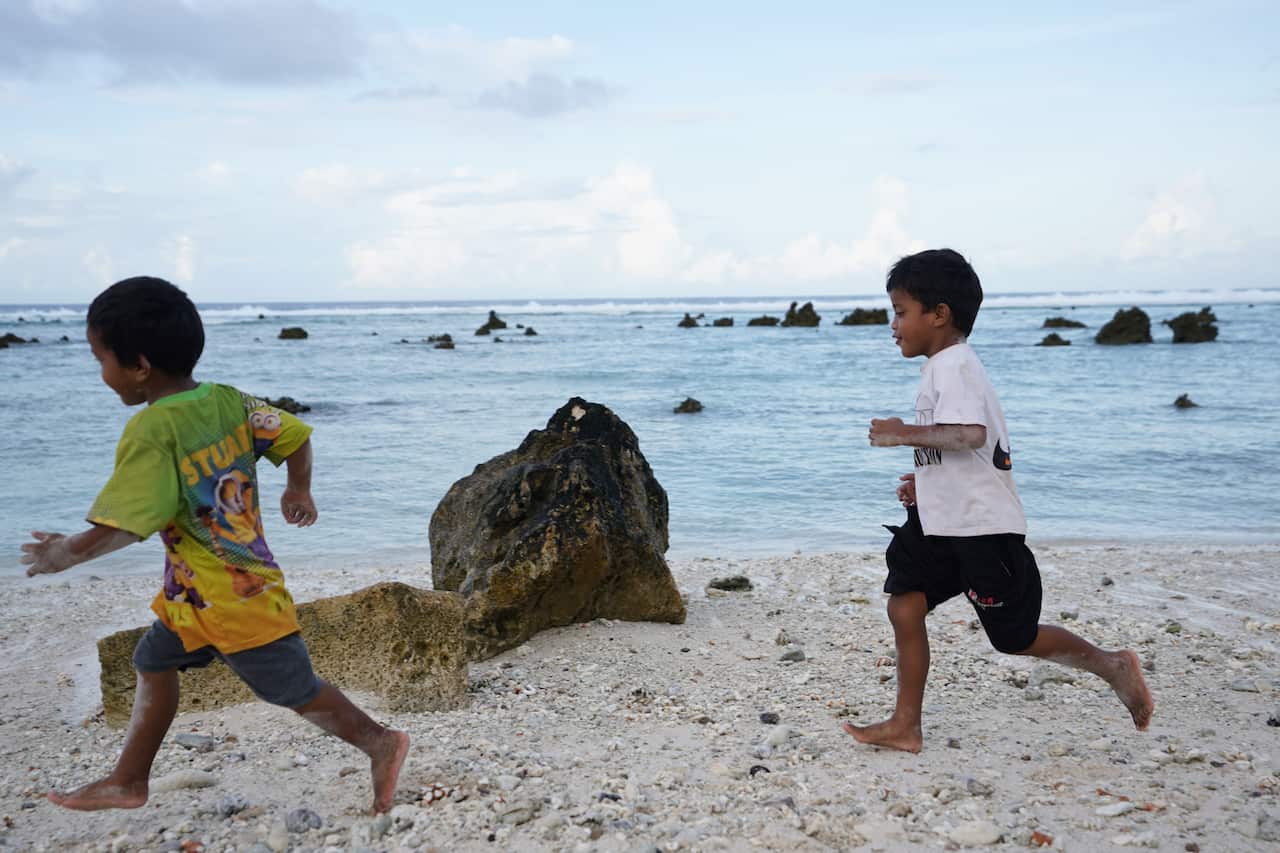
He said this environmental impact could further destabilise the region.
"If one country's deep-sea mining ruined another fishery, that would have a serious political consequence," he said.
Graham said deep-sea mining also raised questions about carbon storage. Scientists are concerned disruptions to deep-sea algae could change how much carbon they can store, and disturbing them could accelerate climate change.
All about politics
Susan Park is an international relations expert from the University of Sydney.
She told SBS News it was important to situate deep-sea mining in the broader geopolitical race for the Pacific.
Deep-sea mining operations would bring infrastructure and political relationships with the countries that host them.
"China and the US want to maintain their control and influence in the Pacific — it's about shipping lanes and access," Park said.

Park also pointed out that while these critical minerals were extremely important, geologists are "confident we have enough of them on the Earth's surface", raising further questions about the need to develop the new industry.
A spokesperson for the Department of Foreign Affairs and Trade said Australia would not support deep-sea mining in areas beyond national jurisdiction until there was a "comprehensive and robust regulatory framework in place, negotiated through the International Seabed Authority (ISA) in accordance with the UN Convention on the Law of the Sea (UNCLOS).
"As a member of the ISA Council, Australia is working with partners to negotiate a regulatory framework that ensures assessment of potential environmental impacts based on scientific evidence, includes strong environmental protections, and establishes robust inspection, compliance and enforcement mechanisms."
For the latest from SBS News, download our app and subscribe to our newsletter.







