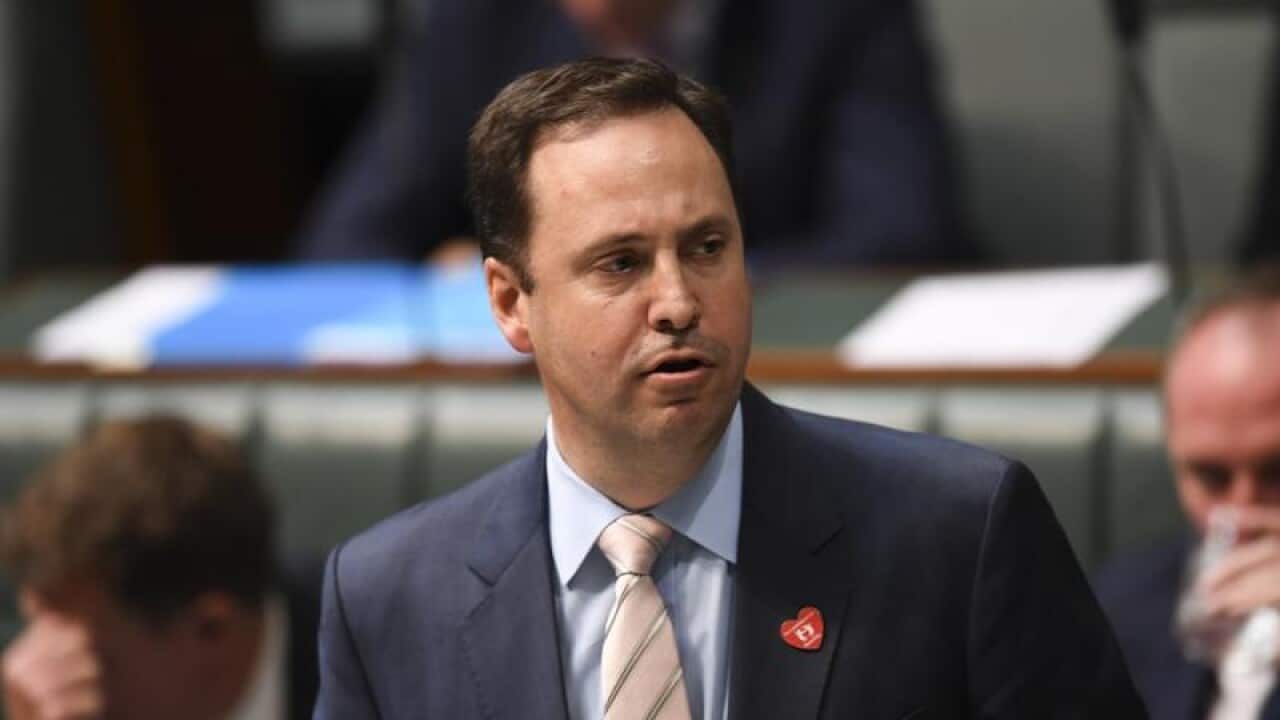
The new Trans-Pacific Partnership should not be “thrown open” and renegotiated just to “appease” Donald Trump who is mulling a major backflip, Australian Trade Minister Steve Ciobo said.
Mr Ciobo said the TPP countries would not be keen to "pause" their domestic ratification processes while the US president made up his mind.
He said the TPP 11 countries were on track to bring the agreement into effect by the start of 2019.
News that makes sense
Your trusted source for staying up-to-date with the world around you. Get free daily news updates and analysis, straight to your inbox.
"We've got a deal, it's a good deal, 11 countries have signed up and we are all working to put the deal into effect," Mr Ciobo told reporters on the Gold Coast on Friday. "I can't see that all being thrown open now to appease the United States."
His comments come after a White House spokesman confirmed the president had assigned his top trade advisers, US Trade Representative Robert Lighthizer and his new chief economic adviser, Larry Kudlow, "to take another look at whether or not a better deal could be negotiated".
However, Mr Trump tweeted on Friday he would only join the TPP "if the deal were substantially better than the deal offered to Pres. Obama". He pulled the US out of the TPP last year.
"We already have BILATERAL deals with six of the eleven nations in TPP, and are working to make a deal with the biggest of those nations, Japan, who has hit us hard on trade for years!" he wrote.
But he said the agreement partners, who had "little appetite for substantial negotiation", would welcome the US coming back to the table.
The TPP 11 countries are Australia, Brunei, Canada, Chile, Japan, Malaysia, Mexico, Peru, New Zealand, Singapore and Vietnam.
Australia reacts
Australian Prime Minister Malcolm Turnbull said it would be "great" to have the US back in the pact though doubted it would happen.
"We're certainly not counting on it," Mr Turnbull told reporters.
The text of the agreement has been tabled in the Australian parliament and two committees are examining it.
A national interest analysis showed the deal would significantly enhance Australia's economic relationships.
But Australian Greens trade spokeswoman Sarah Hanson-Young said reports of Mr Trump taking fresh interest in the deal were bad news.
"Many of the worst features of the first dud deal were put on ice as an attempt to build a new deal out of the rubble. But everything that's on ice gets defrosted if the US comes back to the table," she said.
She said longer monopoly rights on medicines would punish Australians suffering from conditions like cancer or rheumatoid arthritis by making medicine more expensive.







