Key Points
- An Australian embassy vehicle was hit when a homemade explosive detonated in Baghdad.
- Two security staff on board were taken to hospital with non-life threatening injuries.
An improvised explosive device in Baghdad's Green Zone slightly damaged a vehicle belonging to the Australian embassy in Iraq on Friday, without causing any casualties, a security source said.
No major injuries were reported.
Australia's Department of Foreign Affairs and Trade (DFAT) said one of four embassy vehicles was damaged.
Two security staff inside the damaged vehicle were taken to hospital with non-life threatening injuries.
"No Australian diplomats were involved in the incident," a spokesperson said.
News that makes sense
Your trusted source for staying up-to-date with the world around you. Get free daily news updates and analysis, straight to your inbox.
Despite the explosion, the Australian convoy was able to enter the Green Zone.
Baghdad's Green Zone is deemed an ultra-secure area and it houses embassies and government buildings, including parliament and several ministries.
The blast happened amid efforts by the Australian diplomatic mission in Iraq to mediate between influential Shiite cleric Muqtada al-Sadr and an Iran-backed faction of rival Shiite parties, according to the security officials, to end one of Iraq's worst political crises in recent years.
Foreign Ministry spokesman Ahmad al-Sahaf condemned the attack and said Iraq was committed to protecting all diplomatic missions in the country.
Caretaker Prime Minister Mustafa al-Kadhimi has been unsuccessful in trying to bring the quarrelling groups to a settlement.
Al-Sadr's party declined to attend a meeting al-Kadhimi held last week.
The followers of al-Sadr and his political rivals, a coalition of Shiite groups called the Coordination Framework, have been at odds since after last year's parliamentary elections.
Al-Sadr won the largest share of seats in the October vote but failed to form a majority government, leading to what has become one of the worst political crises in Iraq in recent years.
His supporters in late July stormed the parliament and have held frequent protests there.
The firebrand cleric's supporters have regularly protested, demanding the dissolution of parliament and early elections.
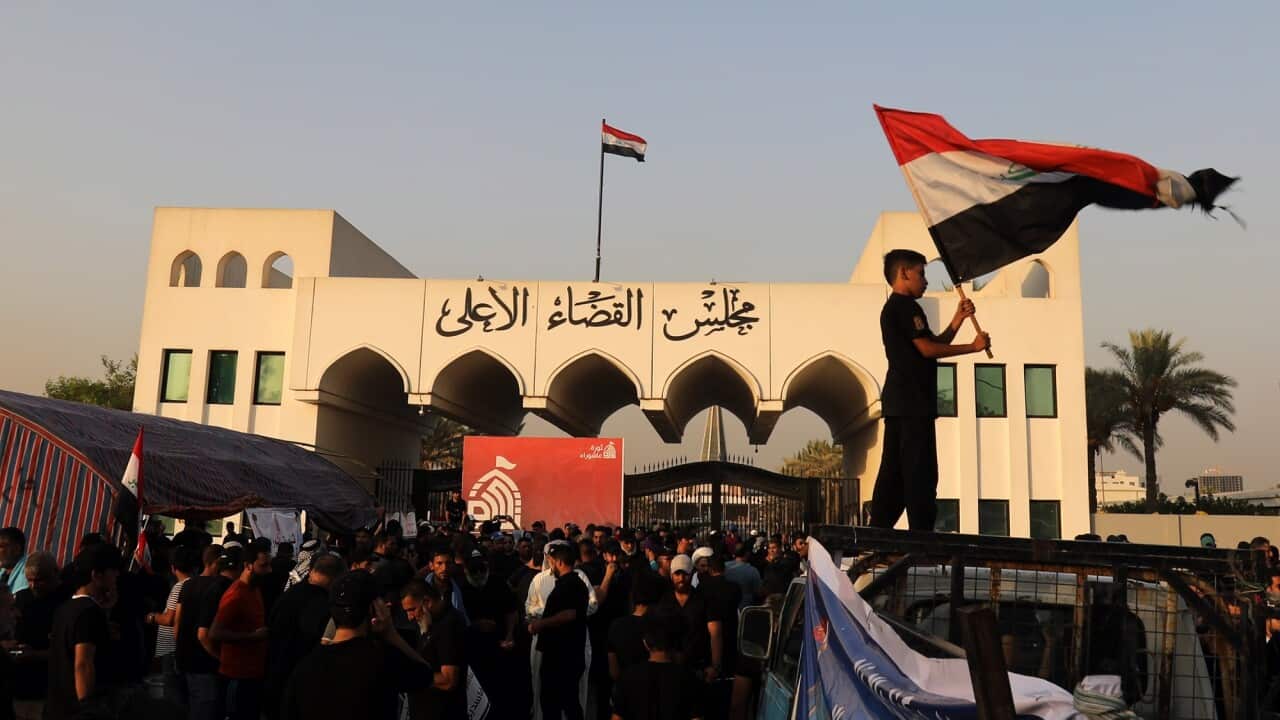
On Tuesday, al-Sadr's supporters pitched tents and protested outside the Supreme Judicial Council, accusing it of being politicised in favour of their Iran-aligned allies.
During a sectarian conflict between 2006 and 2008, bomb attacks hit Baghdad nearly daily but have been much rarer in recent years.
The last significant attack in the Iraqi capital killed around 30 people at a market in Sadr city in July last year. The self-proclaimed Islamic State group claimed the bombing.







