This audio is voiced by AI and may occasionally mispronounce words.
Share your feedback and help us improve this feature. Read more about how we use AI at SBS here.
Bringing a partner to Australia has long been a costly and time-consuming process.
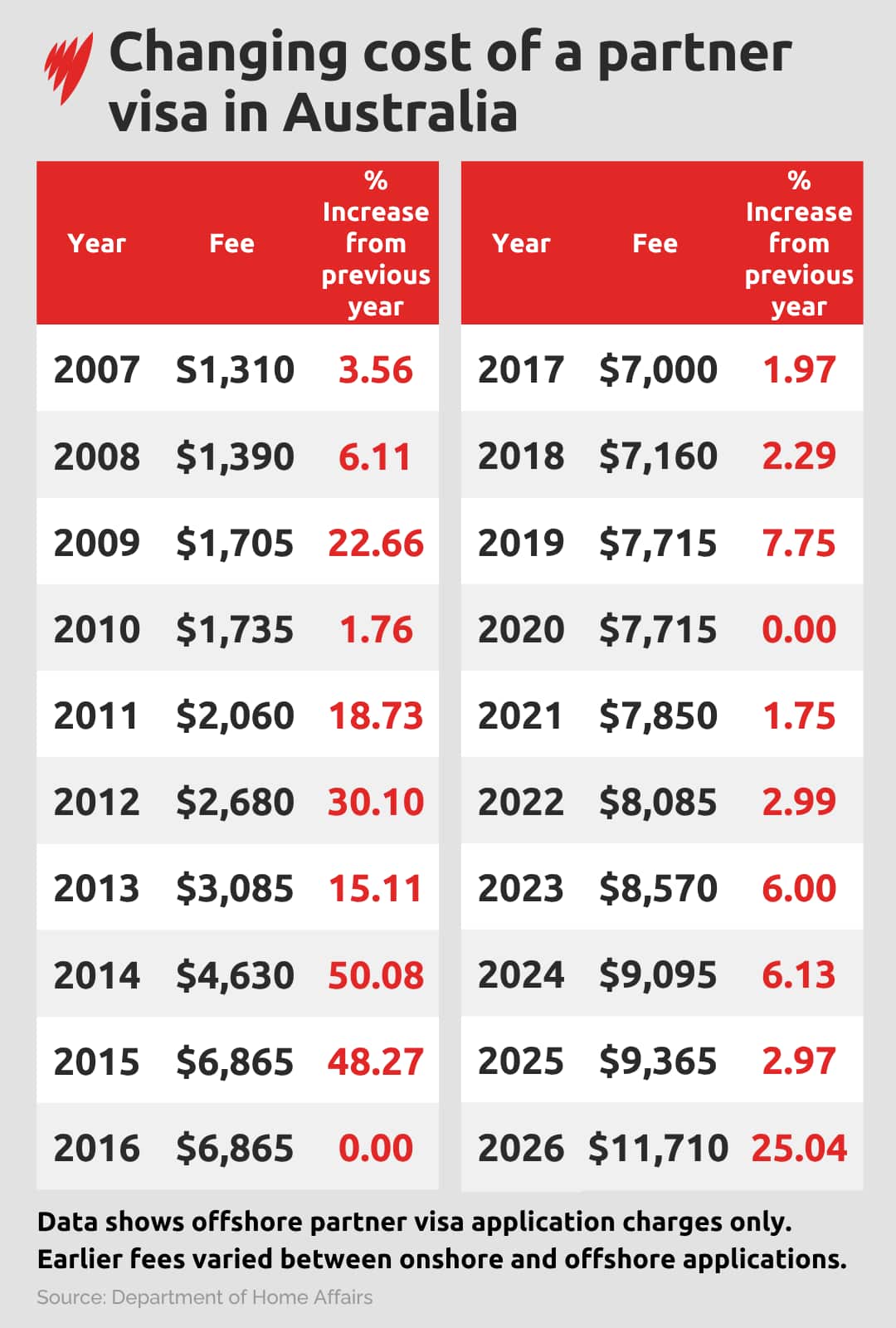
As of this month, applicants now face a record application fee of $11,710 — up $2,345 from the previous charge — while many continue to wait well over a year for a decision, leaving couples separated for months and, in some cases, years.
For Sarosh Akram, the increase came just as he was preparing to apply for his wife's offshore partner visa.
"It's made me think harder about how to save enough to lodge the application sooner, so I can start my wait in the Department [of Home Affairs'] queue," the 32-year-old tells SBS News.
Living in Parkes, a town in the central west of NSW, Akram is now exploring ways to cut costs and grow his savings to cover the additional amount required to apply.
News that makes sense
Your trusted source for staying up-to-date with the world around you. Get free daily news updates and analysis, straight to your inbox.
This has further complicated my situation and delayed my life, which I intended to start with my partner in Australia.
Akram says the fee increase has delayed his plans to lodge the application, adding another hurdle before he and his wife can begin the process of reuniting in Australia.
Akram's case highlights a broader debate over Australia's partner visa system, now among the most expensive in the developed world, with applicants facing rising fees and lengthy waits, while the government argues the increases are needed to fund migration system reforms.
Paying more, waiting longer
Partner visa applications can be lodged through two pathways: offshore for applicants outside Australia and onshore for applicants already in Australia.
Both pathways involve a two-stage process: eligible applicants first receive a temporary partner visa before becoming eligible for permanent residency at a later stage. The full visa application charge (VAC), however, is paid upfront when the combined application is lodged.
According to the Department of Home Affairs' website, the median processing time for offshore partner visa applications is approximately 16 months, meaning half of the applicants receive a decision within that period. Ninety per cent of applicants receive a decision within 27 months. The data was last updated on 26 June 2026.
Those waiting times have become a reality for partner visa sponsors like Ahtesham Altaf.
The 36-year-old lodged his wife's offshore partner visa application in January and has been waiting ever since.
"I applied with the hope that I would get a visa soon, as I was paying quite a higher price compared to other visas, but instead I've been waiting since then," he tells SBS News.
I've tried multiple visa options to bring my wife to Australia, but even her visitor visa application was refused.
Working as a civil engineer in the regional NSW city of Maitland, Altaf moved to Australia in 2023 as a skilled migrant on a permanent visa.
He says he has since spent close to $10,500 on visa fees and medical checks, with no certainty about when his wife will be able to join him.

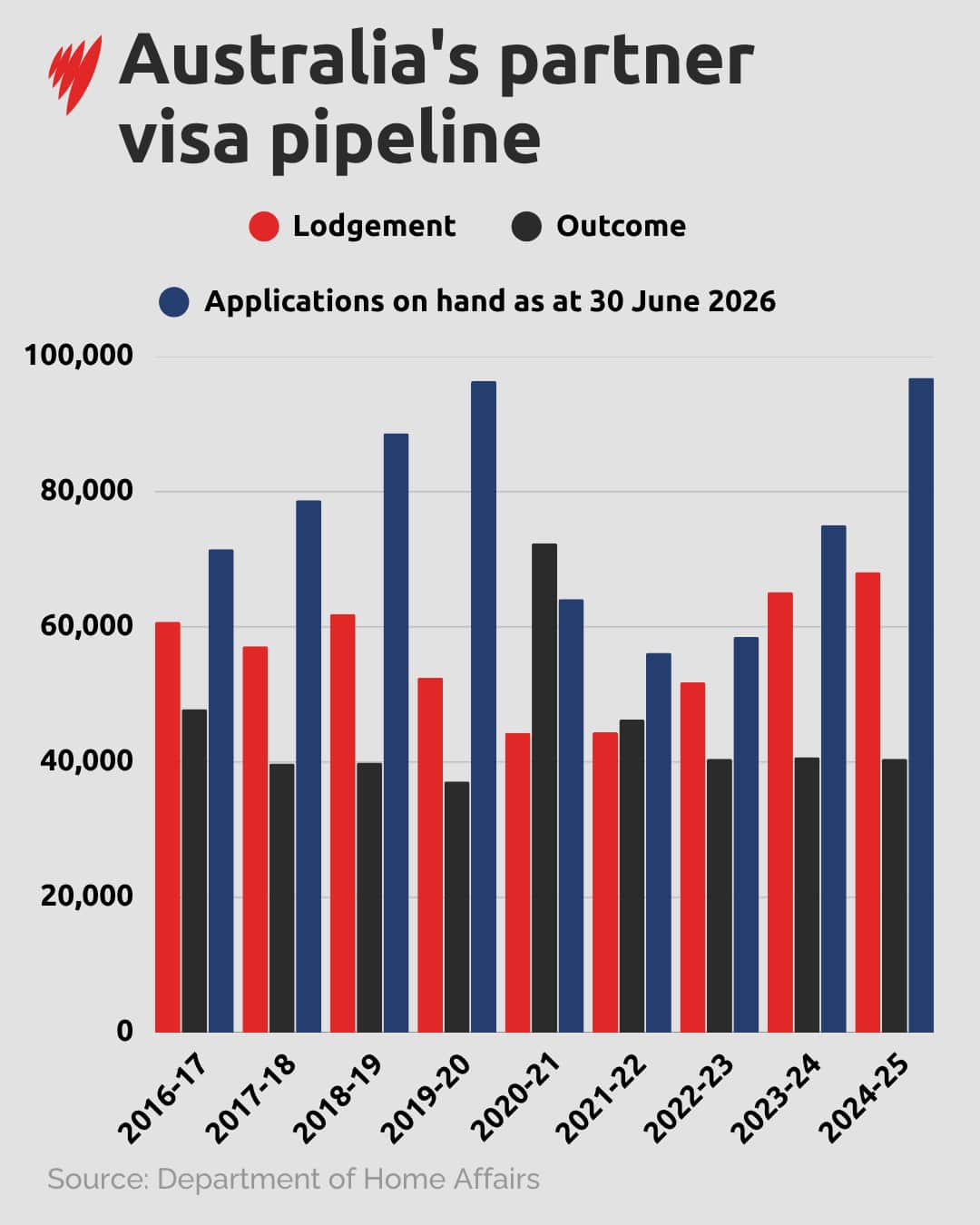
Abul Rizvi, former deputy secretary of the immigration department, says cases like Altaf's reflect a "growing" backlog that fee increases alone are unlikely to fix.
The fee increases are generally poor policy.
"The fee increase may marginally slow the application rate, but the backlog is so big and the application rate so much higher than the finalisation rate and the planning level that the backlog will keep growing," Rizvi tells SBS News.
He also raises questions about how visa fee revenue is being used.
"The current political climate means the government can increase the fees to extraordinary levels and it appears not to use the money to clear backlogs without fear of political criticism."
What does the government say?
The government says the increase in VAC is part of wider reforms to the migration system and is intended to support improvements across the migration program.
In an interview with SBS Nepali, Home Affairs Minister Tony Burke said he did not accept the way the visa fee increase has been characterised, arguing visa fees needed to be considered alongside other costs involved in moving overseas.
"Just remember with the costs as well, anybody who's travelling overseas for an extended period of time has already decided that they've got the cost of an airfare and, you know, the visa fees are, are well below that," he said.
Burke acknowledged the importance of partner visas and the personal circumstances behind many applications, but said the government must make decisions across the entire migration system with available resources.
"Every visa category exists because there are benefits to Australia and the sort of country we are if we can fill those positions. And I have to deal with that with the limited resources that we have."
Among the 'highest-cost' partner visa pathways
Rumina Iqbal, a Melbourne-based registered migration agent who has worked with partner visa applications for the past decade, says applicants are paying significantly more for a process where waiting times have remained broadly similar.
While VACs are typically reviewed and adjusted annually, with changes taking effect from 1 July each year as part of the government's standard indexation process, Iqbal says this year's increases for some visa categories are unprecedented and exceed what would ordinarily be expected from CPI-linked indexation.
Every year, there is an increase in the partner visa fee, but it was never this much. This time, it's huge.
Australia's partner visa cost is among the highest compared with similar family migration pathways in several countries. The United Kingdom's spouse visa, applied for from outside the country, costs about $3,942, while New Zealand's Partner of a New Zealander Resident Visa costs about $4,438.
By comparison, a standard Canadian spousal sponsorship costs about $1,364 in government fees, while the United States pathway costs around $1,872 to 1,955.
The fee varies across countries because some include the medical examination and other miscellaneous charges in the total upfront cost.

While migration systems and eligibility requirements vary between countries, Iqbal says the comparisons show the financial burden faced by Australian partner visa applicants.
"When we look at the price tag, it's one of the highest in the developed world, with such long waiting times," she says.
She says the financial pressure extends beyond the initial payment, as partner visa application fees are generally non-refundable.
"If your relationship ends, then, other than in very limited circumstances, you might not be able to get your visa fee back," she says, noting that family violence and partner death are among the few exceptions.
Iqbal says applicants need to carefully consider the financial commitment before lodging, as the cost can add to the pressure during an already lengthy process.
She says the government could reduce that stress by allowing applicants to split the payment across the visa stages rather than paying the full fee upfront.
The cost of waiting
A Department of Home Affairs spokesperson said the government is investing in reforming the migration system through the 2026-27 federal budget, with additional revenue from the VAC increases supporting these reforms alongside other priorities.
The spokesperson said Australia remains an attractive destination, and higher application charges are unlikely to materially affect demand for most visa categories.
They say VACs are often only a small part of an applicant's overall cost to travel to, work in, or live in Australia.
"Migrants come to Australia seeking access to our strong labour market, high quality of life, reliable infrastructure, and stable political climate," the spokesperson told SBS News.
The department also notes that demand for permanent visas continues to exceed the places available under Australia's permanent migration planning levels.
For sponsors like Akram, the challenge is finding the extra money needed just to lodge an application.
For others like Altaf, paying the fee was only the beginning. He is still waiting for the decision that will allow his wife to join him in Australia. Until then, the thousands of dollars spent have secured little more than a place in the queue.
This story was produced in collaboration with SBS Urdu.
For the latest from SBS News, download our app and subscribe to our newsletter.







