IN BRIEF
- Bahrain, Kuwait, Israel, Qatar and the UAE have been downgraded to level three restrictions.
- Restrictions have eased following the US-Iran peace deal, which is set to be signed on Friday.
The Australian government has downgraded travel warnings for several countries in the Middle East following the tentative peace deal between the US and Iran.
Travel advice for Bahrain, Kuwait, Israel, Qatar and the UAE was downgraded from the highest level of restrictions (do not travel) to level three (reconsider your need to travel).
The downgrade follows the US and Iran tentatively agreeing to a peace deal for the conflict in the Middle East, which is due to be formally agreed to on Friday in Switzerland.
Foreign Minister Penny Wong said the current conditions in parts of the region meant it was appropriate to lift the do-not-travel warning.
"Level three remains a high threshold. We continue to urge Australians to postpone non-essential travel," she said in a statement on Wednesday.
News that makes sense
Your trusted source for staying up-to-date with the world around you. Get free daily news updates and analysis, straight to your inbox.
"Reconsider your need to travel also means reconsider your need to transit. If you need to transit these locations, stay as short a time as possible and eliminate unnecessary activities."
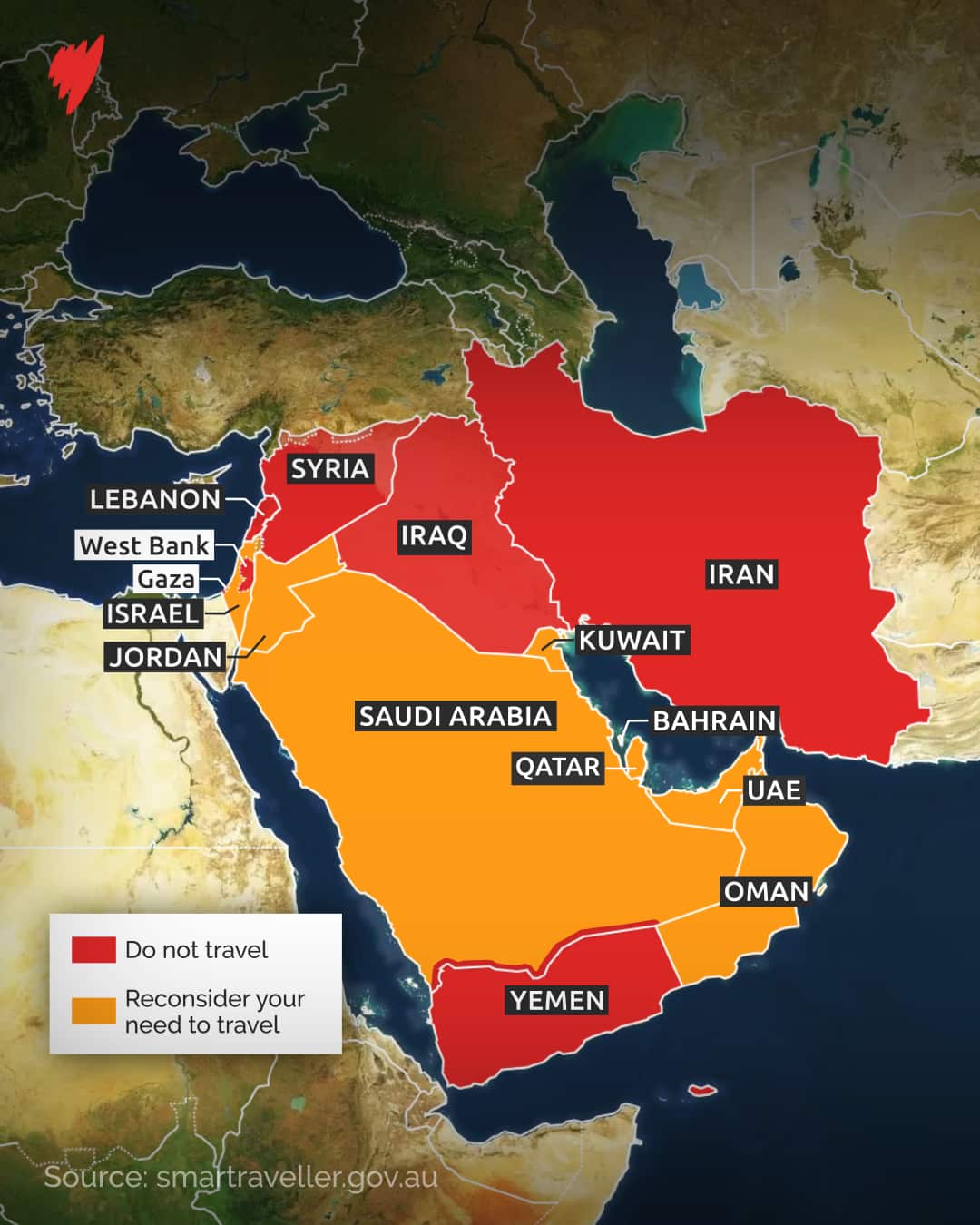
A do-not-travel warning remains in effect for parts of Israel, as well as Iran, Iraq, Lebanon, Palestine, Syria and Yemen.
Level four travel warnings meant travel insurance was often voided for Australian travellers flying overseas via the Middle East.
The do-not-travel warning was issued following the outbreak of the conflict in late February, with airports in the region being closed due to the threat of missiles.
Israel's ambassador to Australia Hillel Newman said the country supported the peace agreement between Iran and the US.
However, he said Israeli strikes against Lebanon would continue.
"Our operations in southern Lebanon are entirely for our defence," he told ABC radio on Wednesday.
"We're trying to just bring defence and security to our people. If we have security, we will not continue our activities in southern Lebanon."
The strikes from Israel and Lebanon have raised fears the peace deal could fall apart.
However, US President Donald Trump said the war between Israel and Lebanon was a minor one and the peace deal would be able to survive.
For the latest from SBS News, download our app and subscribe to our newsletter.







