In Brief
- UNSW is directing researchers to review collaboration with sanctioned countries.
- A spokesperson for the Group of Eight says the direction follows federal government instructions.
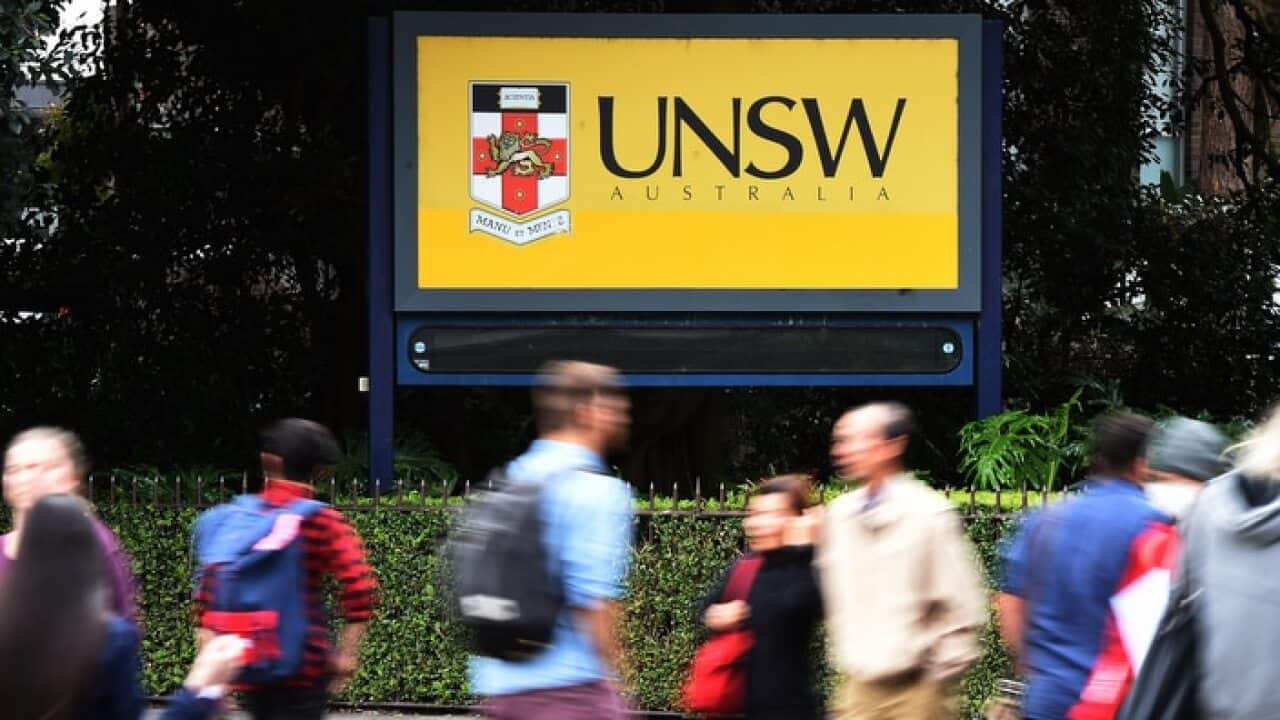
One of Australia's leading universities has tightened restrictions on research ties with Iran, Russia, Belarus and North Korea, warning even informal collaboration could breach sanctions and carry criminal penalties.
The move comes as universities across the country review international partnerships amid increased scrutiny from the federal government, with the Group of Eight saying institutions are investigating links with sanctioned countries.
In an internal email seen by SBS News, University of New South Wales pro vice-chancellor research Dane McCamey told staff not to initiate or continue collaborations with individuals or institutions in the four countries without senior approval.
"In response to the rapidly evolving geopolitical climate, the Australian government has increased expectations on universities to exercise greater caution and oversight in relation to international collaborations," McCamey said in the email.
"It is critical that UNSW is aware of all engagement with individuals or entities in Iran, Russia, Belarus or the Democratic People's Republic of Korea to prevent activities, whether intentional or not, that contravene existing sanctions applicable to these countries or are otherwise contrary to the expectations of the Australian government.
News that makes sense
Your trusted source for staying up-to-date with the world around you. Get free daily news updates and analysis, straight to your inbox.
"This now means that any activity with individuals or entities in these countries is not permitted without prior approval from your Dean or the Pro Vice-Chancellor Research."
McCamey also said researchers who fail to comply with the direction may face "serious consequences", including committing the criminal offence of breaching sanctions, which can lead to up to 10 years in prison.
"Even providing technical assistance (such as editorial guidance) to individuals or entities in these countries may be considered a breach of sanctions," McCamey said.
McCamey said the university's direction is a response to the "shift in Australia's foreign policy towards the governments of these countries".
"[It] is not in any way meant to disadvantage members of the UNSW community who come from, or have strong ties to these countries," McCamey said.
A UNSW Sydney spokesperson said the university had received "updated advice" from the Australian government before sending the email to remind staff to seek approval for any activity with institutions in sanctioned countries.
Under Australian law, a range of measures could be applied to sanctioned countries, including asking universities not to provide a sanctioned service and dealing with a designated person or entity.
According to the guidelines by the Australian Sanctions Office, these include enrolling a student and employing a person from a country subject to sanctions, and collaborating with another person or entity from a country subject to sanctions.
A spokesperson for the Group of Eight, which represents Australia's eight research universities, told SBS News that the universities are undergoing checks following the government's instruction.
"Universities have been asked to investigate institution-to-institution relationships, and the universities are doing their due diligence," the spokesperson said.
"The Group of Eight absolutely committed to national security and protecting that which must be protected, and will continue to work closely with the government."
The Department of Education and the Department of Home Affairs, which oversee the University Foreign Interference Taskforce, have been contacted for comment.
For the latest from SBS News, download our app and subscribe to our newsletter.







