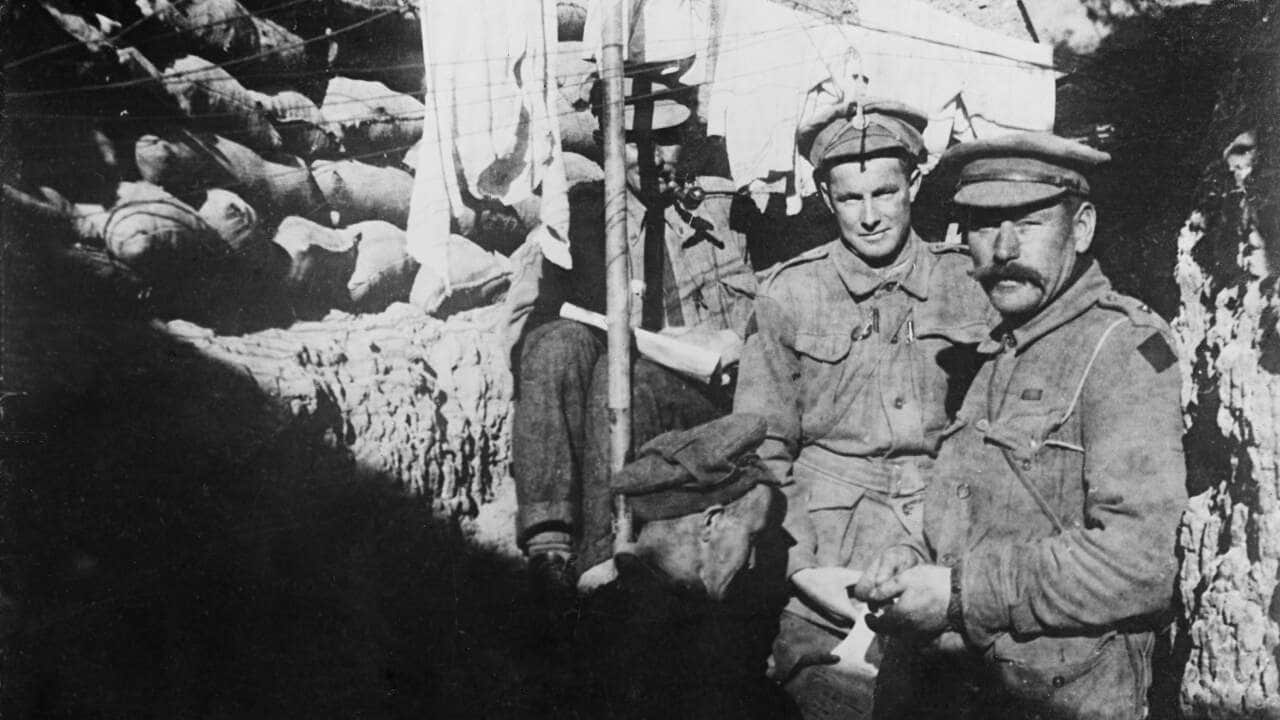
A Last Post ceremony at 5pm (AEDT) will mark the centenary of the end of the Gallipoli campaign.
In the space of a few weeks, all Australians were withdrawn from Gallipoli in what's been billed as the high point of the entire campaign.
Combat on Gallipoli could be astonishingly intimate. In some locations, Australian trenches were within metres of Turkish lines, easy bomb and insult throwing distance. Almost every part of the Anzac enclave was visible from Turkish-held heights.
So the successful evacuation of all troops under the noses of Turkish forces approaches the miraculous.
News that makes sense
Your trusted source for staying up-to-date with the world around you. Get free daily news updates and analysis, straight to your inbox.
From 41,000 soldiers across the 160-hectare Anzac sector, numbers were progressively thinned so that just 1500 held frontline positions on the night of December 19.
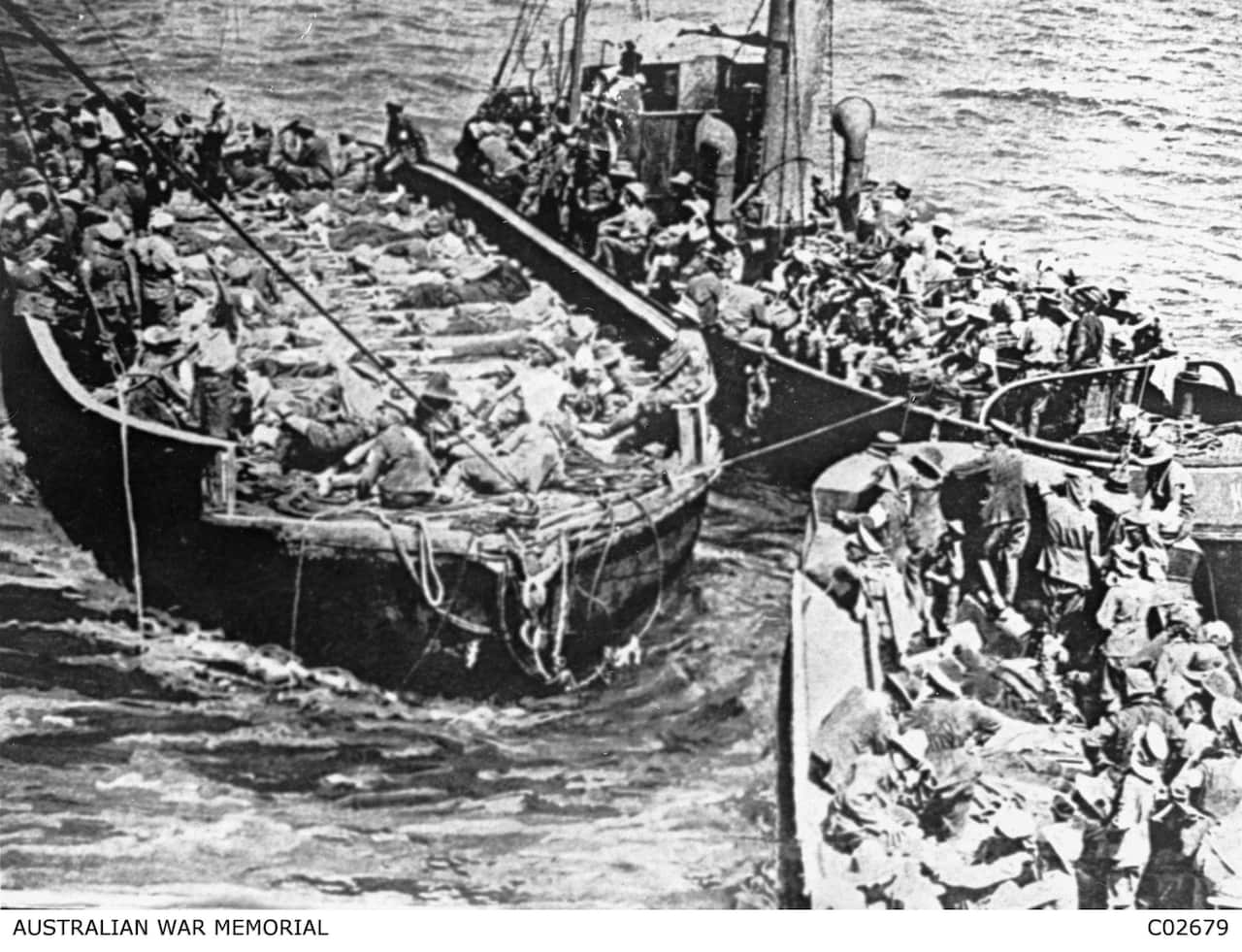
In the early morning darkness of December 20, small groups of soldiers dashed to the beach, fearing pursuing Turks would be upon them at any moment. The last boat carrying the last soldiers departed Anzac Cove soon after 4am.
Eight kilometres north, the last of 38,000 mostly British troops departed Suvla Bay about 4.30am.
Despite dire predictions of up to 40 per cent losses in a panicked and chaotic withdrawal, casualties attributed to Turkish action were just two wounded.
Not for nothing has the evacuation been termed the most successful aspect of the whole blighted enterprise.
This was the result of careful planning, clever ruses, good luck and Turkish inaction.
After weeks of intense vacillation, London finally gave the go-ahead for evacuation on December 8. But commanders on Gallipoli anticipated inevitable withdrawal and had prudently started planning a fortnight earlier.
That fell to two exceptional officers - Australian Brigadier General Cyril Brudenell White at Anzac and British 9 Corps chief of staff General Hamilton Reed VC at Suvla.
Both worked with able staffs and their plans were similar. The British official historian described these as models of precision and clear thinking.
This all required maintenance of an appearance of normality.
Initially, troop numbers were thinned out, with sick and superfluous soldiers withdrawn by night, along with some of the vast piles of stores and equipment accumulated during the campaign.
Along the lines, troops conducted the so-called "silent stunts". Not a shot would be fired for hours.
Early on, Turkish troops who crept over to see what was going on quickly discovered the lines were still fully manned. Their surviving comrades speedily learned not to bother.
There was much more. Troops moved openly on the shores during daylight. On December 17, troops on the beaches ostentatiously played a game of cricket. Supply parties moved noisily up to the trenches, then departed silently with extra troops, their feet wrapped in blankets to muffle the sound.
As the final withdrawal approached, it was envisaged that there might need to be a fighting retreat, with small parties delaying advancing Turks - and likely not surviving - while their comrades escaped. It never came to that.
As the last boats departed, occasional shots continued to ring out, thanks to clever inventions such as the drip rifle, where water slowly dripped into a pannikin, eventually pulling a rifle trigger.
All along the lines, troops had tunnelled out under Turkish positions, emplacing large quantities of explosive. Only at The Nek did those departing fire their mines, killing some 70 Turkish soldiers.
As the sun rose, Turkish patrols slowly probed the Anzac and Suvla lines and discovered everyone had gone. They encountered occasional booby traps found, meals left for them and in one dugout, a note saying: "You didn't push us off Jacko, we just left."
But were the Turks truly deceived?
There's plenty of evidence that they weren't. Turkish reconnaissance flights surely noticed the diminishing piles of stores along the beachfront.
Historian Robin Prior said it suited the allies to play up the cunning of their deception plan as a counterpoint to the total failure of the overall plan.
Australian War Memorial senior historian Ashley Ekins said Turkish commanders faced difficult choices in responding to evacuation.
They could attack too soon and incur heavy casualties, as occurred with their offensive in May. Or they could attack too late and face criticism that they let their enemy get away.
Or they could plead ignorance. Ekins said those Turkish commanders who wrote accounts of the campaign praised the allies for their cleverness in evacuating right under their noses.
One Turkish account describes thick fog for the final five nights. An Australian account describes clear moonlit nights where any movement could be seen at half a mile.
While Anzac and Suvla evacuated in December, the British enclave at Cape Helles remained, with some 40,000 British and French troops, initially with some vague idea this could serve as a naval base. That speedily faded.
After what occurred at Anzac and Suvla, the Turks surely realised Helles would likely also be evacuated, and soon.
And so it was on the night of January 8-9 with the last 17,000 troops departing with minimal Turkish interference.
When correspondent Charles Bean returned to Gallipoli in 1919, he spoke at length with Turkish officer Zeki Bey who told him: "No one regretted that we hadn't known of your intention to withdraw."
Ekins says the unstated message was: "We were glad to see you go."







