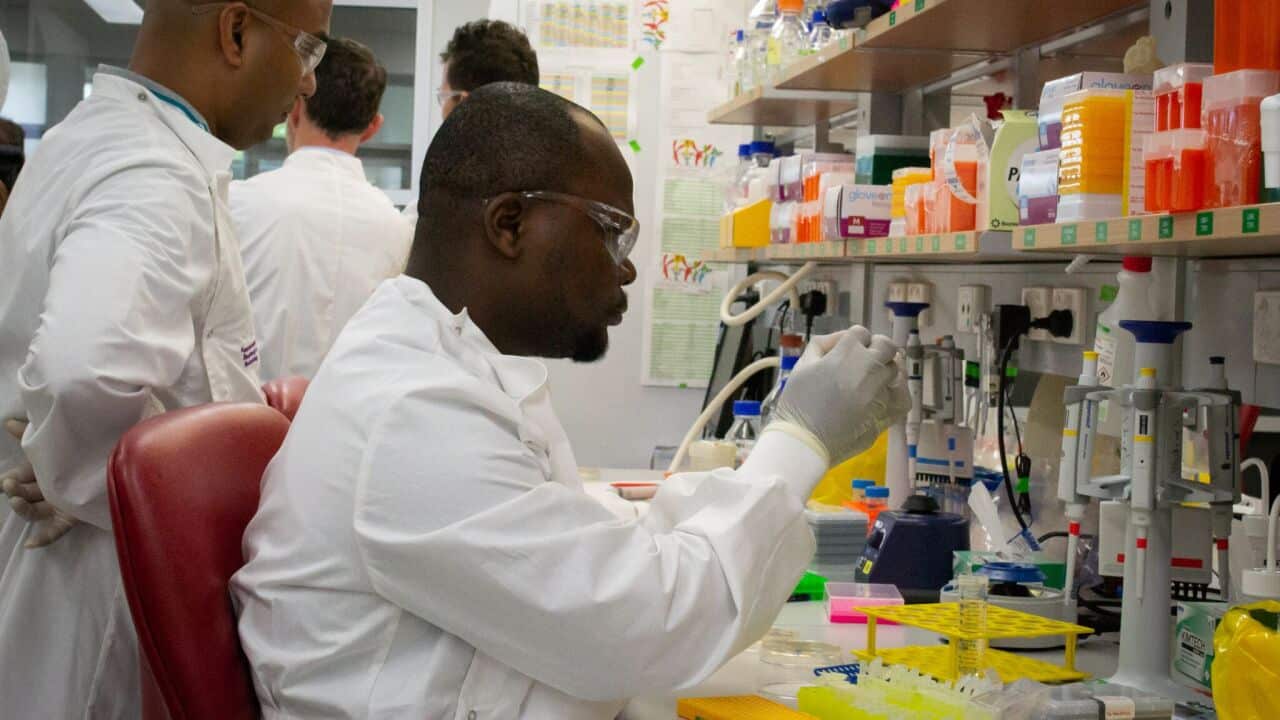
University of Queensland researchers are working round the clock as they race to develop a vaccine to stop people dying from the coronavirus.
The Queensland team is one of three around the world asked to plant their foot on the accelerator and use new technologies to get a vaccine onto the market fast.
If the Queensland team can replicate what they've done in labs with other viruses, including related influenza and ebola, it's possible the world could have a shield against coronavirus within six months.
News that makes sense
Your trusted source for staying up-to-date with the world around you. Get free daily news updates and analysis, straight to your inbox.
So far the virus has killed 25 people in China and infected at least 830 others.
It's also spread to numerous other countries and some ill people in Australia are being tested for it.
Amid fears of a pandemic, the Coalition for Epidemic Preparedness Innovations hand-picked three research teams with the most promising technology to fast-track a vaccine.
The University of Queensland team is confident they'll get there with recently patented DNA-based molecular clamp technology.
It involves using the DNA sequence of the coronavirus - released by China after the outbreak - to produce a protein that's the same as the one on the surface of the actual virus.
That protein will be the essence of the vaccine, capable of generating immune system responses that protect people.
"By injecting that we can get an optimal immune response in people that affords protection," explains Dr Keith Chappell, from the university's School of Chemistry and Molecular Biosciences.
Dr Chappell and colleagues Professor Paul Young and Dr Dan Watterson are responsible for the molecular clamp technology and their team of 20 has been working through the night since they got the call for help.
Gruelling months of work lie ahead, but he's hopeful the six month time frame is realistic.
"That is our goal. It's an incredibly difficult time frame, but we'll do do our best."







