In brief:
- Petrol prices are currently at their lowest since February.
- But the Strait of Hormuz' opening and rapid closure leaves little confidence the price drops can last.
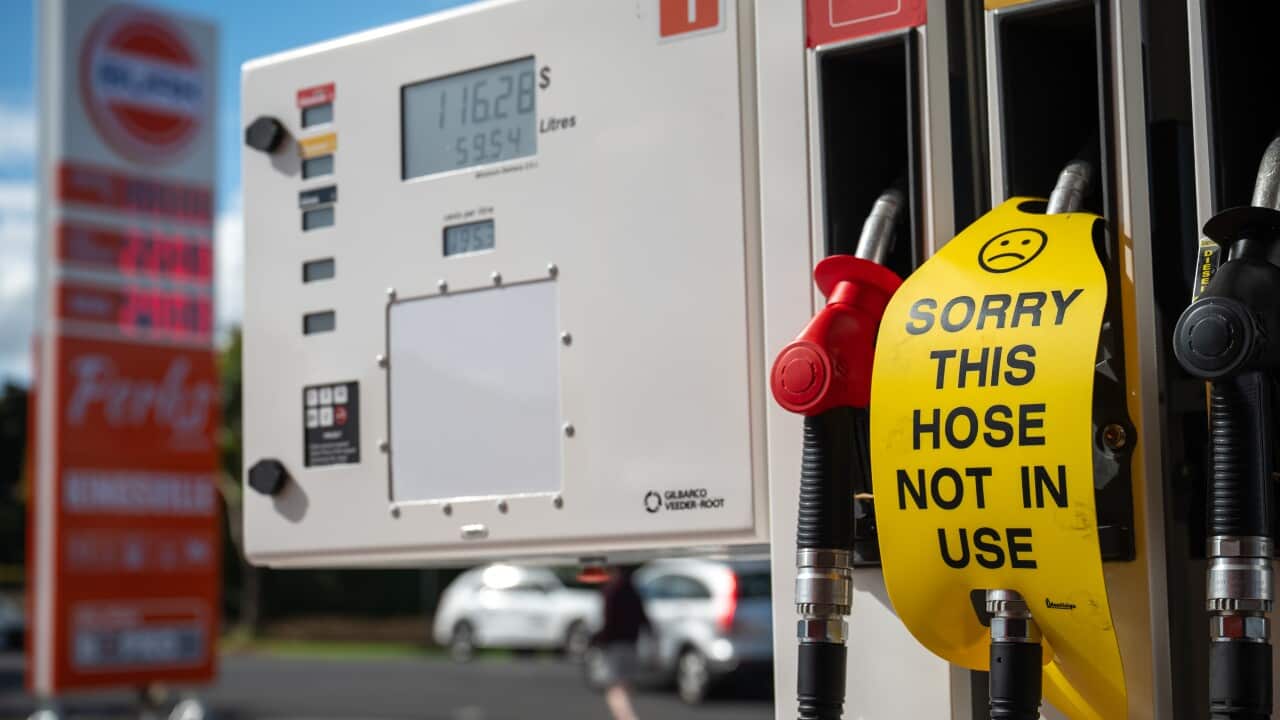
Australians are pulling back on stockpiling fuel as pump prices come down and households adjust to the economic roller-coaster of the war in the Middle East, according to analysis from a major bank.
New data from Westpac shows there's been a two-week decline in fuel spending for the first time since the US-Israel war on Iran began.
The bank analysed customer debit and credit transactions to find fuel spend dropped 3.8 per cent last week. The week prior spending on petrol dropped 17.9 per cent.
It said the average fuel transaction cost rose 2.9 per cent week on week to $59.21, suggesting motorists are reducing short-term stockpiling and focusing on essential fuel use rather than filling up as a precaution.
News that makes sense
Your trusted source for staying up-to-date with the world around you. Get free daily news updates and analysis, straight to your inbox.
The bank also found fewer fuel transactions with fewer customers going to fill up compared to two weeks ago.
Westpac consumer chief executive, Carolyn McCann attributed the decline to the government's decision to cut the fuel excise.
"However, fuel costs are still higher than people were used to before the shock, and we're starting to see the impact shift to some business sectors that are less able to pass costs on quickly."
When will fuel prices go back to pre-war levels?
Tehran has backflipped on a promise to open the key oil-trading waterway, firing on ships attempting to traverse the strait.
Announcing it would close the trading waterway, Iran blamed an ongoing US blockade on its ports, arguing the move breached a temporary ceasefire.
Prime Minister Anthony Albanese has been positive that a re-invigoration of maritime commerce would spell good news for Australian petrol and diesel prices.
He was at pains to stress the arrangement was fragile, following an overnight summit on Friday of some 50 countries to support an ongoing Middle East ceasefire.
The clock is ticking on the pause in hostilities, which could fall apart as soon as Wednesday.
"We want to see de-escalation, we want to see the Strait of Hormuz opened and we want to see no privatisation and no tolls," the prime minister told reporters in Sydney.
"We want to see this fragile arrangement confirmed and we want to see those ships being able to pass."
Australian bowser prices have dipped below $2.10 a litre and are under $3 for diesel for the first time since February across major cities.
However it may take time for consumers to feel the full impact of the Hormuz reopening even if it holds.
While recent falls in global oil prices are translating to cheaper fuel, markets are volatile, according to National Roads and Motorists Association spokesman Peter Khoury.
"Wholesale prices have been falling and they should continue to fall," he told AAP.
"We are focusing on the wholesale prices in Australia because that's the clearest indication of what going to happen at the bowser.
"It takes about seven to 10 days for those falls in oil prices to flow on in the Australian market."
Reprieve aside, Khoury is urging motorists to remain cautious, saying it is still unclear whether the cheaper fuel will last.
"We're really careful not to get too far ahead of ourselves but the trajectory has been in the right direction, it's been positive and we really need that to continue."
Energy Minister Chris Bowen says Australia has 46 days of petrol in reserve and 31 days' worth of diesel.
The number of petrol stations without fuel is also dropping and there are about 120 without diesel across the nation.
Australasian Convenience and Petroleum Marketers Association's Rowan Lee told AAP the issue facing consumers was fuel price rather than supply.
He said price pressures were expected to continue for at least the next six months.
"It's just really uncharted territory and that is not underplaying it," he said.
Energy Economics and Financial Analysis spokesman Kevin Morrison told ABC News it could take six weeks before Australia gets 80 per cent of the oil that's been affected coming back online if peace holds.
"I don't think we can expect cheaper oil prices in the foreseeable future," he said.
With additional reporting by Australian Associated Press
For the latest from SBS News, download our app and subscribe to our newsletter.







