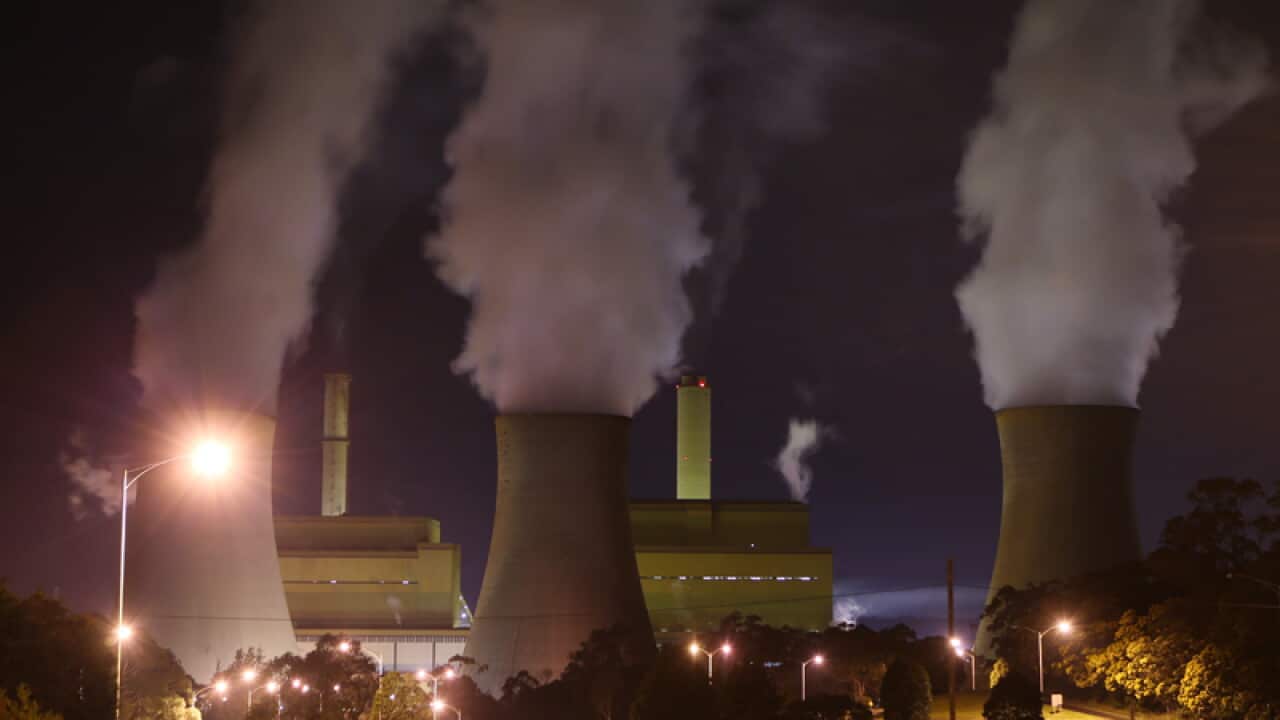
The first full year of data to be released since carbon pricing was abolished shows Australia's greenhouse gas emissions are rising.
The Clean Energy Regulator (CER) says emissions rose by two per cent in 2014/15 compared with the previous year, due mainly to the electricity sector, which is dominated by black and brown coal-fired power stations.
Corporations reported 322 million tonnes of "scope one" greenhouse gas emissions and 91 million tonnes of "scope two" emissions over the year.
Ten companies accounted for 49.3 per cent of emissions. AGL Energy Ltd topped the list with 38.3 million tonnes.
Of the states, Queensland was the highest emitter, accounting for 26.4 per cent, followed by NSW (25.8 per cent), Victoria (22.6 per cent) and Western Australia (17.9 per cent).
News that makes sense
Your trusted source for staying up-to-date with the world around you. Get free daily news updates and analysis, straight to your inbox.
Scope one emissions are released into the atmosphere as a direct result of an activity or series of activities at a facility.
Scope two emissions are released into the atmosphere from the indirect consumption of energy.
The electricity sector remains the largest-emitting industry in Australia, accounting for 55.3 per cent of reported scope one emissions.
Mining accounted for 20 per cent, while the manufacturing sector was responsible for 16.6 per cent of scope one emissions.
Climate Institute chief John Connor said the figures showed the carbon price had been sending an important signal as well as limiting pollution.
"Without any signal, without any limit and without any plan for these big polluters this increase comes as no surprise," he told AAP on Friday.
"And without a credible plan and limits, we will continue to see increases."
He said the Defence White Paper released this week had pointed to climate change being not only an economic issue but a threat to global security.
The CER said 48.4 per cent of Australia's electricity was generated from black coal, compared with 11.1 per cent from renewables, 23.2 per cent from brown coal and 13.8 per cent from gas.
A key element of the government's Direct Action plan will start on July 1 when the "safeguard mechanism" applies.
Facilities whose net emissions exceed the safeguard threshold must keep their emissions at or below a baseline set by the CER.







