
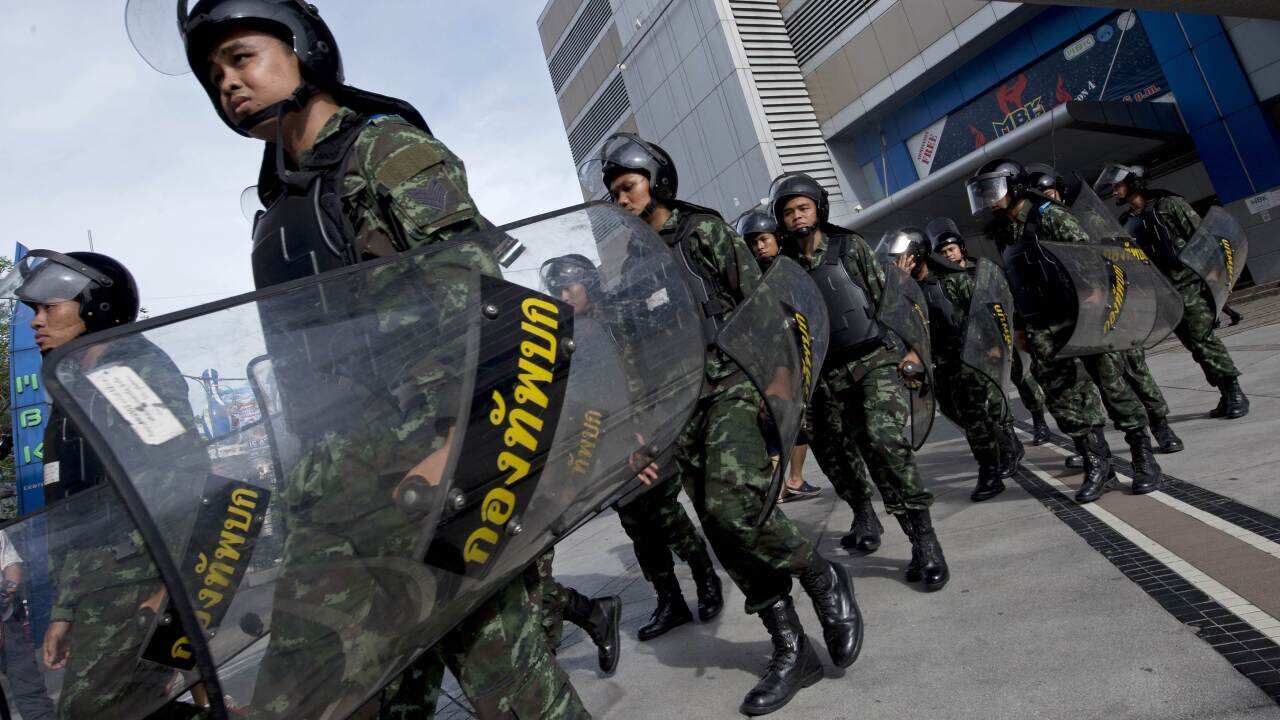
Australia's downgrading of military ties with Thailand over the May 22 coup d'etat was marked by a breach in diplomatic protocols as well as triggering "concerns and surprise", according to Thai Foreign Ministry officials.
The concerns over Australia's stance comes as the Thai Acting Foreign Minister, Sihasak Phuangketkeow, is planning to travel to Australia in a bid to change Canberra's stance on the military takeover.
The military's seizure of power came amid a political deadlock and failed attempts by the military to broker a deal between the government and anti-government groups after months of political protests.
In Singapore last weekend, in a joint statement Foreign Minister Julie Bishop and Defence Minister David Johnston continued to press Australia's opposition to the takeover, calling on the Thai military to "set a pathway for a return to democracy and the rule of law as soon as possible".
Earlier, Canberra had reacted strongly to the military's seizure of power expressing "grave concerns" and leading to a downgrading of military ties.
Canberra also placed the military leaders on a visa ban list, in a move similar to a policy adopted by Australia against senior army generals who oversaw a crackdown against pro-democracy protesters in 1992.
But Thai Foreign Ministry spokesman, Sek Wannamethee, says the Australian reaction to the military's intervention "came as a surprise to lower the level of military engagement."
In an interview with AAP, Sek said Canberra had breached diplomatic protocols by failing to notify Bangkok before the downgrade in military links.
"We are disappointed of course. Surprised and of course disappointed and concerned," he said.
Australia's position against the coup led to a rally outside the Australian Embassy on Wednesday when a bunch of roses was handed to embassy officials supporting Canberra's stance.
This was followed the next day with a protest rally outside the embassy gates by groups backing the coup.
Sek says Thailand accepted that its Western partners have their "norms and values".
But when considering their position on Thailand, he called for the West to "bear in mind firstly the current political situation, the context the military takeover took place," after nine years of political infighting.
He said Australia and other countries needed to look to the longer term as Thailand being "an active player in the region" and "because in two years eventually the situation will return to normal (with elections)."
The Thai military leaders, while facing criticism from the US and rights groups such as the New York Based Human Rights Watch, say the takeover was to prevent escalating bloodshed by para-military groups on both sides of the political landscape.
Over the seven months of anti-government protests and political uncertainty, some 28 people have died and several hundred have been injured.





