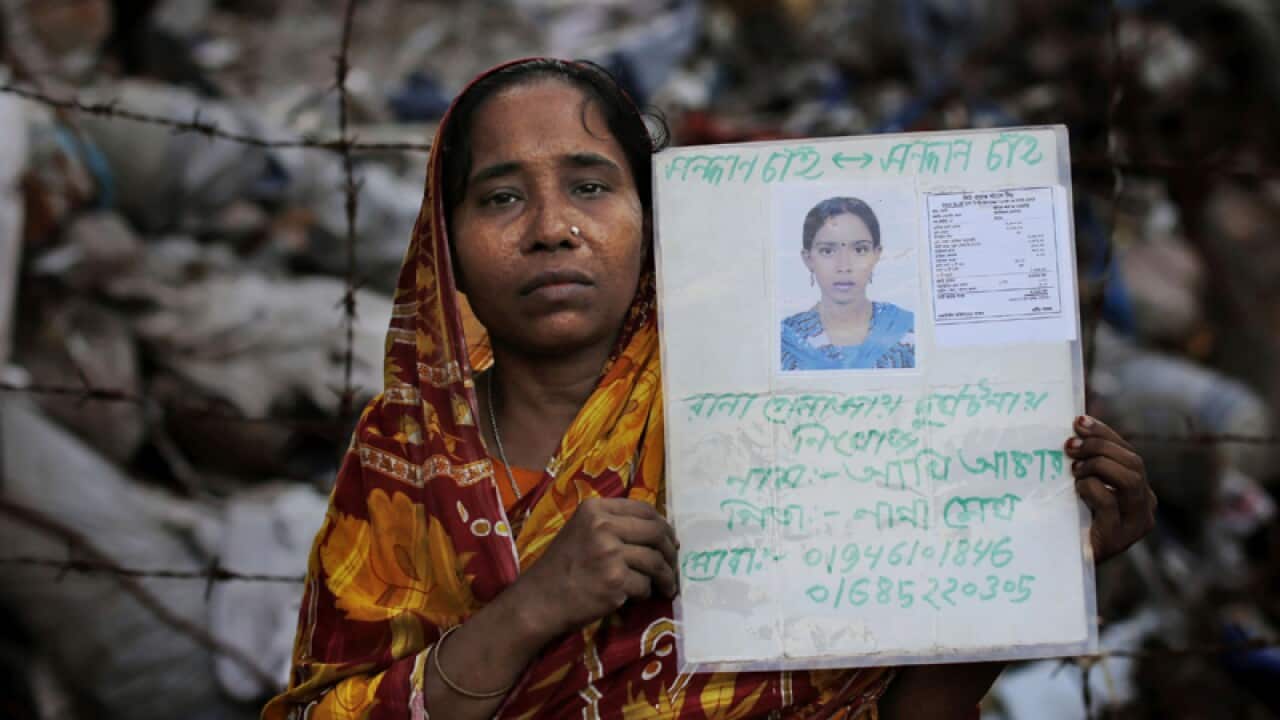
As people around the world rallied for workers’ rights on May Day, or International Workers’ Day, many employees in developing and emerging nations are yet to enjoy fair working rights and wages.
Oxfam Australia said more needs to be done to ensure employees from poorer nations are given decent wages and better working conditions.
“We know that there are still unsafe conditions across many countries, including what we’ve seen in Bangladesh with the collapse of the Rana Plaza building last year,” said Daisy Gardener, Oxfam Australia's Corporate Accountability and Fair Trade Advisor.
It’s been just over a year since the Rana Plaza factory collapse in Bangladesh that killed more than 1,138 garment workers. As well as the dead, more than 2000 people were injured in a tragedy that put the spotlight on the lax safety standards and often abusive working conditions in the world's second-biggest clothing producer.
The disaster shamed Western brands into launching new safety inspections and pushed Bangladesh's government to increase wages and ensure the better enforcement of regulations.
Workers struggle to live off minimum wages
“We know that there are millions of people working in the manufacturing industries and other industries who struggle to get by on very low wages,” said Ms Gardener.
“There’s violation of trade union rights when workers try to come together to organise for improved conditions. Workers are often kept on short term contracts - they don’t have any security for their future.”
The International Labour Organisation (ILO) reported that 375 million workers lived on less than $US1.25 a day in 2013.
"A decent wage is one of the simplest and most direct ways of preventing a rise in working poverty," said ILO Director-General Guy Ryder. "It is up to each country to set the right level but this is too important a tool for any country to disregard."
Ms Gardener told SBS garment workers in Bangladesh earn as little as 32 cents an hour.
“The wages are extremely low in the garment industry. We know that in Banglagesh workers receive 32 cents an hour. And that is just not enough for families to feed themselves,” she said.
“Minmum wage is five times lower than what the living wage is... The minimum wage is just too low for workers to get by."
Safeguarding workers from exploitation and abuse
There are currently no international laws in place to protect workers from unethical or unsafe working conditions. In 2011, the United Nations released guidelines on business and human rights, but as this is a voluntary code, it’s not legally binding.
However in the aftermath of the Raza Plaza building collapse, the Bangladesh Fire and Safety Accord was created to legally hold companies to account. More than 160 companies, including adidas, Marks and Spencer and Abercrombie & Fitch have signed on so far.
"This Accord is really important because it mandates independent inspection into electrical repairs, fire safety and structural safety to try and make sure a tragedy like Rana Plaza doesn’t happen again," said Ms Gardener.
"We’ve also seen a number of Australian companies sourcing from Bangladesh have also signed this agreement, including companies like Kmart, Cotton On, and Forever New.
"We think this Accord is a step forward, but there’s still a long way to go in terms of the low wages that workers are facing in Bangladesh. And also the violation of trade union rights as well."
Chocolate, coffee and iPhones
With the fair trade movement gaining popularity over recent years, workers in the chocolate and coffee trade can now receive better wages, said Ms Gardener.
"We do know in the chocolate and coffee industries for example, there is a growing fair trade movement.
"Plantations can become certified fair trade - and that means workers can receive decent wages and growers can receive a minimum guaranteed price. So that’s a positive development that’s growing in recent years," she said.
But working conditions in electronic manufacturers are still poor.
“In terms of the electrical manufacturing industries, such as phones as computers, we know that that’s similar to the garment industry where workers are facing very difficult conditions,” said Ms Gardener.
“One of the big problems in those industries... is that we just don’t know where these workers actually are. So companies don’t reveal sometimes which countries they’re sourcing from, let alone which factories they’re sourcing from.”
In 2010, at least 13 Foxconn employees in China died in apparent suicides, which activists blamed on tough working conditions, prompting calls for better treatment of staff. Foxconn manufactures a range of computer products, including Apple iPhones, iPads and computers.
These incidents have prompted Apple to demand better working conditions in these factories. The tech giant has previously said in a statement: "Our suppliers must live up to the toughest standards in the industry if they want to keep doing business with Apple."
People power: 'Consumers need to pressure companies'
But it's not just multinational companies that hold the power. Ms Gardener said consumers can help change working conditions in poorer nations through their buying power.
"We absolutely know that following the Rana Plaza collapse, that Australian companies were really listening to what their consumers were saying," she said.
"We believe that companies are forced to listen to what consumers and investors are telling them and that’s making a difference."
Share


