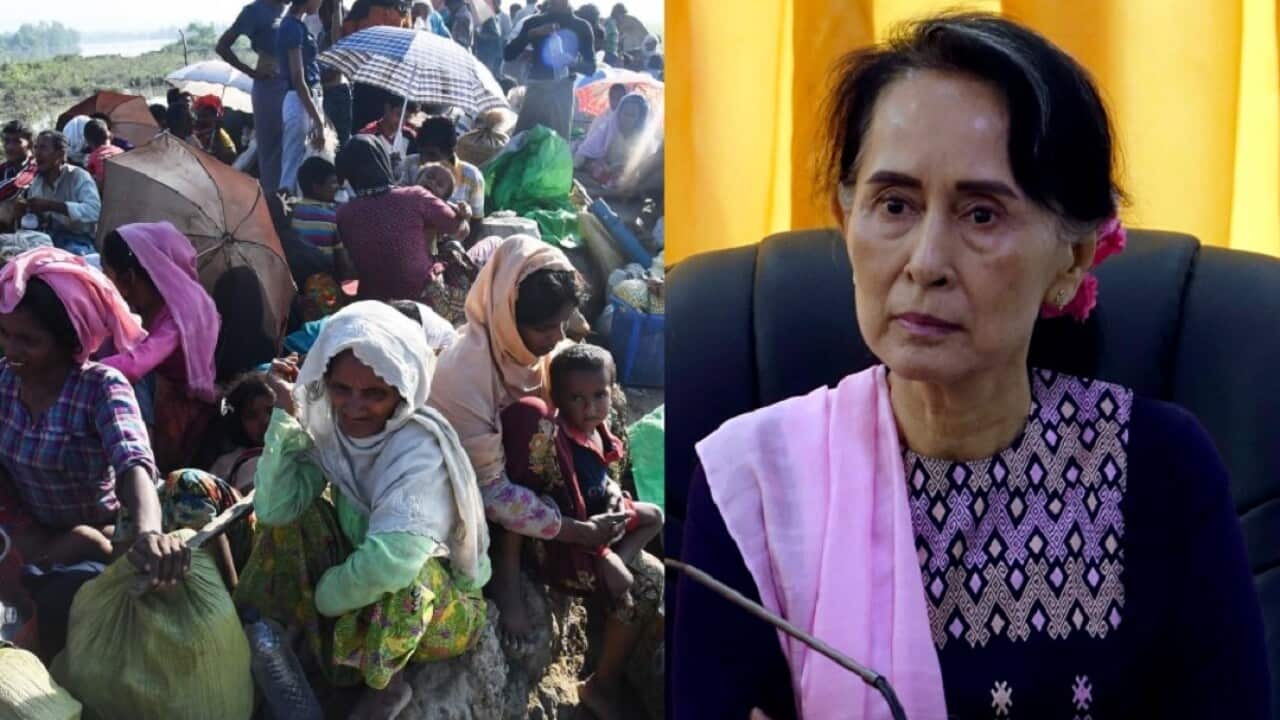
Proposed US sanctions targeting Myanmar's military for its treatment of Rohingya Muslims would hinder the fledgling civilian government sharing power with the generals, a spokesman for de facto leader Aung San Suu Kyi says.
The bill, introduced by members of the US Senate on the eve of Donald Trump's departure on his first trip to Asia since becoming president in January, seeks to reimpose some sanctions lifted last year as Myanmar returned to democracy.
The measure would impose targeted sanctions and travel curbs on Myanmar military officials and bar the US from supplying most assistance to the military until perpetrators of atrocities against the Rohingya in Myanmar's western Rakhine State are held accountable.
Responding to the moves in Washington, Suu Kyi's spokesman, Zaw Htay, told Reuters, "we need internal stability to improve the country's economy. Imposing international sanctions directly affects the people in travel and in business investments, and there are many bad consequences."
News that makes sense
Your trusted source for staying up-to-date with the world around you. Get free daily news updates and analysis, straight to your inbox.
Myanmar officials would explain the government's efforts on Rakhine during a visit by Secretary of State Rex Tillerson scheduled for November 15, he said.
Members of Congress have pressed for a strong response to the plight of the Rohingya and the Trump administration has been weighing labelling the actions by Myanmar's military as "ethnic cleansing".
Myanmar has rejected that accusation, defending the military's actions as a counter-insurgency operation provoked by Rohingya militant attacks on 30 security posts in Rakhine State on August 25.
More than 600,000 Rohingya Muslims have fled Myanmar since the military crackdown.







