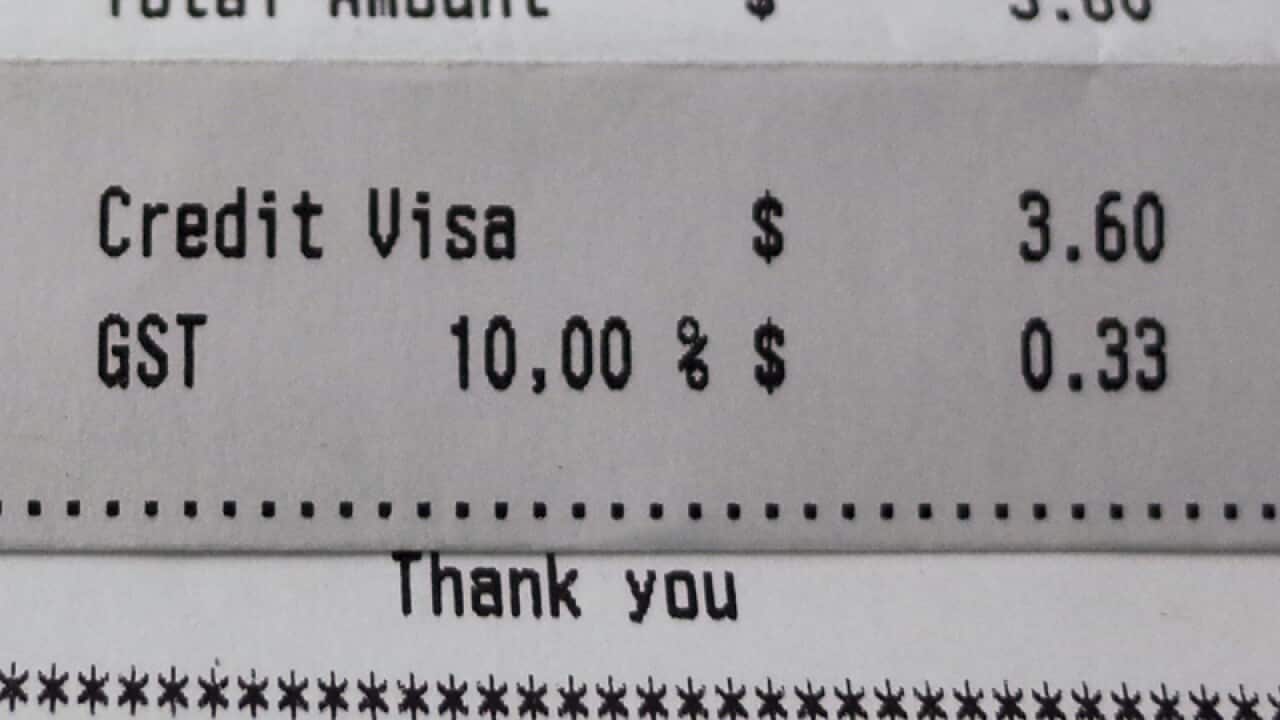
The Turnbull government won't reconsider revamping the GST, even though NSW Premier Mike Baird expects a review of the tax mix is needed to address the looming challenge of funding health.
In its latest assessment of Australia, the Organisation for Economic Co-operation and Development acknowledged the commonwealth's reform efforts, such as better targeting of superannuation and proposed cuts in the corporate tax rate.
"However, the reforms fall short of a major shift in taxation as recommended in OECD economic surveys, which stress the importance of efficient tax bases, such as the goods and services tax and land tax," the Paris-based group said in a report.
Asked whether he saw merit in what the OECD was saying, Finance Minister Mathias Cormann said the issue was "well and truly settled".
"We've had a debate in this country about the merits or otherwise of making changes to the GST and we've decided against it for reasons that we've spelled out in some detail in the lead-up to the election," he said on Tuesday.
News that makes sense
Your trusted source for staying up-to-date with the world around you. Get free daily news updates and analysis, straight to your inbox.
Mr Baird doubts the federal government will return to tax reform over the next to three years beyond what it is arguing for at the moment.
"In the longer term ... we will inevitably come back to it and the reason I think we will come back to it is because the biggest challenge we have is health," Mr Baird told the National Press Club In Canberra.
He declined to specify what the tax mix should be.
The OECD also expects Australian economic growth to slip below three per cent by the end of 2016 and stay there until 2018.
The economy was expanding at an annual 3.3 per cent pace as of June.
Treasurer Scott Morrison says the economy is still growing faster than the OECD average.
"We are growing faster than Canada, the United States, United Kingdom, Germany, France, Netherlands, Japan, Singapore, New Zealand," he told parliament.
Former Labor treasurer Wayne Swan said the government had got its policy settings wrong and, like the OECD suggested, it should be more actively deploying fiscal policy to strengthen growth.
"What the economy really demands is a boost to public sector investment and critical economic infrastructure to lift our productivity and to lift demand," he told reporters in Canberra.
The OECD expects by 2018 unemployment will be lower at 5.3 per cent, from 5.6 per cent now, and inflation will be a more normal 2.1 per cent.
As such it doesn't envisage the Reserve Bank of Australia will cut its key interest rate any further and will be raising the rate by late 2017.
It believes a rate hike would help tame tensions in the housing market, which has experienced rising prices in many places for some time.







