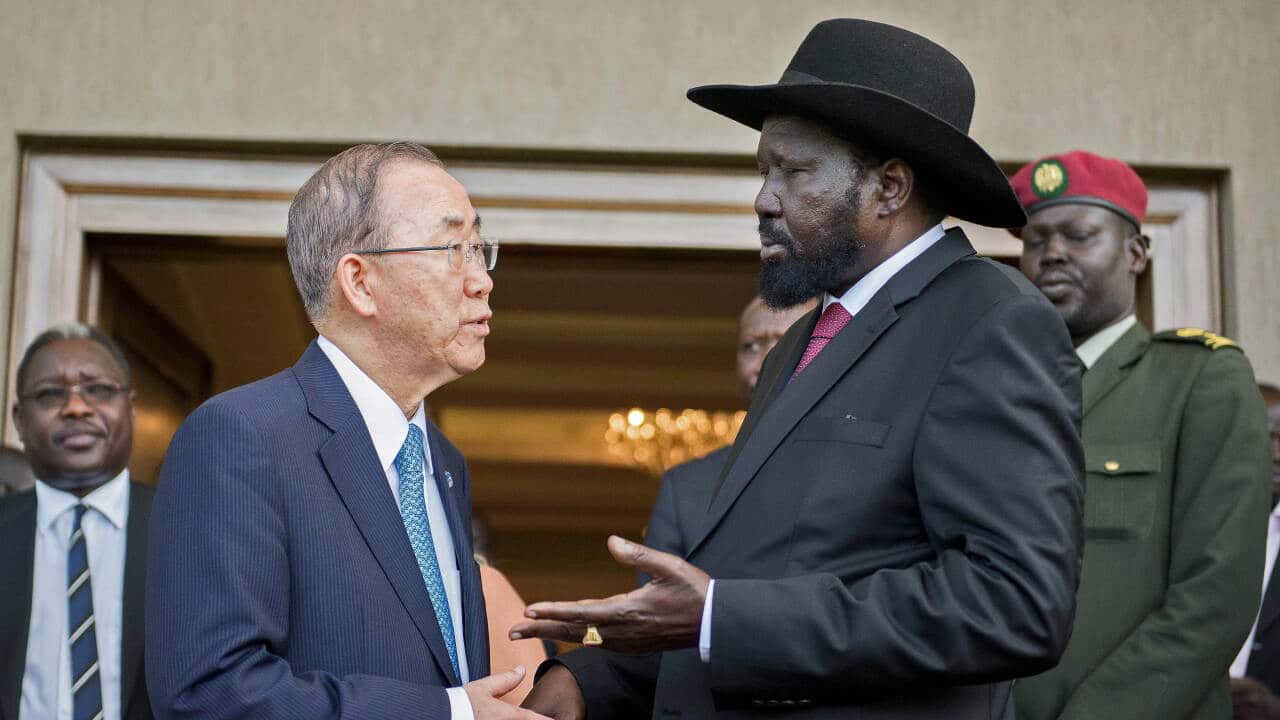
The visit, which comes as rebels and government forces fight heavy battles for control of a key oil town, is the latest major push for a ceasefire in the four-month-old civil war, which has seen the world's youngest nation collapse amid a brutal cycle of war crimes.
"The Secretary-General has repeatedly called on the leaders to find a political solution, and to put an immediate end to the violence which has led to the suffering of so many innocent civilians," a UN statement read.
Both sides in the conflict have been accused of widespread ethnic massacres, rape and child soldier recruitment.
News that makes sense
Your trusted source for staying up-to-date with the world around you. Get free daily news updates and analysis, straight to your inbox.
Ban's visit comes days after US Secretary of State John Kerry flew into the capital, a visit in which he extracted promises from President Salva Kiir to meet face-to-face with rebel chief Riek Machar.
But despite warnings of sanctions if fighting continued, one day after the government pushed forward a major offensive to claw back towns from the gunmen.
Ban, who is scheduled to meet with Kiir on his one-day visit, will also meet with community leaders from the tens of thousands sheltering inside hugely overcrowded fortified UN peacekeeper bases.
They are too frightened of attacks to leave the protection of the peacekeepers, even though the camps themselves have come under attack.
Meanwhile battles continued around the dusty northern town of Bentiu, capital of the oil-producing Unity state, four days after government troops moved to wrest back control.
Defence Minister Kuol Manyang told AFP insisted government troops were in control of the town centre, but that heavy fighting was ongoing in surrounding villages, some five kilometres (three miles) from the town.
The war has claimed thousands -- and possibly tens of thousands -- of lives, with at least 1.2 million people forced to flee their homes, many living in appalling conditions in overstretched UN bases and in fear of ethnic violence.
A January ceasefire was never enforced. Stop-start peace talks in Ethiopia have yet to forge agreement on even the basic agenda, despite warnings from the UN that the conflict threatens famine and genocide.







