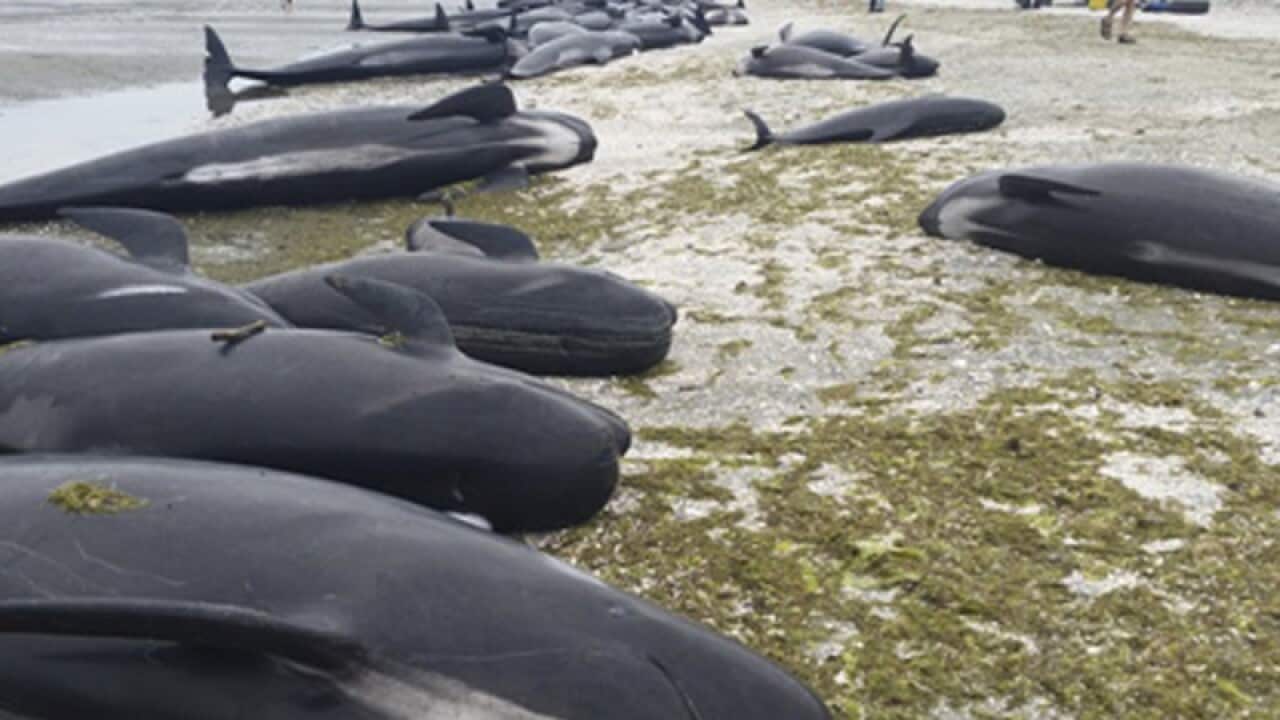
Whale strandings could partly be caused by the animals becoming exhausted while trying to escape human noise, scientists believe.
A study has found that startled beaked whales swimming away from low frequency sonar boost their energy consumption by more than 30 per cent.
Tests on trained dolphins showed they doubled their energy use when pushing against a force plate in a pool.
Cetaceans such as dolphins and whales, which have to surface to breathe, balance their energy demands against a limited supply of oxygen.
In some cases fleeing whales might run out of steam and become washed up on beaches, the research suggests.
News that makes sense
Your trusted source for staying up-to-date with the world around you. Get free daily news updates and analysis, straight to your inbox.
US lead scientist Dr Terrie Williams, of the University of California at Santa Cruz, said the study showed a big difference in the energy cost of whales swimming normally and attempting to escape danger.
"In view of the number of cetacean mass strandings across the globe and the increase in human presence in the oceans, such data are critical," she said.
The research involved training six bottlenose dolphins to take part in swimming tests while scientists measured their oxygen consumption and the rate at which they beat their fins.
Another part of the study analysed recordings of a Cuvier's beaked whale reacting to 20 minutes of loud sonar.
Based on the whale's fin beat pattern, the scientists calculated the animal's energy consumption was increased by 30.5 per cent.
The findings are published in the Journal of Experimental Biology.
Experts are still at a loss to explain the mass stranding of more than 600 pilot whales on New Zealand's South Island during the course of two days in February.
About half the whales died or had to be euthanised.
The others were refloated by volunteers or managed to swim back to sea unassisted.







