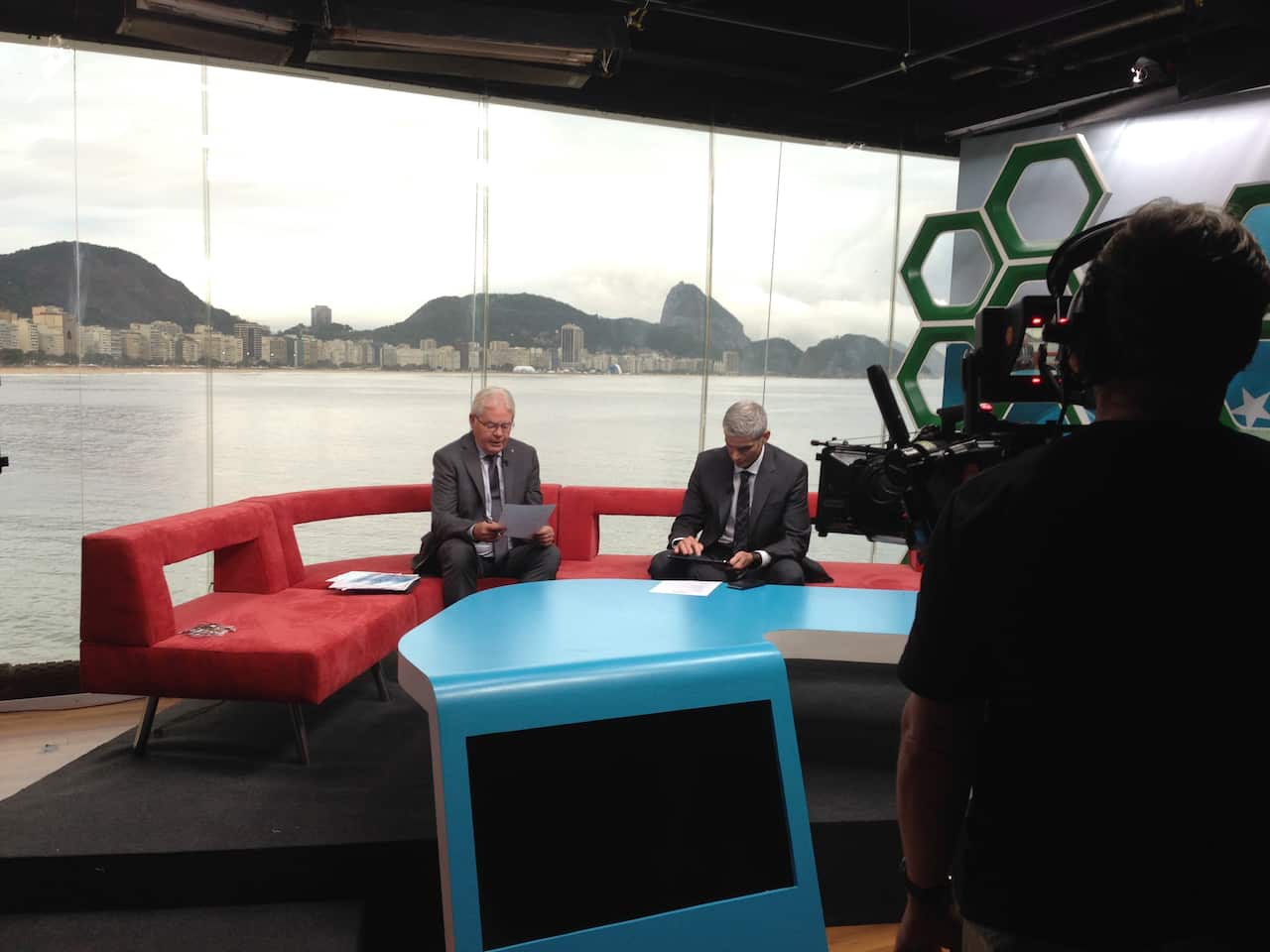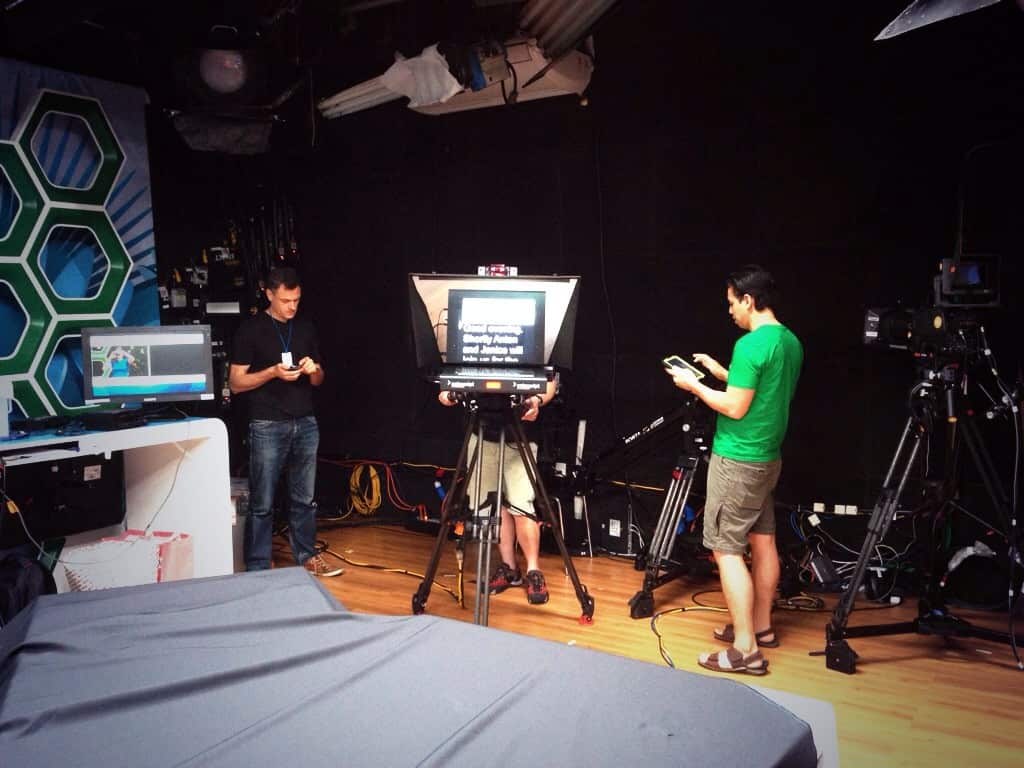
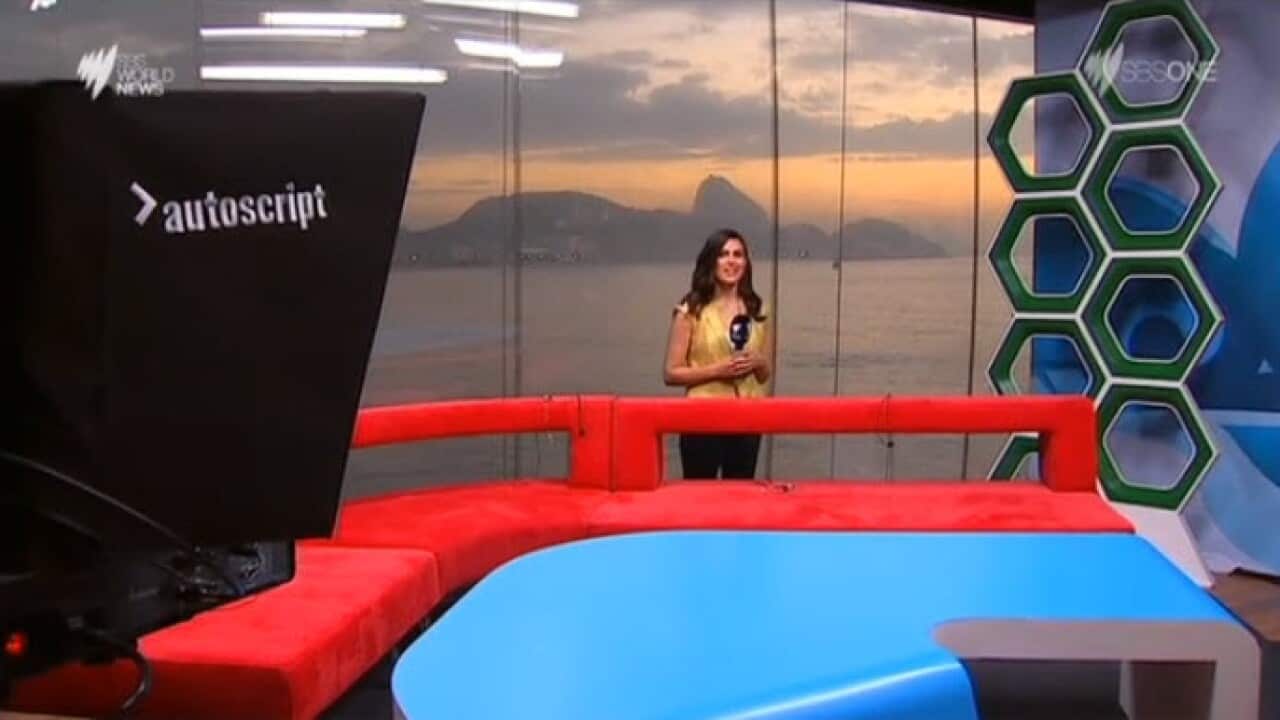
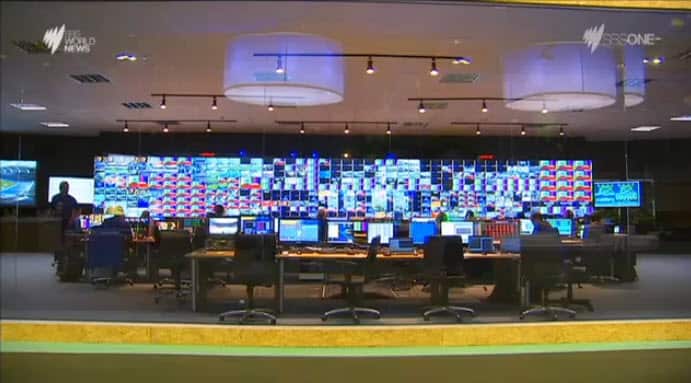
The numbers are staggering: 161 TV outlets, 100,000 electrical cables and hundreds of TV screens make up the purpose-built World Cup media centre in Rio.
The 13-hour time difference means SBS reporters are up at 4am - before the other international journalists - to bring Ausralian audiences the latest developments.
Shipping containers have been converted to control rooms, with journalists at different media outlets sitting side by side to share the electronic setup that delivers audiences at home the latest news.
Correspondent for Hong Kong's TVB broadcaster, Janis Chan says the journalists are working at a frenetic pace.
"It has been very exciting but I need to catch up on my sleep," she said, "because of the time difference I have to wake up at 5.30 in the morning and work to around 10pm at night."
For Sky Italia presenter Angelo Mangiante, the media centre's location has one key benefit.
"It is like a vacation because there is a wonderful landscape," he said. "We are very proud to broadcast the matches from here."
A number of journalists are also based at the media centre in Maracana Stadium. Earlier this week, about 100 ticketless Chilean fans broke a door to the centre before filling the corridors ahead of their team's match against Brazil.
Since then, authorities have posted an extra 600 police officers to boost the 2,500 already positioned around the stadium.
Television coverage of the World Cup has broken a number of viewing records during the first round of group matches in Brazil in countries around the world, FIFA says.