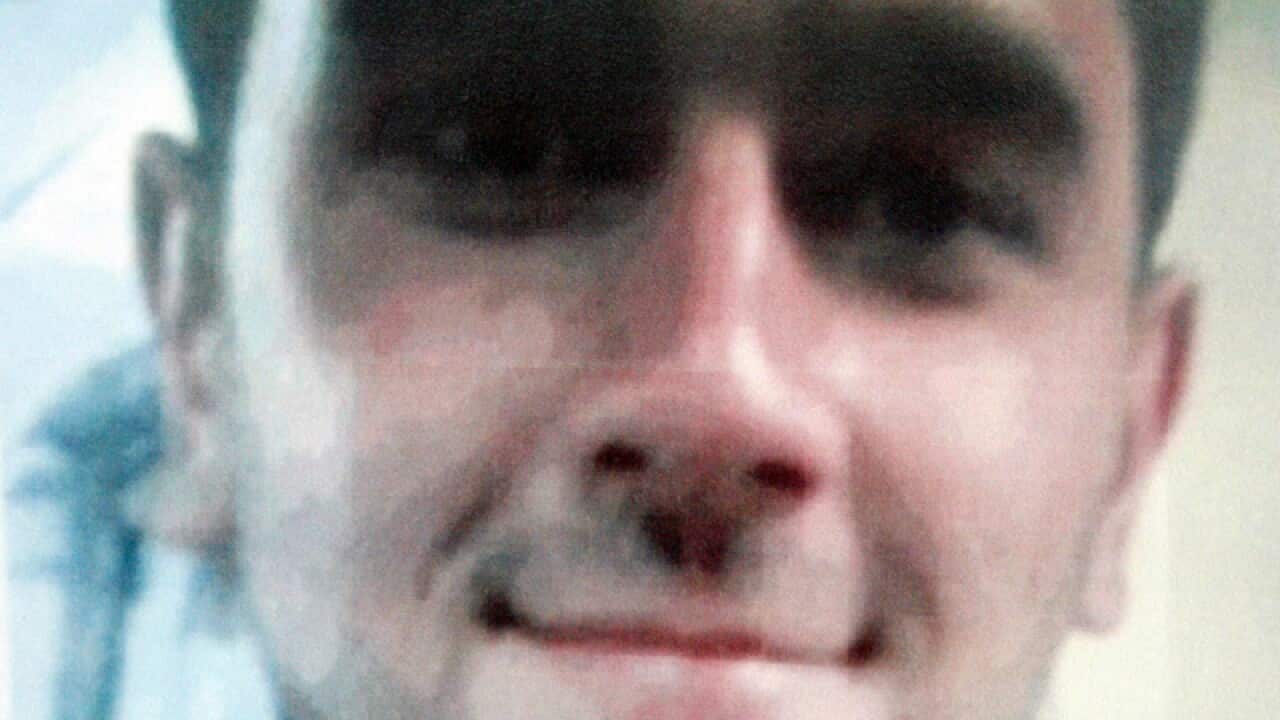
A suicide bomber who attacked Iran's embassy in Beirut has been identified through DNA tests on his father, a judge says, after the man came forward when photos of suspects were published.
The test on Adnan Abu Dahr shows that human remains at the scene belonged to his son, Mouin Abu Dahr, who was identified as one of two attackers, the judge was quoted by the National News Agency as saying.
A Facebook page reportedly belonging to Mouin Abu Dahr expressed support for al-Qaeda and for a radical Sunni Muslim Lebanese cleric, who is a supporter of the Syrian rebellion.
The double suicide bombing outside the embassy in a southern suburb of Beirut killed 25 people, and was claimed by an al-Qaeda-affiliated group called the Abdullah Azzam Brigades.
"The government's commissioner to the military court, Judge Saqr Saqr, confirmed that the DNA test administered to Adnan Abu Dahr corresponded with the human remains recovered from the scene of the attack, belonging to (his son) Mouin Abu Dahr, one of the two suicide bombers," the agency reported on Saturday.
News that makes sense
Your trusted source for staying up-to-date with the world around you. Get free daily news updates and analysis, straight to your inbox.
For its part, the army said Mouin Abu Dahr, from Lebanon's majority Sunni town of Sidon, was one of the two suicide bombers.
On Friday, the army released two pictures of men wanted for "dangerous crimes" - believed to be the suicide bombers.
The second suspect has yet to be officially identified, but the agency quoted Saqr as saying investigations were ongoing.
It was the first attack in Lebanon against interests of predominantly Shi'ite Iran, which is a key ally of the Syrian regime as it battles a 32-month uprising.
Tehran is also the key sponsor of the Lebanese Shi'ite group Hezbollah, which has dispatched fighters to Syria to bolster the government in its fight.







