The Australian government is being urged to work with tech platforms to list 'sovereign citizen' groups as designated terrorist entities online and create a global database to monitor the movement's leaders and influencers.
The sovereign citizen movement — a loose network sharing the view that governments and legal systems are illegitimate — has grown from "mostly a nuisance" to a legitimate security threat, a new report by the Lowy Institute argues.
While sovereign citizens are often dismissed as eccentrics, those inspired by the ideology have carried out terrorist attacks and violence against officials, according to the independent think tank report.
Authors Lydia Khalil and Keiran Hardy say the movement "has grown beyond a nuisance, escalating into a national security challenge for many countries around the world".
The report refers to the fatal shooting of two police officers in the regional Victorian town of Porepunkah in August 2025 as an example of "how encounters between sovereign citizens and law enforcement can turn deadly".
News that makes sense
Your trusted source for staying up-to-date with the world around you. Get free daily news updates and analysis, straight to your inbox.
It notes that "sovereign citizens view police as agents of illegitimate governments" and, as such, defiance of police orders is considered to be legitimate resistance to "the tyranny of state control".
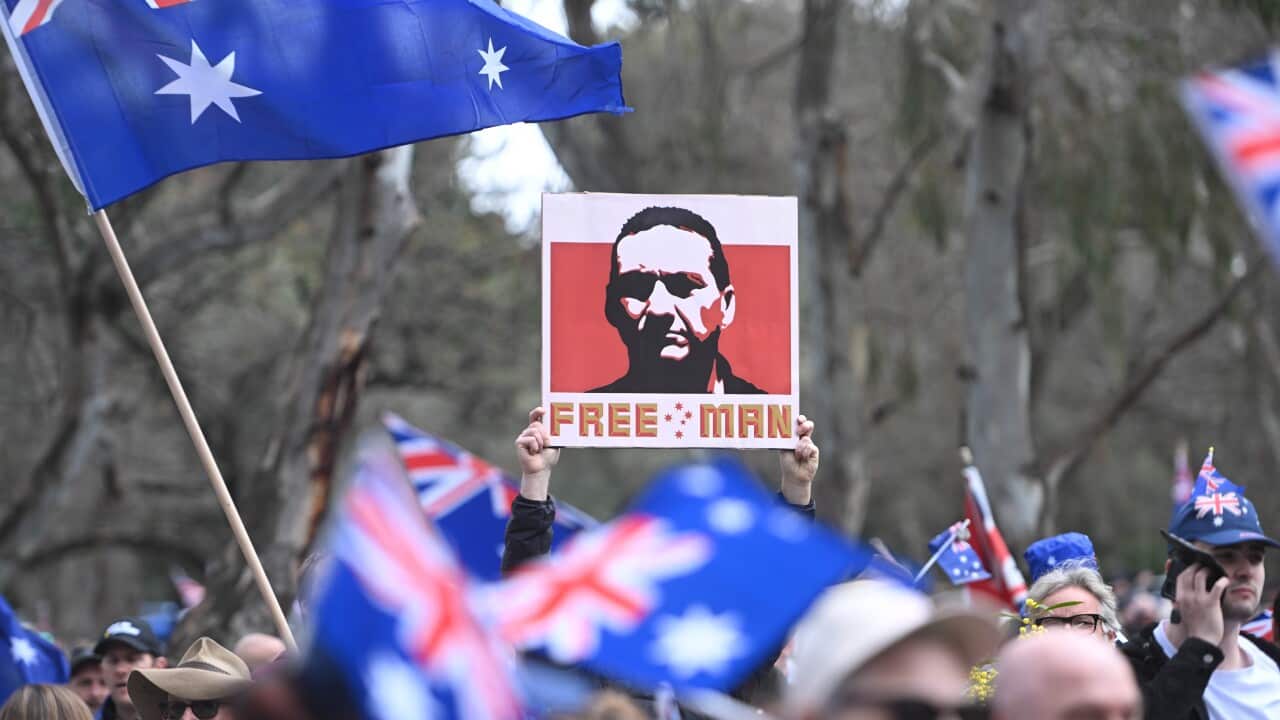
Dezi Freeman — the alleged Porepunkah shooter, who is still at large although believed by police to possibly be deceased — has been described as a "very active sovereign citizen" who is held in "high regard" by followers of the movement.
Such threats show the need for stronger action to prevent the growth of the movement, which is now spread across 26 countries, Khalil and Hardy argue.
Among other things, their report calls for closer intelligence cooperation and a comprehensive global database with partner countries that are also grappling with sovereign citizen movements.
The trajectory of the sovereign citizen movement
Originating in the United States in the 1960s, sovereign citizen ideology portrays the governments, state institutions and legal systems as illegitimate and tyrannical.
It gained popularity in the late 2000s during the global financial crisis and saw a significant uptick in followers during the COVID-19 pandemic lockdowns.
"Public health restrictions, combined with social isolation and increased time online, created the ideal conditions for disinformation and conspiracy theories about government control to thrive," the report said.
It cites examples of anti-lockdown protests in Canada, Australia, New Zealand and Europe, when many of the arguments made by participants against public health mandates were "taken from sovereign citizen rationales".
However, the report notes the movement — more accurately thought of as "a loose alignment of groups and individuals" — is fractured, and its followers in different countries don't share a single set of unifying traits.
For example, in Italy, sovereign citizen followers have combined the ideology with new age spirituality and apocalyptic messaging.
In Canada, the self-described 'Queen of Canada' Romana Didulo, a QAnon believer who's also an anti-vaxxer, sought to start her own "sovereign" village.
Meanwhile, some sovereign citizens in Australia have "co-opted the language of Indigenous sovereignty movements" and in some cases, "sought credibility by association with Indigenous sovereignty claims".
The Australian 'micronations' threatening state institutions
Though sovereign citizens have often been "dismissed as a collection of conspiratorial eccentrics" on society's fringes, the report stresses that the movement has increasingly been associated with violence.
Between 2023 and 2025, threats against the judiciary in Victoria increased nearly fourfold, while almost a quarter of judges in NSW have received death threats.
Sovereign citizens have also participated in violent protests, the report explains, including the attack on the US Capitol on 6 January 2021 after the US elections.
Sovereign citizens have also created 'micronations', which have their own alternative systems of governance, identity documents and sometimes even currency.
The threat of such entities escalates when they form their own law enforcement and attempt to arrest legitimate government officials, the authors write.
In Western Australia in 2021, members of a sovereign group broke into a courthouse, attempting to establish a "proper governing body of law".
Another group, also in Western Australia, established their own courts.
"Micronations have cropped up around the world, but nowhere more so than Australia," the report reads.
Why Australia needs to partner with other countries
The report calls for Australia to form part of a dedicated intelligence-sharing stream or a global database, especially for countries where the movement has a significant presence.
They said such a database would help track information on sovereign citizen online influencers, since their ideas, arguments, narratives, and tactics spread globally on social media platforms, websites, online forums, and encrypted messaging channels.
"Meaningful action is needed to reduce this global spread of harmful online content," the report's authors write.
"Many of the mechanisms and forums used by partner governments to address other global extremist movements can be used to exchange information, intelligence, and lessons learned about sovereign citizens."
In order to be able to moderate and restrict certain content online, the authors of the report suggest working with members of the Global Internet Forum to Counter Terrorism — an NGO founded by Meta, Microsoft, YouTube and X to counter terrorism — to list them as designated entities.
"Because the sovereign citizen movement is not a designated terrorist entity, its influencers, narratives, and communities often evade the moderation efforts of the online platforms that facilitate their growth," the report said.
Designating the sovereign citizen movement would enable tech platforms to deplatform accounts and report trends regarding the movement.
"While sovereign citizens are increasingly using alternative online platforms with little to no content moderation, this would reduce their presence and influence on mainstream platforms."
For the latest from SBS News, download our app and subscribe to our newsletter.







