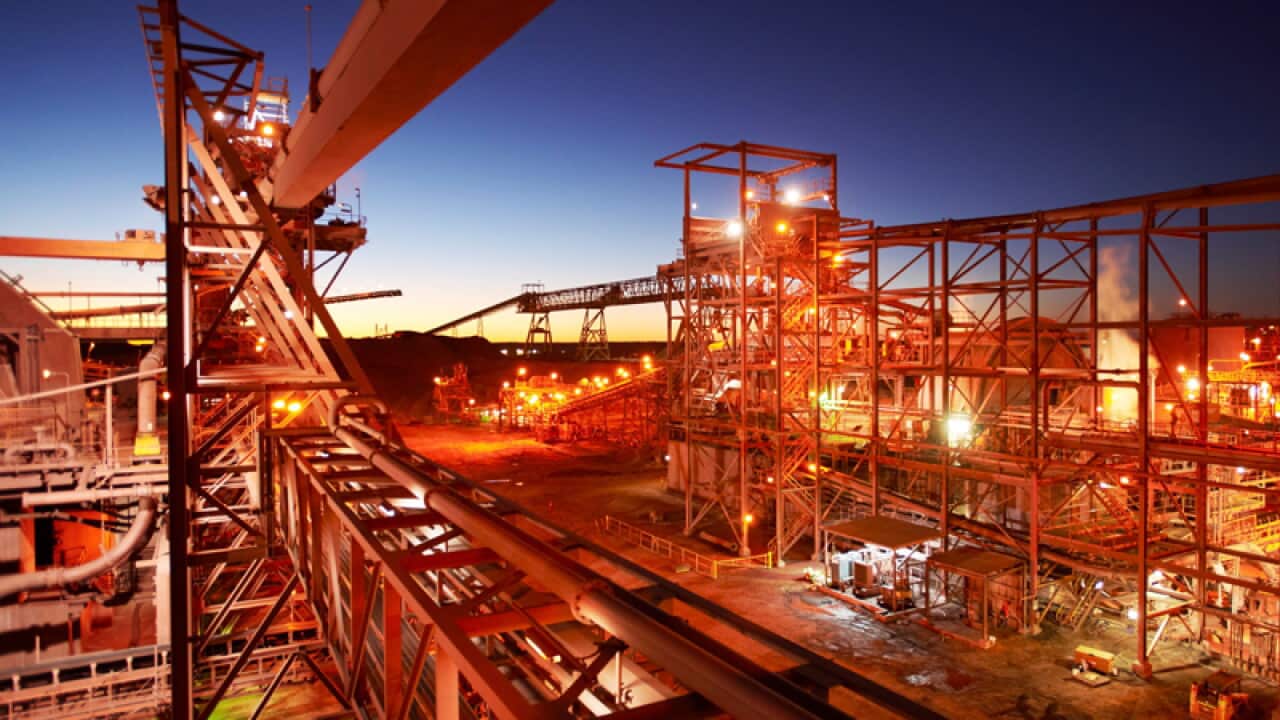
BHP Billiton plans to almost halve its costs at Olympic Dam over the next two years but says it will double capacity over the long term.
President of the copper division Daniel Malchuk says while an oversupply of copper is weighing on prices in the short term, the mining giant expects a global supply deficit by the end of the decade.
BHP is aiming to reduce costs at its Olympic Dam operations by 48 per cent to $US1.00 per pound by the end of fiscal 2017 as it pursues labour efficiencies and contract and supply renegotiations.
The global miner has already made large-scale cuts to its Olympic Dam workforce, with hundreds of job losses this year.
Mr Malchuk said the company's early design included an underground mine expansion, which gives it the potential to deliver more than 450,000 tonnes of copper from 2025.
News that makes sense
Your trusted source for staying up-to-date with the world around you. Get free daily news updates and analysis, straight to your inbox.
"At Olympic Dam we remain confident in our long-term growth plan to double capacity," Mr Malchuk told analysts in a presentation on Wednesday.
"We will still preserve optionality for a longer term open pit development."
The company is conducting technology trials for the large expansion as it considers a way to optimise the current plant and infrastructure.
BHP aims to slash its overall copper unit costs to $US1.08 a pound in fiscal 2017 as copper prices hover around six-year lows.
The copper division, which makes up 24 per cent of BHP's underlying earnings, has already slashed its workforce in Chile by 11 per cent.
"We have achieved outstanding cost reductions and this is just the beginning," Mr Malchuk said.
Despite a significant decline in the grade of copper at the company's massive Escondida mine in Chile, BHP expects to maintain an average production capacity of 1.2 million tonnes per annum for the next decade.
The release of latent capacity across the portfolio would help grow annual group copper production to around 1.7 million tonnes, BHP said.
The company added that it has entered the feasibility stage with its large-scale Spence growth project in Chile which it hopes will be producing in 2020.







