

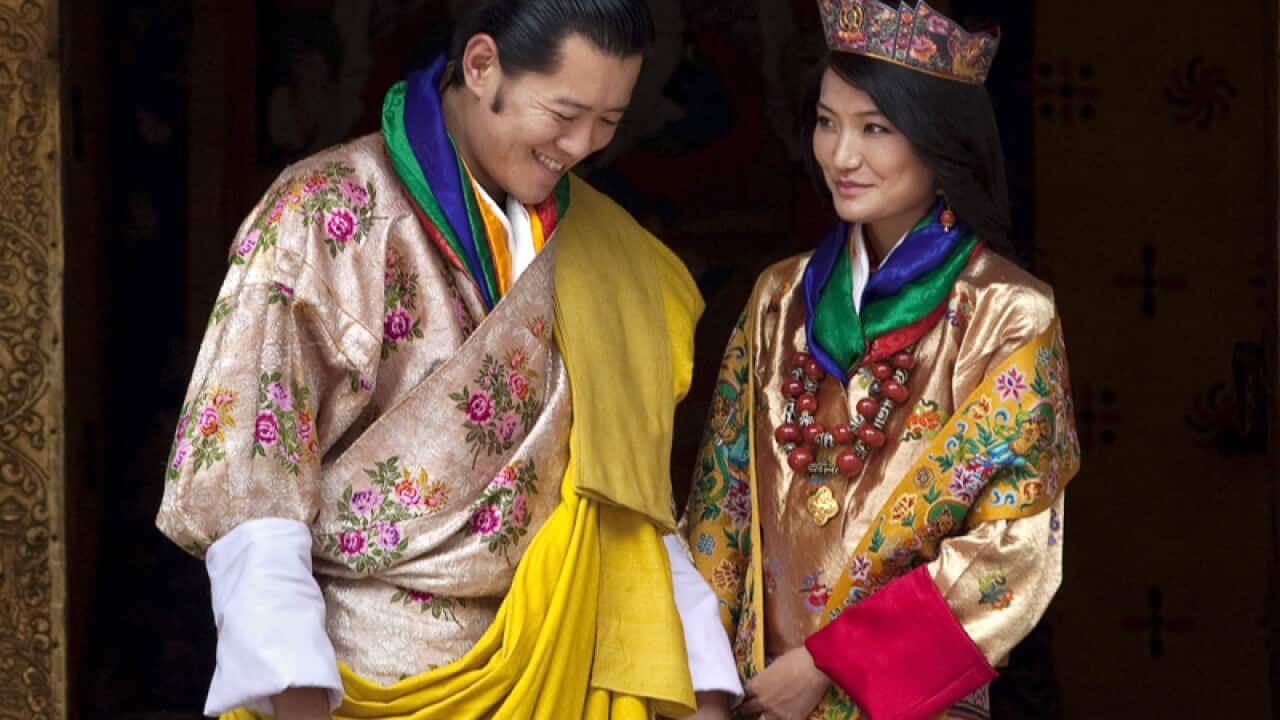
A healthy son was born to the king and queen of the tiny Himalayan nation of Bhutan, the palace has announced.
The newborn is the first child of King Jigme Khesar Namgyal Wangchuck, 35, and Queen Jetsun Pema, 25, who wed in 2011.
The baby was delivered at the Lingkana Palace on Friday night, the Royal Media office said in the capital Thimphu.
"Our happiness knows no bounds, as we announce the royal birth of His Royal Highness The Gyalsey on 5 February 2016," the couple said on their Facebook pages on Saturday.
King Wangchuck was by the queen's side during the delivery, the statement said.
News that makes sense
Your trusted source for staying up-to-date with the world around you. Get free daily news updates and analysis, straight to your inbox.
The heir to the Bhutanese throne was later presented to his grandfather and former king, Jigme Dorji Wangchuck.
The boy's name was yet to be announced.
Bhutanese traditions were being observed with the chief Buddhist abbot presiding over religious ceremonies in the capital.
State-run Kuensel newspaper described the birth of the prince as the "most precious gift to Bhutan" and hailed the "dawn of a new era." "The government has decided to declare Monday a national holiday to celebrate the joyous occasion so that the people may offer their prayers and good wishes," Bhutanese Prime Minister Tshering Tobgay was quoted as saying.
Oxford-educated King Jigme Khesar married Jetsun Pema, the commoner daughter of an airline pilot, in a fairytale wedding ceremony in 2011, an event that grabbed global media attention.
King Jigme Khesar was crowned in 2008 after his father abdicated the throne to make way for democracy, and install his son as constitutional monarch.
The Wangchuck dynasty has ruled Bhutan for more than 100 years and is highly revered by people across the Himalayan country spread over 38,000 square kilometres.
Bhutan, whose local name Druk Yul means "land of thunder dragon," has 750,000 inhabitants and is situated between India and China.
It has largely remained isolated from the world, introducing television only about 15 years ago and discouraging mass tourism.
The Buddhist nation has developed a unique measure of progress, quantifying its Gross National Happiness rather than exclusively using economic indicators to assess its development.