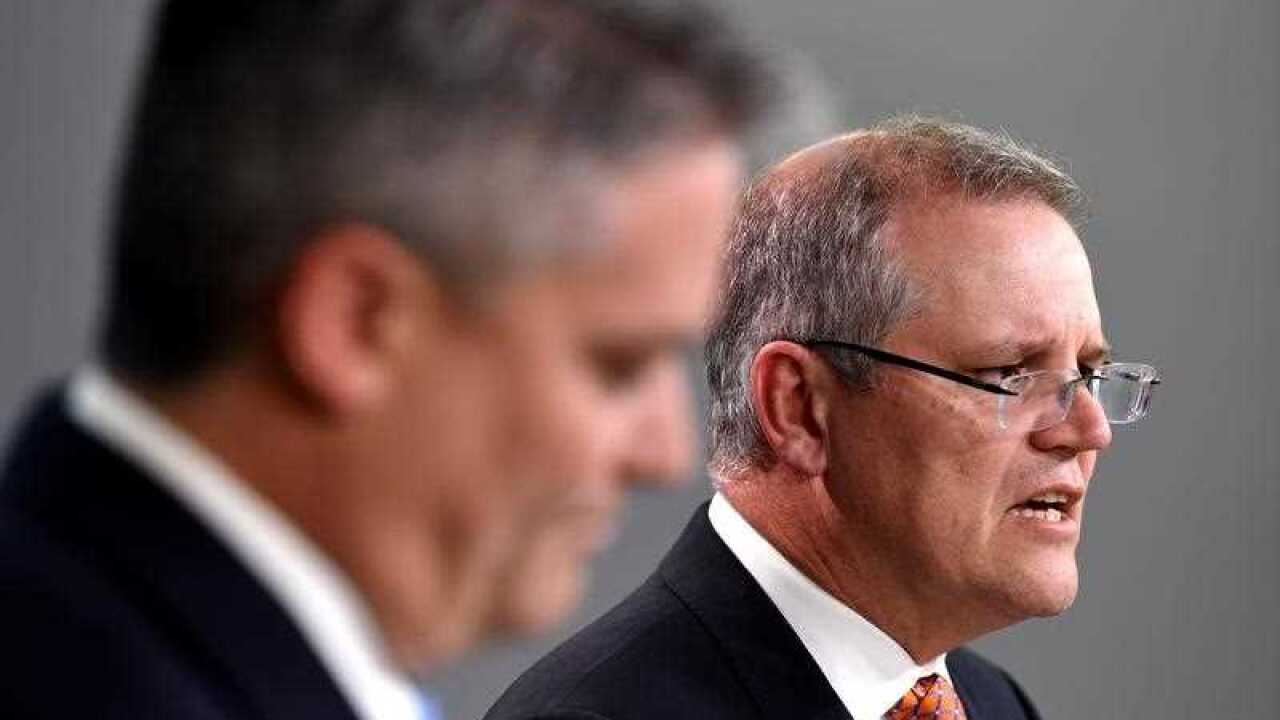
The Turnbull government will head into next year's federal election still wearing hefty budget deficits, more debt and a vague promise of a surplus in five years.
Treasurer Scott Morrison's first budget update on Tuesday suffered a further $34 billion write-down in revenue over the next four years.
This was a result of "considerably weaker" tax receipts from tumbling commodity prices, low wages growth and volatile equity markets.
The 2015/16 budget deficit forecast has been increased to $37.4 billion from the $35.1 billion predicted by former treasurer Joe Hockey in May.
News that makes sense
Your trusted source for staying up-to-date with the world around you. Get free daily news updates and analysis, straight to your inbox.
The timing of a promised return to surplus has been pushed back a year to 2020/21.
"We continue patiently and responsibly on the path to budget balance," Mr Morrison told reporters in Perth.
But Opposition Leader Bill Shorten described it as a "road to nowhere", saying the government has persistently called the economy wrong since it came to power in 2013.
Mr Morrison insists the government's plan is about restraining expenditure while supporting economic growth to lift revenue.
Policy decisions since the budget, such as increasing the humanitarian intake to resettle 12,000 refugees, have been offset by savings measures for a $400 million net benefit to the bottom line.
The treasurer said that net figure is the balance of some $10.6 billion in saves and $10.2 billion in spending.
Mr Shorten said the government is taking Australia on a path of cuts which is not what it needs at the moment, noting the economic growth forecasts have also been cut.
"They are proposing the harshest cuts to the people least able to protect themselves," Mr Shorten told reporters in Sydney.
A key savings measure was a crackdown on welfare cheats by using better data matching to ensure payments were within the rules.
"Importantly, the spending reductions that we have been able to achieve are sensible, they are measured, they are focused on improving consistency, integrity and efficiency across commonwealth government payments," Finance Minister Mathias Cormann said.
Even so, government debt will continue to rise, reaching $647 billion by 2025/26, up from a previous forecast of $573 billion at the time of the budget.
Debt was around $300 billion when Labor was voted out of office.
Economic growth forecasts have also been trimmed, showing the recent annual growth rate in the September quarter of 2.5 per cent will be as good as it gets in 2015/16 and won't reach three per cent until 2017/18.
Respected economist Chris Richardson said the budget savings were minor and left much-needed budget repair for down the track.
"Budget repair is getting harder and it's looking further away," the Deloitte Access Economics economist said.







