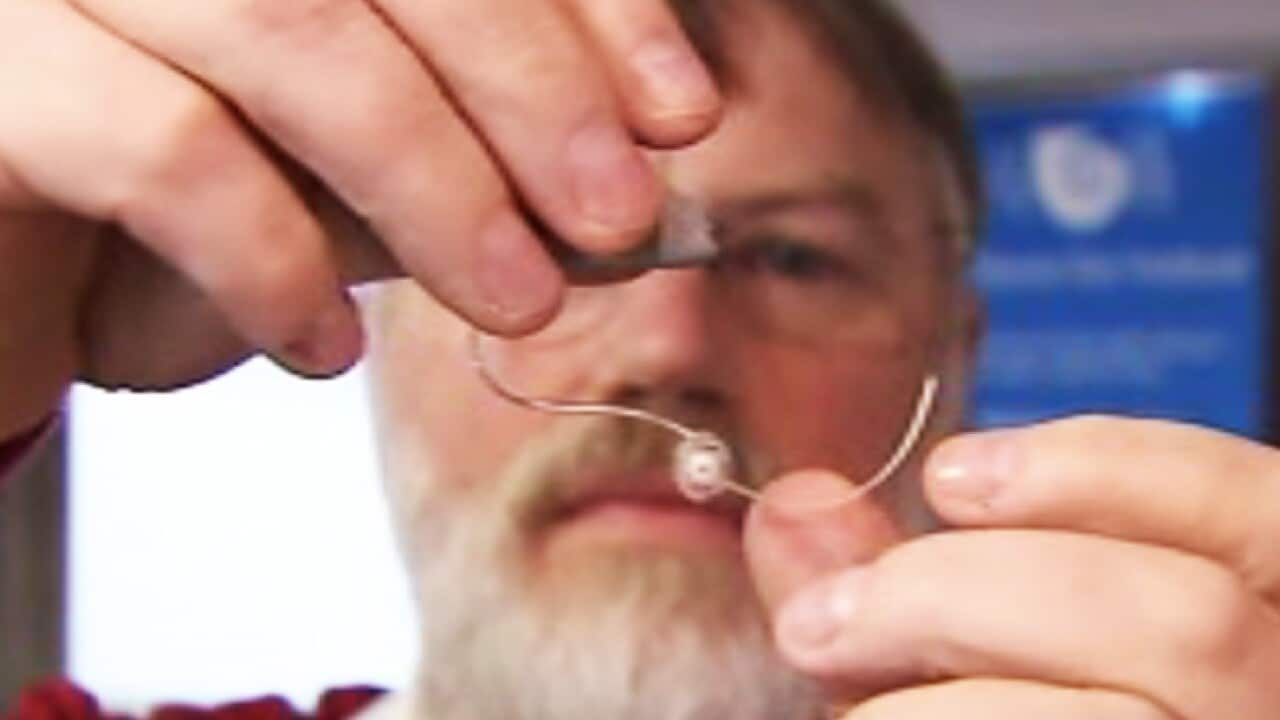
Professor Graeme Clark has been awarded Australia's top scientific prize and now plans to create an improved version of the hearing implant.
Implanted with a bionic ear at just two, Sian Neame can attest to the success of the device.
News that makes sense
Your trusted source for staying up-to-date with the world around you. Get free daily news updates and analysis, straight to your inbox.
"It's meant that I can communicate independently. I can socialise in both the deaf and hearing world...anything is possible", he told SBS.
But now Professor Clark and his team want to create a device offering recipients higher-fidelity hearing of not just speech, but also music and sounds.
"What we aim to do now is to see how to get good quality hearing and good quality speech for all people", Clark said.
To do that requires a better understanding of how electrical impulses from the device communicate with the brain.
Researchers intend to exploit the very latest speech and music recognition technology.
But it comes at a rocky time for leading manufacturer Cochlear, which recently suffered a share price slump after recalling one of implant models.
Gareth Boreham has more.







