In March, my partner and I made the decision to travel with our young son to Syria.
We had been planning a trip to Syria and neighbouring Lebanon for some time.
But working in the SBS newsroom, news from the Arab world was building up.
News that makes sense
Your trusted source for staying up-to-date with the world around you. Get free daily news updates and analysis, straight to your inbox.
We watched with interest, and even excitement, as protesters rallied across the Maghreb, the Gulf and the Levant.
We covered it everyday here at SBS. I read as much as I could on the situation in Syria, spoke to anyone I thought might have an insight. We both tried to ignore our parents – and our son's grandparents – about the warnings.
But we weren't total fools, we thought; we decided not to go to Lebanon. The ongoing inquest into the assassination of former leader Rafik Hariri could come out at any moment, and Hezbollah might not like what it came back with. We couldn't take a toddler there.
Most analysts writing in English at the time were arguing that Syria was different. President Assad was popular with the young. He stood up to the US, and Israel. Syria's economy was not faltering in the way Tunisia's and Egypt's were.
And so it was off to Syria – while still searching 'protest' and 'Syria' in Google News on Sydney airport's wifi, right up until we got on the plane. If there was a problem, we could get out, we reasoned.
If we were in Damascus, it was three hours to Lebanon. If we were up north, we could cross into Turkey. If we were out east, we could head into, well, Iraq. We hoped there wouldn't be any issues out east.
In the end, we had a fantastic time with incredibly warm people along the way. The sights and sounds were like nowhere I've been. And the food – mind-blowing.
But looking back – and perhaps I'm bound to say this – there was a slight tension.
Most Syrians would not talk politics with me. I expected this. They know they can't speak to the first stranger in town, especially one with a camera round his neck.
But it was different for one reason – everyone was glued to Al Arabiya and Al Jazeera.
The newsstands were full of magazines with Colonel Gaddafi, or Facebook and its game-changing role, on the cover. I covered some of this in a film I made on our trip. People were even mocking and joking about Gaddafi's 'Zenga Zenga' speech, which even garnered the remix treatment on YouTube.
Fellow Arabs were revolting. But Syrians weren't. Not yet.
Finally, someone would talk politics. We befriended a man who drove us from one town to another. He spoke of his experience working in a jail in the 1980s, at the same time as the Syrian army was bombing the Islamist uprising in Hama into submission. Various accounts say that over 10,000 were killed in the sort of act Saddam Hussein or Gaddafi would have been proud of. He told us of the mass killings inside the jail at the time, as we drove through Hama, observing the huge amount of1980s-looking buildings. Everything was destroyed in 1982.
My son played on the back seat of the car as the driver pointed these things out, and we continued our drive north.
Days later, we were to stay in the seaside resort town of Latakia. Assad's Alawi sect is from the region, but the tension was no different. I was curious about the Iranian warships which had recently docked – but no one wanted to talk politics.
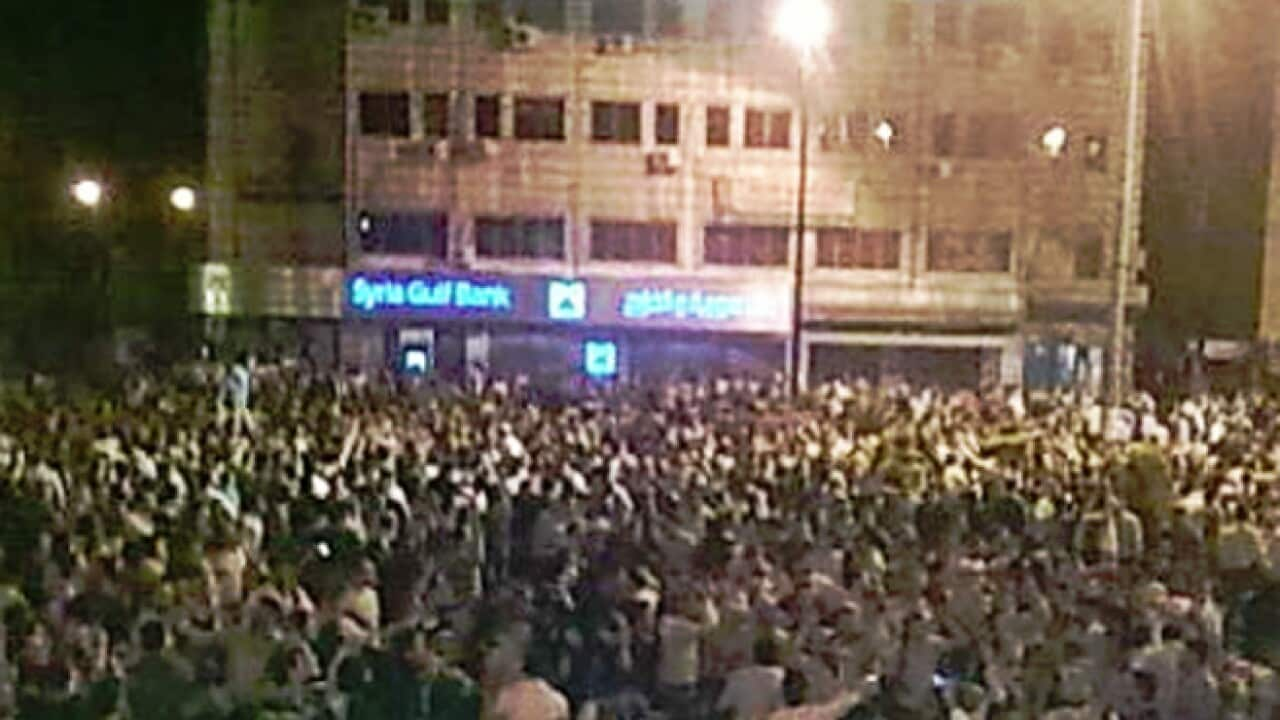
Not two weeks later there was violence on the streets as protesters were, according to witnesses, shot dead by authorities.
We watched this from my parent's living room in rural England. They held their tongue, for the most part.
Months on, it continues, and we think of the warm people we met. Sunnis and Shia, Christians, Kurds. And we remember with fascination the people who watched the news from other Arab countries, people who gave so little away which said that Syria might be next.
In the meantime, Lebanon remains relatively peaceful. Perhaps we'll go there next time.







