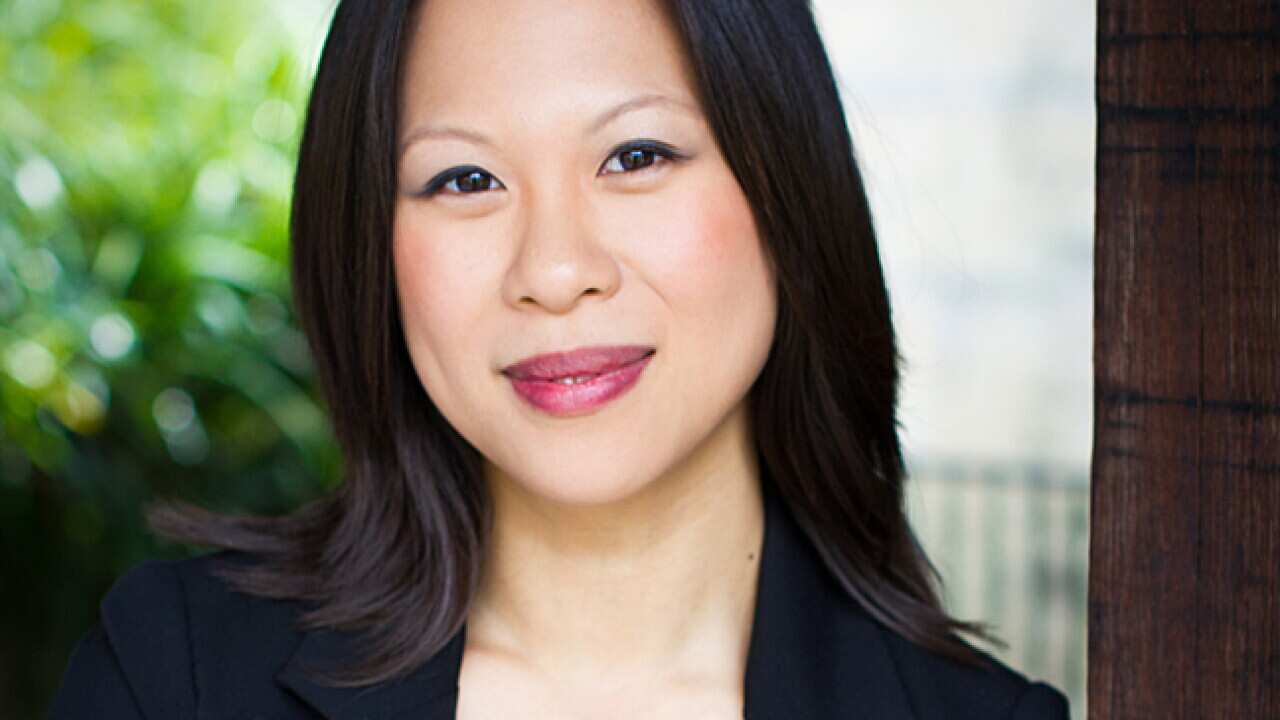
Pearl Tan is an Australian actor, writer, director and producer. She says racial prejudice is not absent from the acting world, but believes the slow death of stereotypes will finally lead to a more cohesive Australia.
When I was in primary school, Jack Van Tongeren and the Australian Nationalist Movement plastered my hometown of Perth with racist anti-Asian posters. I have a vivid memory of the rudimentary sketch of a slanty-eyed Chinaman with a triangular hat and a big red banned sign stamped over him. It was stuck on public walls and the back of nearly every street sign.
Strangely, I felt completely safe. I don't remember being bullied at school for being Chinese. Kudos to my parents who didn't make a big deal out of it and to my teachers who didn't let any other students use it as fodder for a cheap shot. What I do remember is a classmate telling me “You're the nicest Asian I've ever met.” I wondered to myself why I couldn't just be one of the nicest people she'd ever met?
News that makes sense
Your trusted source for staying up-to-date with the world around you. Get free daily news updates and analysis, straight to your inbox.
I was grade 9 when I first realised just how Asian I was. I attended a new school, and this high school was highly populated with Asian students. On my first day I noticed that almost all of the Asians were sitting on one side of the quadrangle and all of the white kids were sitting on the opposite side. I ended up finding myself in a group of rather odd bods. We were mostly artsy types whose cultural heritage came from all over the world; White, European, Asian, Aboriginal and South African. I didn't really care where anyone else came from. I just wanted to feel accepted.
Fast forward to studying acting at the National Institute of Dramatic Art (NIDA), a challenging three years where the myth that they break you down and build you up again is somewhat true. It's because you learn that any problem you have with your acting usually stems from blocks you have in your real life. I was struggling to neutralise my Australian accent. My voice teacher said “Do you know why you can't neutralise your accent?”. I raised my eyebrows and antagonistically asked “Why? Tell me why.” She replied, “Because you don't look Australian so you have to sound Australian.” I guffawed.
I went home and thought about what she had said and realised that she was right. I recognised all of the things I had learnt to do to assimilate. That dirty “A” word that racists bang on about. We often hear 'assimilate or go home'. I ocker-up my accent. I make anti-Asian jokes to disarm others. If I make the joke first, I hold the power. I also get very frustrated when I see Asians perpetrating a negative stereotype as I feel it reflects badly on me. My subconscious assimilating brain screams “How dare they behave in a socially unacceptable way? Don't they know how hard I've worked to be seen as Aussie?”. So am I self-racist?
Fast forward to a couple of months studying in New York on a Mike Walsh Fellowship. What an amazing experience in so many ways. I have never felt more Aussie than I did there. Everyone was more interested in my accent and my Australianness, than my skin colour and my 'Asianness'. Finally, I was true blue… on the other side of the world.
It is imperative that kids feel safe in their neighbourhoods and that their schools are proactive in being accepting of all minorities. Racism comes from fear of “the other”, fear of something that you haven't had positive exposure to. I believe there are only two ways you can change someone's perception of your minority group. The first way is to get to know them on an individual basis. Tell them your story. Smash the stereotype. In the future when they meet someone in the same basket as you, hopefully they won't be so quick to jump to the negative conclusions. The other way is through storytelling. This is why it is important for the media to tell the stories of people from different cultures and minorities. Evocative, truthful stories, fact and fiction, that normalise minorities and allow the audience into a world they're not familiar with. Hopefully, they will meet characters that they like, or develop empathy for, and become more tolerant in real life.
It's up to us to bring up a new generation of Australians who aren't scared of each other.
I had a positive experience growing up, and I get the best of all three worlds and hope that the next generation gets to experience this wonderful hybridity. Three worlds, I hear you ask? I enjoy the respect, diligence, resilience and food from my Asian culture. I enjoy the traits of mateship, fair go, can do attitude and food from my Aussie culture. I enjoy the belief in yourself Oprah-style attitude and the potential for everyone to be anything that they want to be from our pop Americanised culture. Let's respect our history and learn from it. How wonderful!







