
In the aftermath of a storm - sometimes you don't know where to look. There are numbers to explain: a rising death toll, provincial tallies of villages destroyed, tonnes of aid on their way, scribbled maps of roads covered with debris.
In disaster zones, in wartime, there are often spreadsheets: relief coordinated by Excel equations, in disaster management centres, emailed statements of promised help, in figures, in black and white.
It's easy to reel off numbers; they're neat and tidy. But they can't tell the whole story.
In Fiji, figures have been hard to come by. Phones don't work. Networks are down. The tiniest islands in the path of the storm are days away, by boat. Boat, because there's nowhere left to land a plane. The rain keeps arriving, in explosive bursts.
Sometimes - in wars, in disasters - we find beauty in destruction.
Often, it's the contrast; so remarkable in its surprise, it takes your breath away. In wartime, it has the feel of nostalgia; the turrets of a once-glorious city pockmarked with bullets, destruction sanctified by romanticism.
But in the aftermath of a natural disaster, there’s little in the way of the romantic. What was, is no longer, and that’s just how it is. Pragmatism takes hold, because then and there, it’s about survival rather than blame.
Here, in parts of Fiji, is a land - and a people - stripped raw. And within that nakedness, everything is on show: the secrets kept at the back of a bedside drawer, now sodden and strewn on the floor, the bald mountainsides of northeastern Viti Levu bereft of leaves, the gaps where bridges were torn from their rivers, the bones of homes after walls blew away; lives laid out on the grass to dry.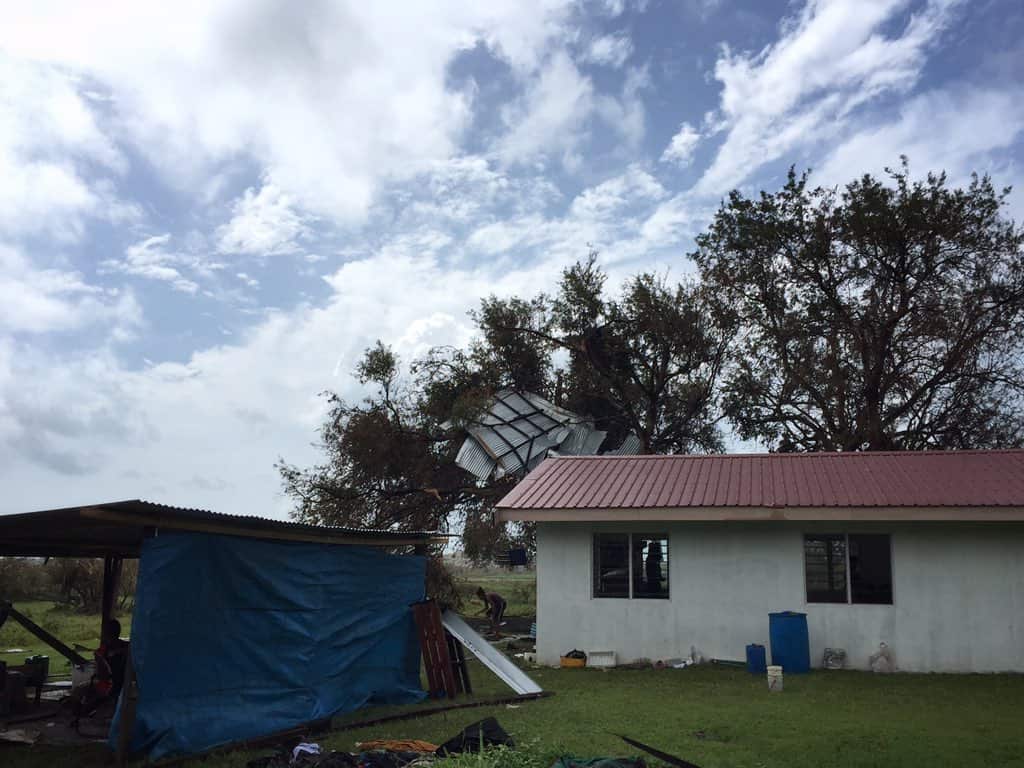 Here, people speak often of God.
Christians, Hindus, and all alike talk of prayer and hope; a tacit acceptance of what’s been, a quiet wish for what’s to come.
I’ve never liked the word “tragedy”. It feels too limiting, too personal, too much of a judgement. "Devastation” borders on the melodramatic; it suggests hair-tearing and tears. Here, in Fiji, I haven’t seen a tear.
There are many who have lost a great deal. They are shocked because a storm tore through their lives, uprooting foundations they spent years trying to build. But, here too, are a great many people who smile through those losses; not because they are happy, not because they are pretending away sadness, but because they like to smile.
There is beauty to be found in destruction, if you know where to look.
When the first commercial flight touched down after the cyclone, an announcement came over the speakers, “We may not be at our prettiest because of Winston, but you'll experience the warmth and strength and love of our people. Stay safe out there.”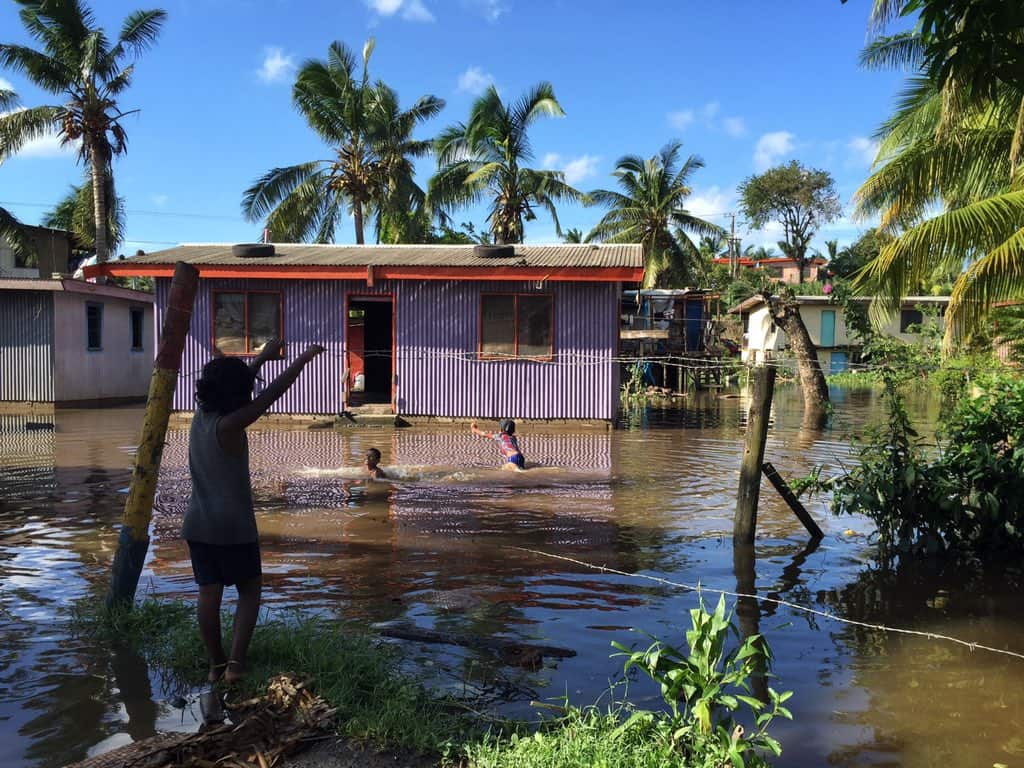 If you turn right after Nadi town, where the train track crosses the street, the lane to Nawaka has become a lake. There, children - newly returned from evacuation centres - splash in the flooded front yards of neighbours.
On the road to Tavua, next to a little white cement church, is a rickety, tarp-covered shelter with a family of eight, their dogs, cows and chickens, who’ve been surviving on tea and biscuits for days. In the rain, a bedraggled teddy-bear points at the cement foundations of their former home. But within the plastic walls there is laughter and ambition for what’s next.
On the Queens Road, just after the 5-star resorts of Denarau and the 24-hour McDonalds, there are roadside piles of coconuts. Collected from amid broken trunks in the aftermath of the storm, they’re now sold for $2 a fruit by budding entrepreneurs.
In Rakiraki town, where fallen electricity pylons have become washing lines, there’s a corrugated iron roof topped with a rattan armchair. Gashes in the metal roof have opened a new terrace. Residents waited for the sun to emerge, before raising an enormous Fijian flag.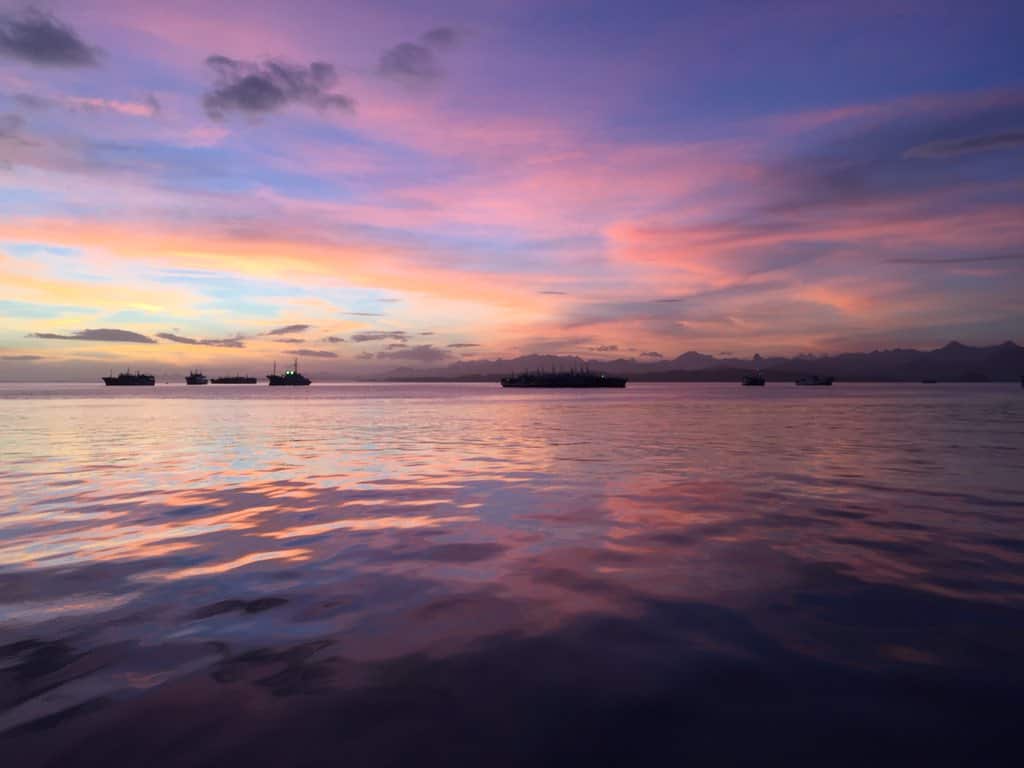
Between swelling rivers ribbed with plaited currents, and mountainsides covered with matchstick trees, there are candy coloured wooden houses- their walls split into planks on the grass.
When I ask their owners, “What now?”
I’m met with shrugs and grins: We build again.
But even as aid arrives, from the sky and across the sea, reconstruction can’t be limited to walls and ceilings.
There is little clean water, and worries about outbreaks of dengue and typhoid.
There are schools to reopen, but many - torn apart by winds and debris - will remain shut for months.
There are sugar cane plantations, swathes of the country’s chief export, flattened and wilting.
In backyards littered with debris, there are no longer carefully tended vegetable gardens that would have fed whole families. On the coast, fishermen have no boats.
The resorts still standing hope tourists will return.
And it's only the start of hurricane season.
For Fiji, as it steels itself for the future, this is just the beginning.
RELATED READING

Fiji to receive $10m more cyclone relief
Share


