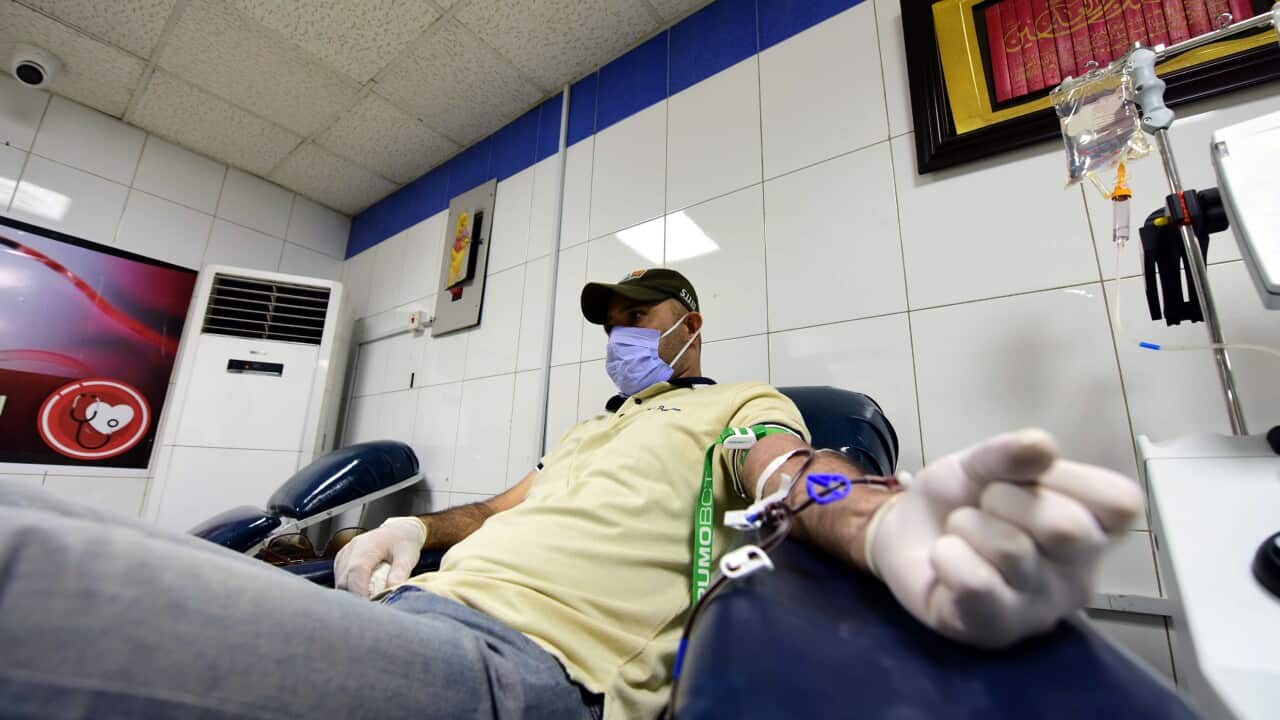
A person's blood type and other genetic factors may be linked with severity of coronavirus infection, according to European researchers looking for further clues about why COVID-19 hits some so much harder than others.
The findings, published in The New England Journal of Medicine on Wednesday, suggest people with type A blood have a higher risk of being infected with the coronavirus and developing worse symptoms.
At the peak of the epidemic in Europe, researchers analysed the genes of more than 4000 people to look for variations that were common in those who became infected with the coronavirus and developed severe COVID-19.
A cluster of variants in genes that are involved with immune responses was more common in people with severe COVID-19, they found.
These genes are also involved with a cell-surface protein called ACE2 that the coronavirus uses to gain entry to and infect cells in the body.
News that makes sense
Your trusted source for staying up-to-date with the world around you. Get free daily news updates and analysis, straight to your inbox.
The researchers, led by Dr Andre Franke from Christian-Albrecht-University in Kiel, Germany, and Dr Tom Karlsen, from Oslo University Hospital in Norway also found a relationship between COVID-19 severity and blood type.
The risk for severe COVID-19 was 45 per cent higher for people with type A blood than those with other blood types.
It appeared to be 35 per cent lower for people with type O.
"The findings... provide specific clues as to what disease processes may be going on in severe COVID-19," Dr Karlsen told Reuters by email, noting that additional research is needed before the information becomes useful.
"The hope is that these and other findings... will point the way to a more thorough understanding of the biology of COVID-19," US National Institutes of Health director and genetics expert Francis Collins wrote in his blog on Thursday.
"They also suggest that a genetic test and a person's blood type might provide useful tools for identifying those who may be at greater risk of serious illness."
People in Australia must stay at least 1.5 metres away from others. Check your state’s restrictions on gathering limits.
Testing for coronavirus is now widely available across Australia. If you are experiencing cold or flu symptoms, arrange a test by calling your doctor or contact the Coronavirus Health Information Hotline on 1800 020 080.
The federal government's coronavirus tracing app COVIDSafe is available for download from your phone's app store.
SBS is committed to informing Australia’s diverse communities about the latest COVID-19 developments. News and information is available in 63 languages at sbs.com.au/coronavirus.







