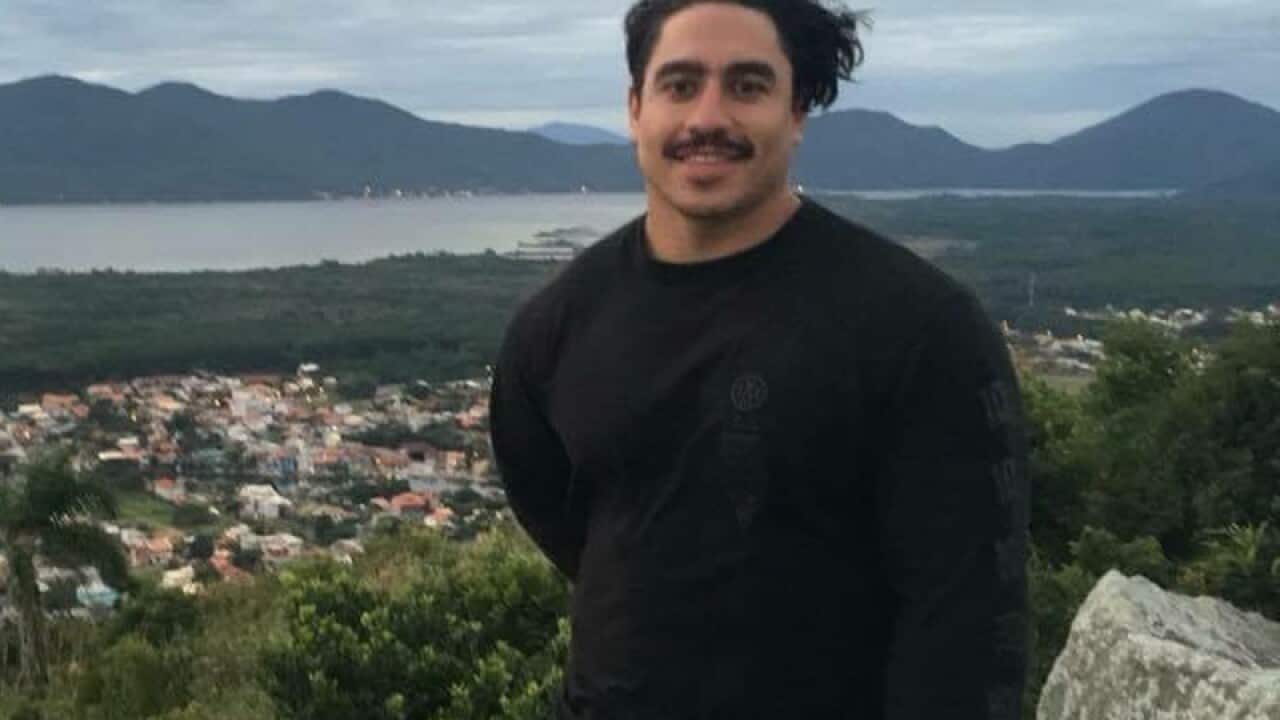
A body suspected to be that of missing Australian backpacker Rye Hunt has been found on a remote beach near Rio de Janeiro, Brazilian police have confirmed.
Residents found the body washed ashore on the idyllic Guaratiba beach in the district of Marica, 50 kilometres from the centre of Rio, early on Wednesday local time.
They noticed vultures on the white sand and then spotted a clothed, decomposed body covered in sand, a local journalist Romario Barros, who attended the scene, told AAP.
Two firemen arrived and put the body, which was dressed in blue shorts and a light-coloured shirt, in a black body bag, Mr Barros said.
News that makes sense
Your trusted source for staying up-to-date with the world around you. Get free daily news updates and analysis, straight to your inbox.
Military police registered the find and the body is being sent to the Legal Medical Institute (IML) in the nearby city of Niteroi for identification.
"A body was found in Marica," a spokesman for the Civil Police in Rio de Janeiro state said.
"It has been sent to experts for analysis, including a DNA comparison, to see if it could be the Australian tourist who has been missing since May 21."
It is believed Mr Hunt's uncle, Michael Wholohan, who is in Rio de Janeiro to help in the search for his nephew, has already given a DNA sample to police.
Mr Hunt went missing after he separated from his travelling companion Mitchell Sheppard following an argument after the two had taken what is suspected to be a highly potent hallucinogen known as NBOMe.
Last week Brazilian authorities called off a 72-hour sea search after a fisherman spotted a body floating off Rio's coast in clothes similar to those worn by Mr Hunt when he vanished.
Marica is a distant suburb of Rio de Janeiro, known for its beautiful beaches but also its gang violence.
In 2013, Sergey Petrovich Danshin, a 17-year-old Russian pupil on a school trip from a top London private school was shot dead there, after apparently going out at night to buy drugs.
In an emailed statement Mr Hunt's family said they'd been told by Australian authorities a body had been found, but there had been no confirmation that the body was that of the missing backpacker.
The family said they were upset pictures of the body had been published by media outlets and sent by journalists to family members via text asking them to identify it.







