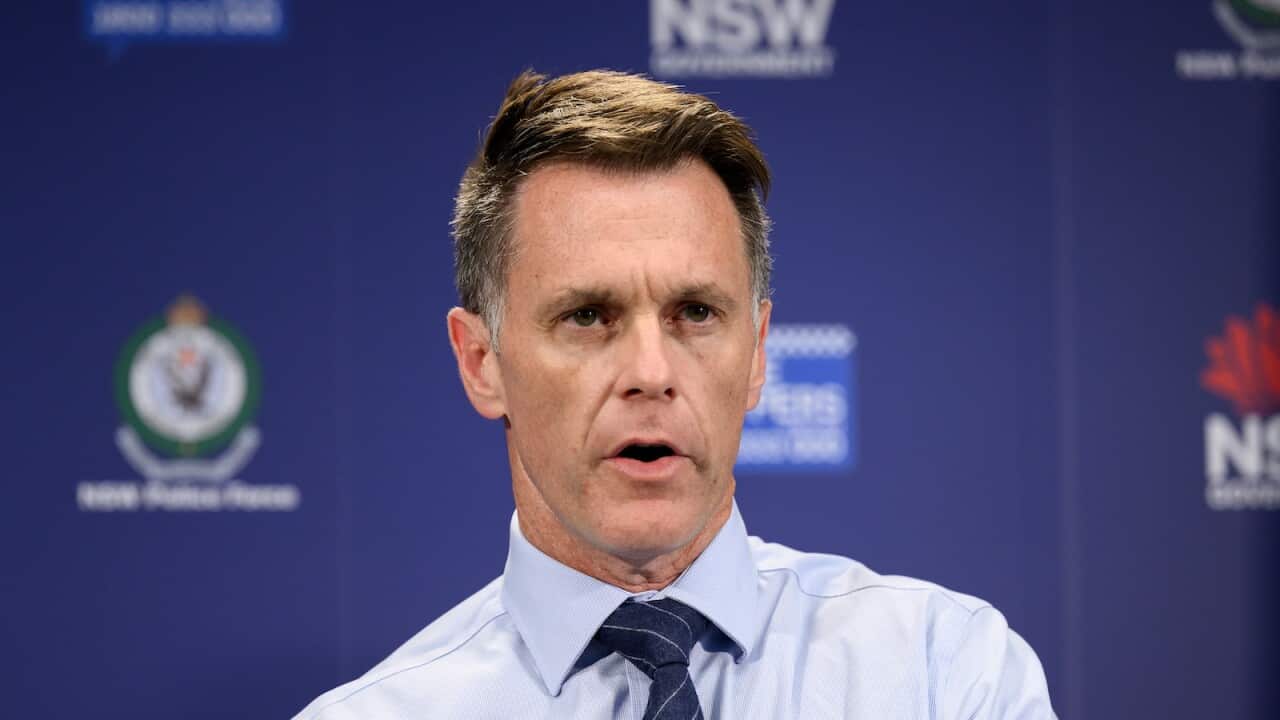
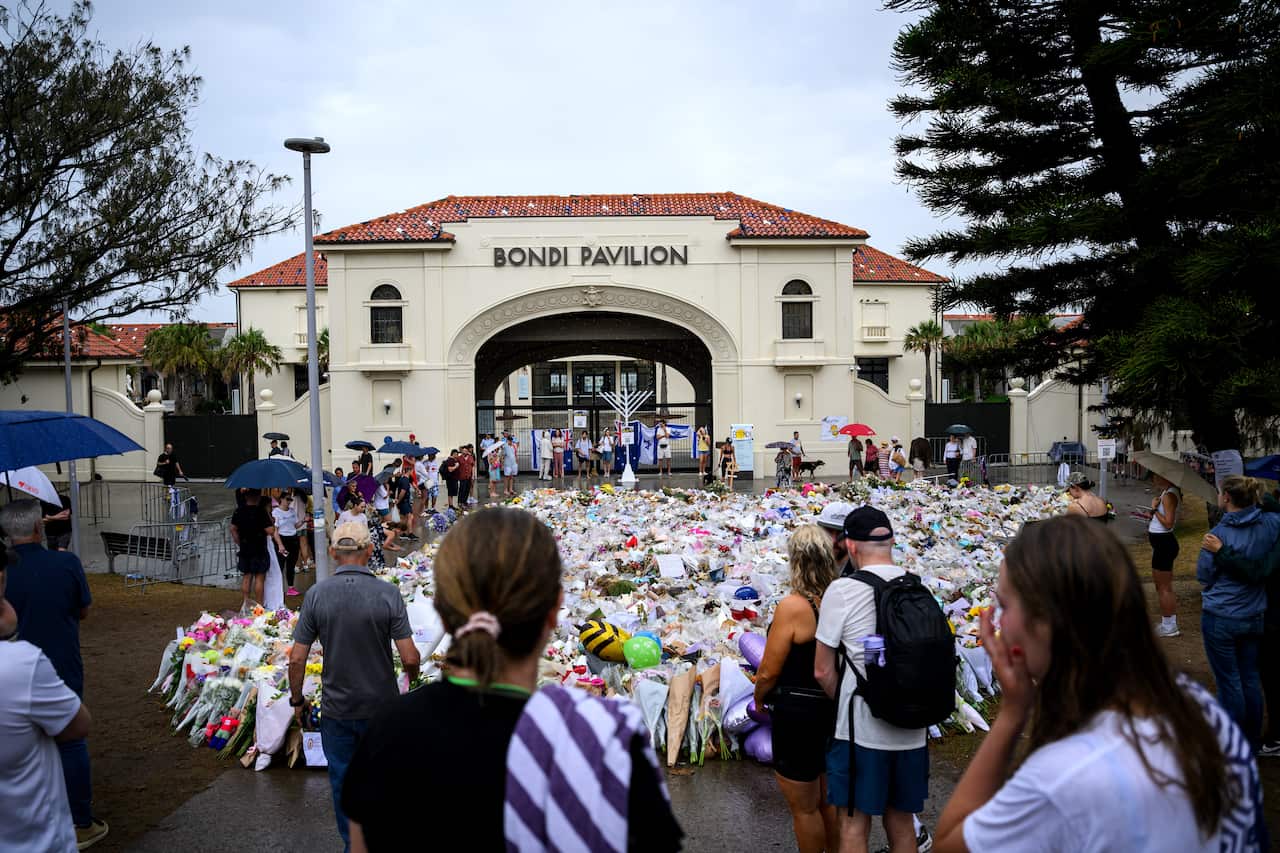
NSW Premier Chris Minns will recall state parliament on Monday to try to fast-track a slew of law changes in the wake of the Bondi Beach terror attack.
Minns has proposed several changes this week, to be debated in state parliament this week, that could crack down on demonstrations in NSW — in response to the attack on 14 December, which targeted a Jewish Hanukkah festival.
Fifty-year-old Sajid Akram and his 24-year-old son Naveed Akram allegedly killed 15 people during the massacre, with Sajid shot dead by police and Naveed facing dozens of charges. Police believe the two were inspired by the Islamic State (IS) group.
Minns defended the proposals on Sunday, saying he believed that antisemitism "begins with slogans" and escalates to violence.
"I believe, in many cases, when you see violent imagery and hateful slogans ... it is unleashing forces that the organisers of the protests can't control," Minns told ABC TV.
News that makes sense
Your trusted source for staying up-to-date with the world around you. Get free daily news updates and analysis, straight to your inbox.
"Whatever the reasons for those protests and genuine grievances or concerns about what is happening overseas, my responsibility is in Sydney."
Minns said that he had an obligation to take every action to ensure there was a "summer of calm" and bring the community together.
"I don't think that can happen if we have mass, major protests through the heart of the city, which, in my view, would rip apart and tear whatever scar tissue has been healed in just seven days."
What are the proposed changes to protest laws?
On Friday, Minns' government announced it would move to restrict the authorisation of public assemblies in designated areas following a terrorist incident — effectively banning them.
The proposed laws would require a terrorist incident to be declared under the NSW Terrorism (Police Powers) Act.
That was passed in 2002 following the September 11 terrorist attacks in the United States the previous year, and gave police expanded powers to deal with imminent threats of terrorist activity and respond to attacks.
Under the proposed changes, when a terrorist incident is formally declared, the police commissioner or deputy police commissioner, with the police minister's agreement, could designate certain areas where public assemblies such as protests were restricted.
Those would be areas where police determine public gatherings could cause people to fear intimidation, or put public safety at risk.
Once a declaration was made, no public assemblies would be able to be authorised for that area, including by a court, and police would be given access to existing powers to move people on when their behaviour "causes harassment or intimidation or obstructs traffic".
Those declarations would last for an initial period of 14 days, and could be extended for up to three months.
On Saturday, Minns announced further proposals, including banning the public display of symbols and flags linked to proscribed terrorist organisations, and the phrase "globalise the intifada".
The word 'intifada' is an Arabic word that means uprising and translates literally to "shaking off", and is used in a historical context to refer to two periods of Palestinian resistance against Israeli occupation.
Some pro-Palestinian activists say they use the phrase to call for international solidarity with Palestinians, while many Jewish groups say it encourages violence against Jews.
No federal or state law enforcement agency has provided any evidence to the public that the alleged Bondi Beach gunmen were motivated by pro-Palestinian beliefs.
The Sydney-based activist organisation Palestine Action Group accused Minns on Friday of "seeking to blame" pro-Palestinian protesters for the "horrific" Bondi attack.
"This is an outrageous claim, with absolutely no evidence to back it up," the group said, adding that the movement had "always stood against antisemitism".
Under the proposals, police would also be given the power to demand a person remove their face covering at a public assembly if they believe that person is committing any offence.
Under current laws, face coverings only have to be removed for police to confirm someone's identity after they have been arrested.
The new restrictions would mean the threshold would be lowered to include all suspects.
Minns has argued the proposed powers are "proportionate" and said they are not about "suppressing views".
How are protests in NSW currently authorised?
In NSW, protest organisers can submit a Form 1 — an application notifying the police of their intent to hold an assembly.
NSW Police can oppose the application, taking the matter to court.
If at least seven days' notice is given when a Form 1 is submitted, and a court has not prohibited the gathering, it is considered an authorised public assembly and participants have certain legal protections.
If not authorised, "individuals who choose to attend may be liable for obstruction and unlawful assembly offences", according to NSW Police.
Under Minns' proposed changes, the police commissioner could suspend the authorisation system in some places after a terrorism incident.
A Form 1 would not be able to be approved in a designated area following a declaration of a terrorist incident, meaning protests would be unauthorised.
What has been the reaction?
NSW Jewish Board of Deputies president David Ossip has welcomed the proposed reforms.
"We cannot allow our fundamental freedoms of speech and assembly be perverted and weaponised against us," he said.
"Public protest cannot become a licence to threaten or terrorise minority communities."
Others have expressed concerns about the proposals violating the right to assemble and protest.
NSW Greens MP and justice spokesperson Sue Higginson has accused Minns of "authoritarian overreach".
"Conflating the right to peaceful public assembly with the horrors of the antisemitic killings that we are all reeling from in Bondi is dangerous and divisive," Higginson said on Friday.
NSW Council of Civil Liberties president Timothy Roberts accused Minns of using a "horrifying situation" to further an agenda against "a legitimate right to assembly".
"He seems to think that he can get his way to social cohesion by regulating it through laws and using police powers for arrest. That's not how it happens," Roberts told SBS News.
"We get cohesion through talking about issues, hearing from all members of our society, and coming together in quite powerful and moving displays as we saw on the Sydney Harbour Bridge," he said, referring to a pro-Palestinian march in August.
For the latest from SBS News, download our app and subscribe to our newsletter.







