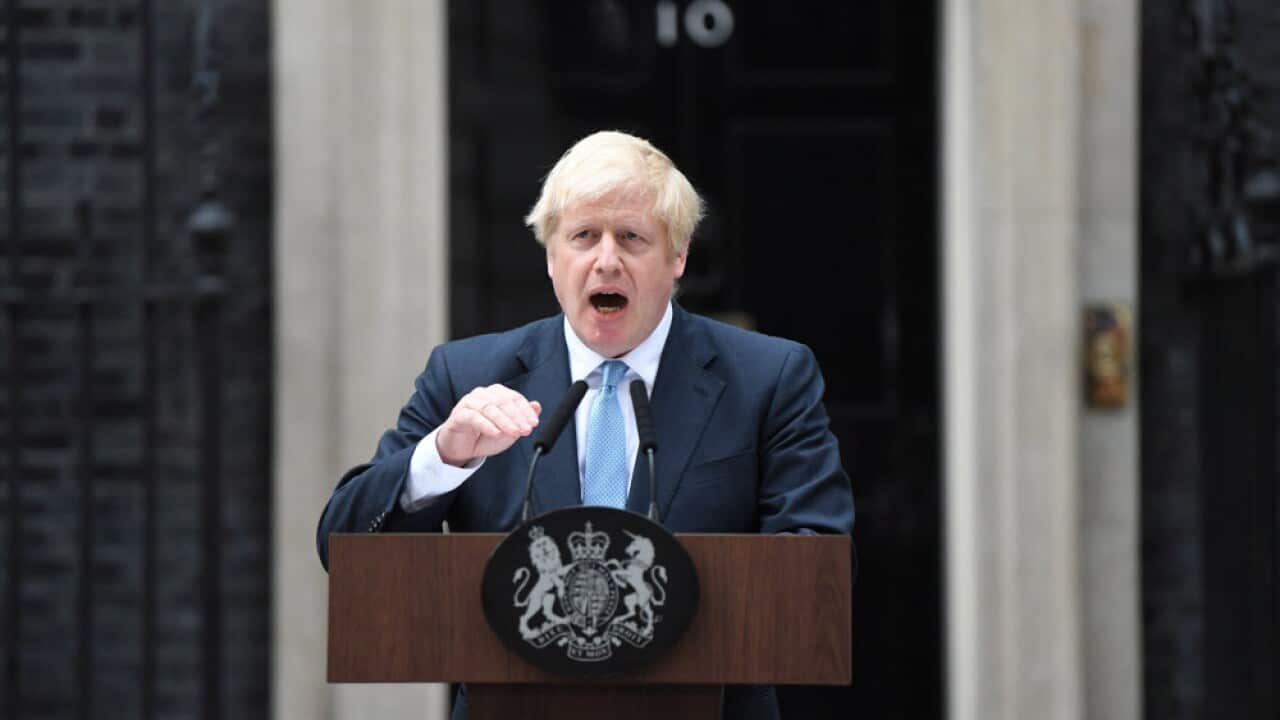
British Prime Minister Boris Johnson will call for a general election to be held on 14 October if he is defeated in a parliamentary vote on his Brexit strategy to be held on Tuesday (local time), a senior government official said on Monday.
The official said that if, as expected, rebel MPs from his Conservative party join with the opposition to defeat Mr Johnson, the government would immediately table a vote for Wednesday on holding a general election.
Earlier, Mr Johnson said there would be "no circumstances" in which he would delay Brexit, as his own MPs joined with opposition lawmakers to try to stop him taking Britain out of the European Union next month without a deal.
The Conservative leader expressed hope he could get an agreement with Brussels on ending Britain's 46-year-old membership of the EU, but added: "We are leaving on October 31, no ifs or buts."
He was speaking outside Downing Street on the eve of a major showdown with the House of Commons, as a cross-party group of MPs seeks to change the law to potentially delay Brexit until January 31, 2020.
News that makes sense
Your trusted source for staying up-to-date with the world around you. Get free daily news updates and analysis, straight to your inbox.
The main opposition Labour party, working with rebel Conservative MPs, fear that Mr Johnson's threat to leave the EU without a deal next month could cause huge economic disruption.
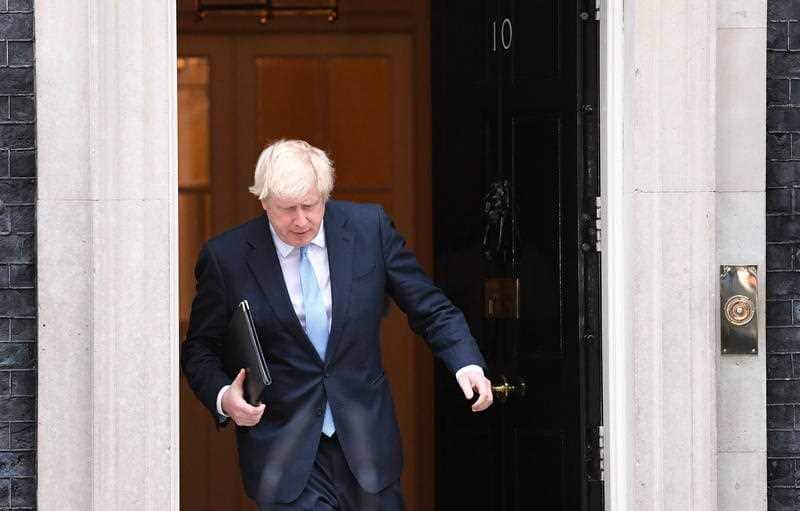
But Mr Johnson took office in July promising to deliver the 2016 referendum vote for Brexit whatever the circumstances, and after talks with his top ministers on Monday evening, made clear he would not move.
He said the chances of striking a divorce deal with Brussels "have been rising" ahead of a summit of EU leaders on October 17 and 18, but warned this was partly because the bloc understood he was willing to walk away.
A vote by MPs to delay Brexit would "chop the legs out from under the UK position and make any further negotiation absolutely impossible", Mr Johnson said.
"I want everybody to know - there are no circumstances in which I will ask Brussels to delay. We will not accept any attempt to go back on our promises or scrub that referendum," he said.
"Armed and fortified with that conviction I believe we will get a deal at that crucial summit in October."
'I don't want an election'
Mr Johnson's government had earlier warned dissenting Conservative MPs they could be expelled from the party if they work with Labour, and said any parliamentary defeat on Tuesday would be seen as an issue of confidence in his negotiating position.
The warnings prompted speculation Mr Johnson was planning an election to force through his plan, perhaps even before Brexit.
However, he said on Monday he wanted to let British negotiators continue their work "without an election, which I don't want and you don't want".
'Last chance'
More than three years have passed since Britons voted by 52 per cent to leave the European Union, a period marked by huge political upheaval, economic uncertainty and deep divisions both in parliament and across the country.
Former prime minister Theresa May agreed exit terms with Brussels last year but the deal, which covered Britain's financial contributions, the rights of EU expatriates and the Irish border, was rejected by parliament three times.
Johnson has repeatedly called on the EU to renegotiate but it has so far refused, prompting both sides to ramp up preparations for a disorderly divorce.
Many MPs are opposed to "no deal" but they have only a few days to act.
They return from their summer holiday on Tuesday, and Johnson has controversially decided to suspend parliament next week for more than a month.
"We must come together to stop no-deal," Labour leader Jeremy Corbyn said in a speech on Monday, warning: "This week could be our last chance."
On Tuesday afternoon, a cross-party group of MPs will seek to take control of the parliamentary timetable in order to allocate time on Wednesday to debate their draft law blocking "no deal".
Their bill says that if MPs have not approved an EU deal or endorsed a "no deal" scenario by October 19 - the day after the EU summit - then Mr Johnson must seek a delay to Brexit.
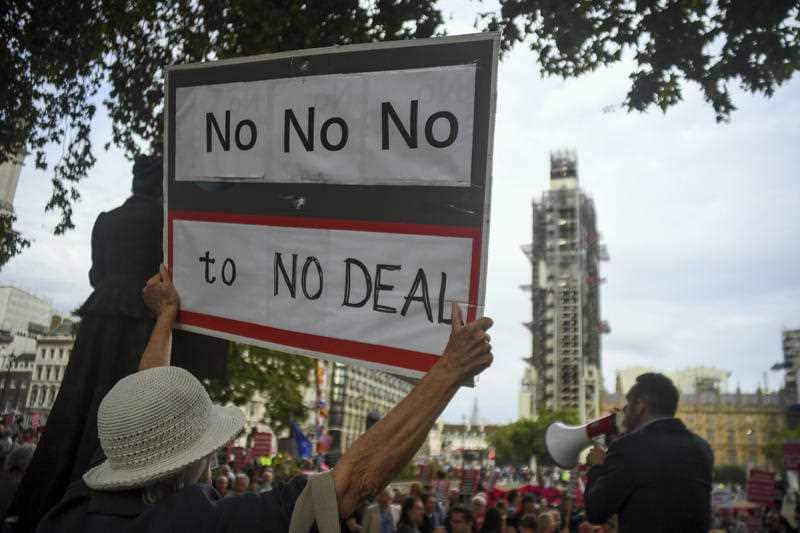
However, the coalition behind the plan is divided, including MPs from veteran socialist Corbyn to former Conservative finance minister Philip Hammond, to Welsh and Scottish nationalists.
Corbyn said that if the legislative efforts failed, Labour could back a vote of no-confidence in Mr Johnson's government, which could trigger a general election.
The alternative is that Mr Johnson himself calls a vote, although he would need the support of two-thirds of MPs.
Opinion polls suggest Mr Johnson's decisive action on Brexit is popular with voters, but an election - particularly before Brexit is delivered - could be a huge risk.
The 2016 referendum vote shook up the political landscape, with the governing Conservatives challenged not just by Labour, but also Nigel Farage's eurosceptic Brexit party and the pro-European Liberal Democrats.







