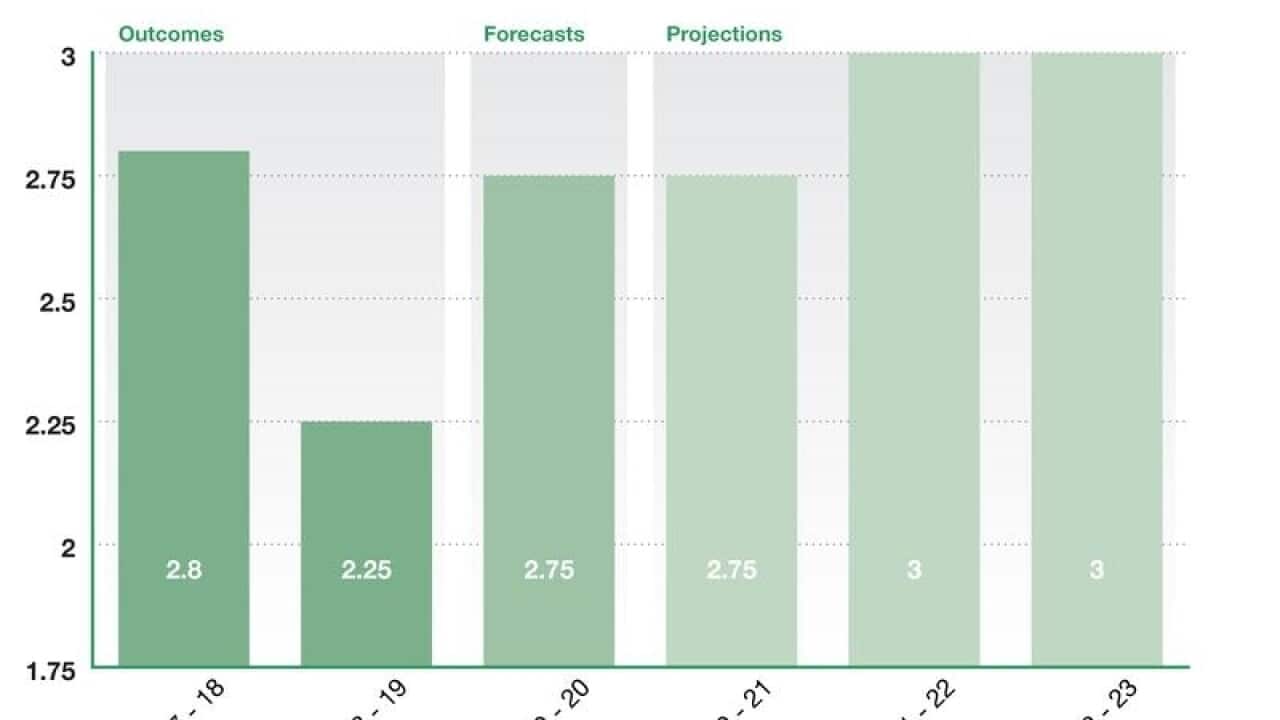
The growth forecasts underpinning the federal budget look a touch optimistic, according to economists.
The federal budget contained few surprises for watchers who for months had predicted the government would offer consumer tax relief and infrastructure spending to stimulate economic growth against a backdrop of low wage growth and falling house prices.
Economists agreed with Treasurer Josh Frydenberg that a $100 billion, 10-year infrastructure spend and lower than expected cost of the National Disability Insurance Scheme will contribute to a surplus in the next financial year, but some anticipate it being lower than the $7.1 billion flagged on Tuesday night.
And echoing their frequent - eventually justified - opinion that the Reserve Bank had been overly bullish with its growth forecasts, many said the government was being too optimistic about the likely pace of GDP growth.
The NAB team including chief economist Alan Oster expects economic growth of about 2.25 per cent in the 2019/20 financial year, compared to Treasury's forecast of 2.75 per cent.
News that makes sense
Your trusted source for staying up-to-date with the world around you. Get free daily news updates and analysis, straight to your inbox.
"Our profile sees the consumer still struggling with their cashflow and hence with any discretionary spend," the NAB economists said.
"Also house price falls will see construction activity fall another 20 per cent over the next two years."
BIS Oxford Economics chief economist Sarah Hunter and AMP chief economist Shane Oliver were similarly sceptical, the latter predicting 2.3 per cent economic growth in 2019/20 and for wage growth to undershoot budget forecasts in each of the two years after that.
"The main risk is that the revenue boost is not sustained and the budget continues to have relatively optimistic assumptions regarding wages growth," Dr Oliver said.
Fitch echoed comments by fellow ratings agency that Australia would keep its top line rating intact, but also suggested the $7.1 billion figure was unlikely.
The difference, however, is not material to our credit outlook," Fitch said.
The budget should ease some of the pressure on the RBA to cut the cash rate, although Ms Hunter said there is still "a significant risk" that they will do so to support the economy.
The RBA indicated it was monitoring downside risks when it again held the cash rate at its record low 1.5 per cent on Tuesday, and the market is still pricing in at least one 0.25 percentage point rate cut before the end of 2019.
NAB said the infrastructure spend unveiled on Tuesday, NDIS spend and LNG exports should support the economy, but wondered how much of the budget would actually become reality given the looming federal election.
"This budget needs to be seen in its political context," NAB economists said.
"It is more like an election manifesto than a traditional budget and big questions remain around what parts, if any, will actually be implemented."







