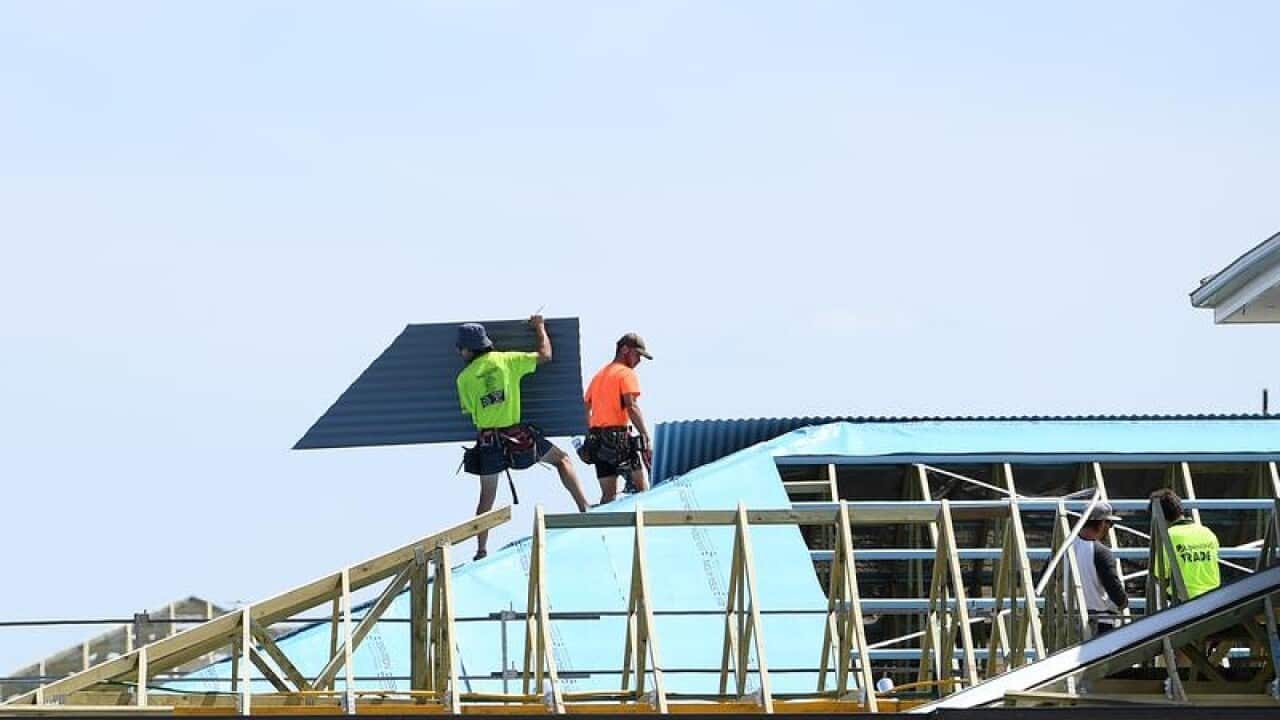
Building approvals have rebounded in September, increasing by the most in more than six months on the back of a lift in apartment permits.
Approvals for the construction of new homes rose 1.5 per cent in September, beating market expectations of a 1.0 per cent decline.
Approvals for private sector houses increased by 9,867, or 0.6 per cent in the month, data from the Australian Bureau of Statistics showed on Thursday.
Permits in the volatile 'other dwellings' category, which includes apartment blocks and townhouses, was 8.754, or 2.6 per cent higher.
The data comes amid signs of a gradual easing in Australia's housing boom in recent months after regulators tightened investor lending rules in March.
News that makes sense
Your trusted source for staying up-to-date with the world around you. Get free daily news updates and analysis, straight to your inbox.
Housing construction has continued to be supported by record low interest rates, but rising household debt levels have increasingly worried regulators.
Thursday's data indicates a period of stabilisation in building approvals, St George Bank senior economist Janu Chan said.
"The recent uptick in approvals suggests that the potential drag on economic growth from a downturn in residential construction could be less than feared," she said.
"Nonetheless, the tighter conditions on home lending which is weighing on demand will likely flow on to weaker residential construction in time."
While house prices have show some tempering in recent weeks, particularly in Sydney and Melbourne, the data showed a jump in approvals in several states.
Monthly approvals rose 10.7 per cent in NSW, but declined 2.0 per cent in Victoria.
Queensland approvals also fell 17.0 per cent but there was a 27.1 per cent increase in Western Australia, 16.5 per cent in Tasmania and 6.6 per cent in South Australia.
Over the 12 months to September, overall building approvals were up 0.2 per cent.
September's solid growth provides support to the view that the dip in dwelling approvals is most likely over, ANZ economist David Plank said.
"The recent trend is clearly up, which means the downturn looks to be have been much shallower than previous downturns," he said.
"We attribute this to continued low interest rates and strong population growth."
The Australian dollar rose to 77.01 US cents shortly after the figures were published, up from 76.81 US cents just prior their release.







