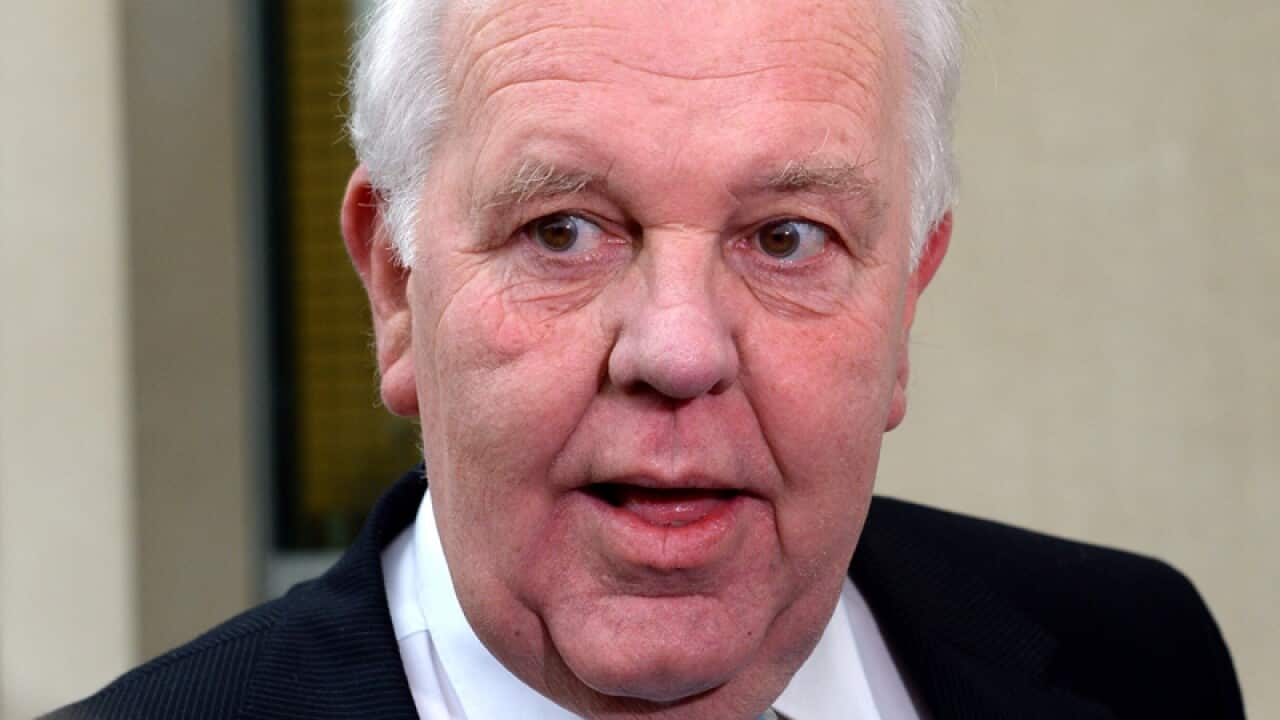
Joe Bullock says Labor has lost a voice from its diverse mix of views with his decision to quit the Senate over same-sex marriage, but political analysts believe he cost the party too much.
The senator, who is the fourth of six sitting West Australian Labor MPs to retire from federal politics in recent weeks, said he was disappointed the party voted in favour of removing the conscience vote on gay marriage after this year's federal election.
He was the sole opponent of the resolution at Labor's national conference in July, and says a plebiscite on gay marriage will only determine a majority view.
"When you're in a room where there are 500 votes one way and one vote the other, you tend to walk out a bit lonely," he told ABC Radio on Wednesday.
Senator Bullock said he had regarded himself as a different voice within the party - not a political "fossil" as suggested by some.
Political analysts Harry Phillips and David Black said Senator Bullock's sudden decision was a surprise, given he had fought so hard to win a seat.
He controversially shunted running mate Louise Pratt, who has a transgender partner, from the top of Labor's WA Senate ticket in the 2014 election re-run.
"He had genuine support for battlers and working class people but was a source of division within Labor," Professor Phillips said.
"He suffered so much criticism within his party, it became uncomfortable."
Both analysts said Senator Bullock had cost Labor too much, defending a section of the vote but losing the middle ground.
Last time at the polls, the party needed 28 per cent of the vote to win two seats, but only won one.
Many Labor voters felt so strongly against Senator Bullock, they voted below the line - taking the risk of botching the ballot paper - so they could put him in final place.
"He was a very divisive figure," Professor Black said.
Senator Bullock, the former national vice-president of the Shop, Distributive and Allied Employees Association, said Labor had lost a voice with his departure and he had been swamped with support for his stance.
"It shows there are Labor people out there in the community who identify with the sort of values I've addressed."
Liberal senator Chris Back said it was a sad day for Australian democracy that someone of his experience felt he had to resign "as a result of his principles on a matter he should have every right to express".
Meanwhile, Ms Pratt told AAP she would again seek to be elected to the Senate, but would not stand in the way of indigenous leader Pat Dodson, who is likely to fill the vacancy on a casual basis.
Mr Dodson is expected to get the nod from senior ALP figures at a meeting convened by national secretary George Wright this week, before being formally endorsed by the WA parliament.
Share


